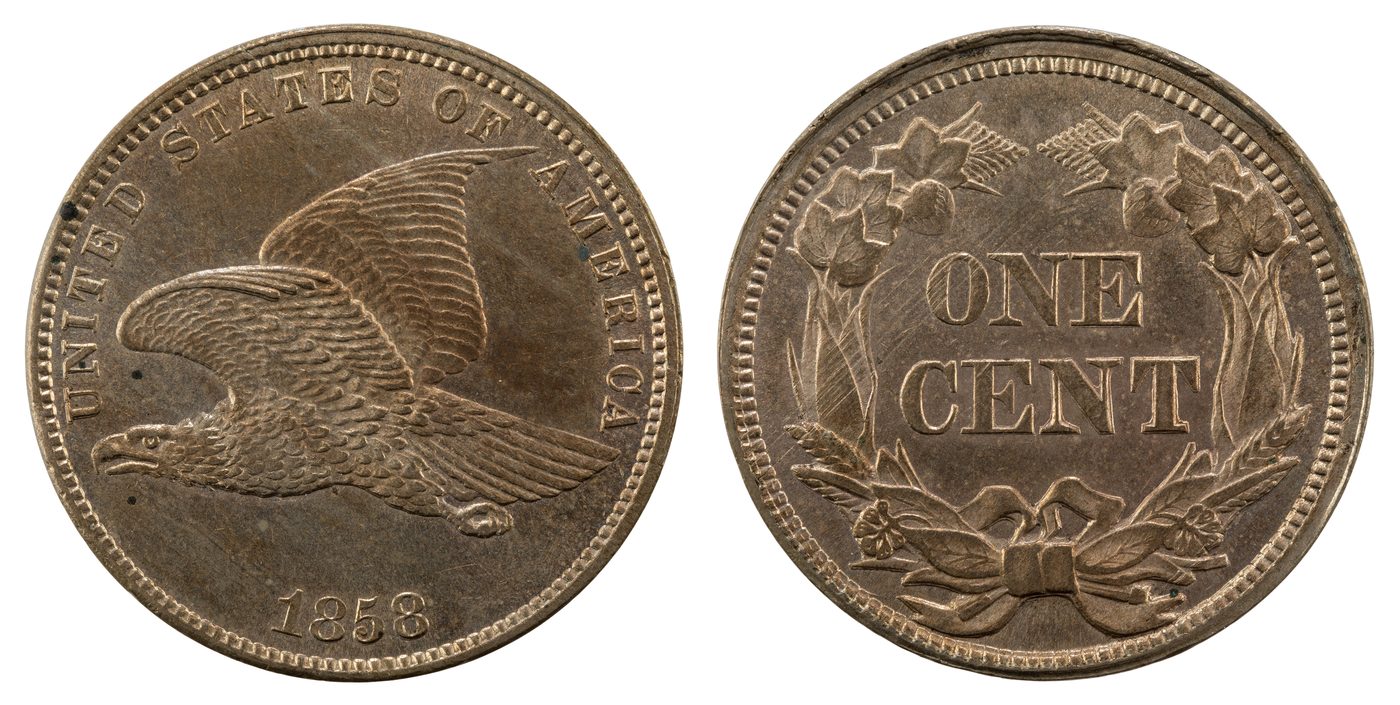
The penny that cost too much
By the 1850s, the American cent was a problem. It was a slab of pure copper the size of a half dollar — heavy, dark, and increasingly unloved. Worse, the price of copper had climbed so high that the Mint was losing money on every cent it struck. A coin is supposed to be worth a little more than the metal in it. This one was upside down.
The country also had a stranger problem in its pockets: foreign money. Spanish and Mexican silver coins had circulated freely in America since colonial days, and they were still legal tender. The government wanted them gone. It needed a new, cheap, distinctly American coin people would actually want to trade for them.
The answer came on February 21, 1857, when President Franklin Pierce signed the act that created a smaller cent. The law did three things at once. It shrank the penny to roughly the size we know today. It killed the old large cent and the half cent outright. And it gave Americans a two-year window to bring in their worn coppers and their Spanish silver and swap them for the bright new coins.
When the new cents were released in the spring of 1857, the response was almost a spectacle — collectors and historians describe long lines winding around the Philadelphia Mint as people queued to exchange their old money. The little eagle was an instant sensation. It was also, it turned out, a coin with a fatal flaw.