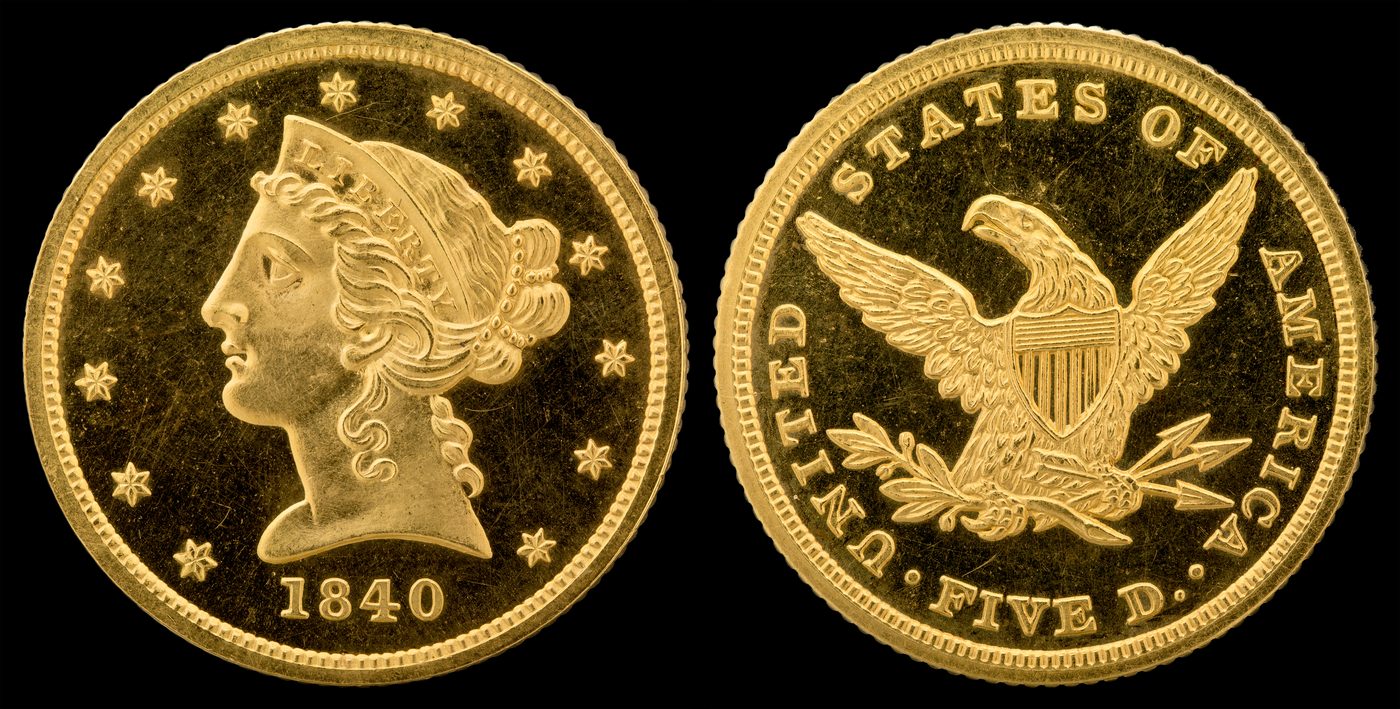
The coin that outlasted everything
In 1839, the U.S. Mint needed a new face for its gold. It chose one and then kept it for almost seventy years — through a gold rush, a civil war, the rebuilding that followed, and the rise of the United States as an industrial power. The Coronet Head half eagle, the $5 gold piece, is the coin that watched all of it happen from inside America's pockets, banks, and vaults.
It was not a souvenir or a collector's toy. Five dollars in 1840 was real money — close to a week's wages for a working man. This was the coin you used for serious things: a land payment, a debt settled, savings hidden in a wall. That everyday weight is part of what makes it fascinating now. The romance of pre-1933 gold is that these pieces actually did something.
And it traveled. The half eagle is the only U.S. coin denomination ever struck at all seven American mints — Philadelphia, the frontier gold mints at Charlotte and Dahlonega, New Orleans, San Francisco, Carson City, and finally Denver. No other coin can say that. Hold a Coronet half eagle and you may be holding metal dug from Carolina hills, California riverbeds, or a Nevada silver mountain.