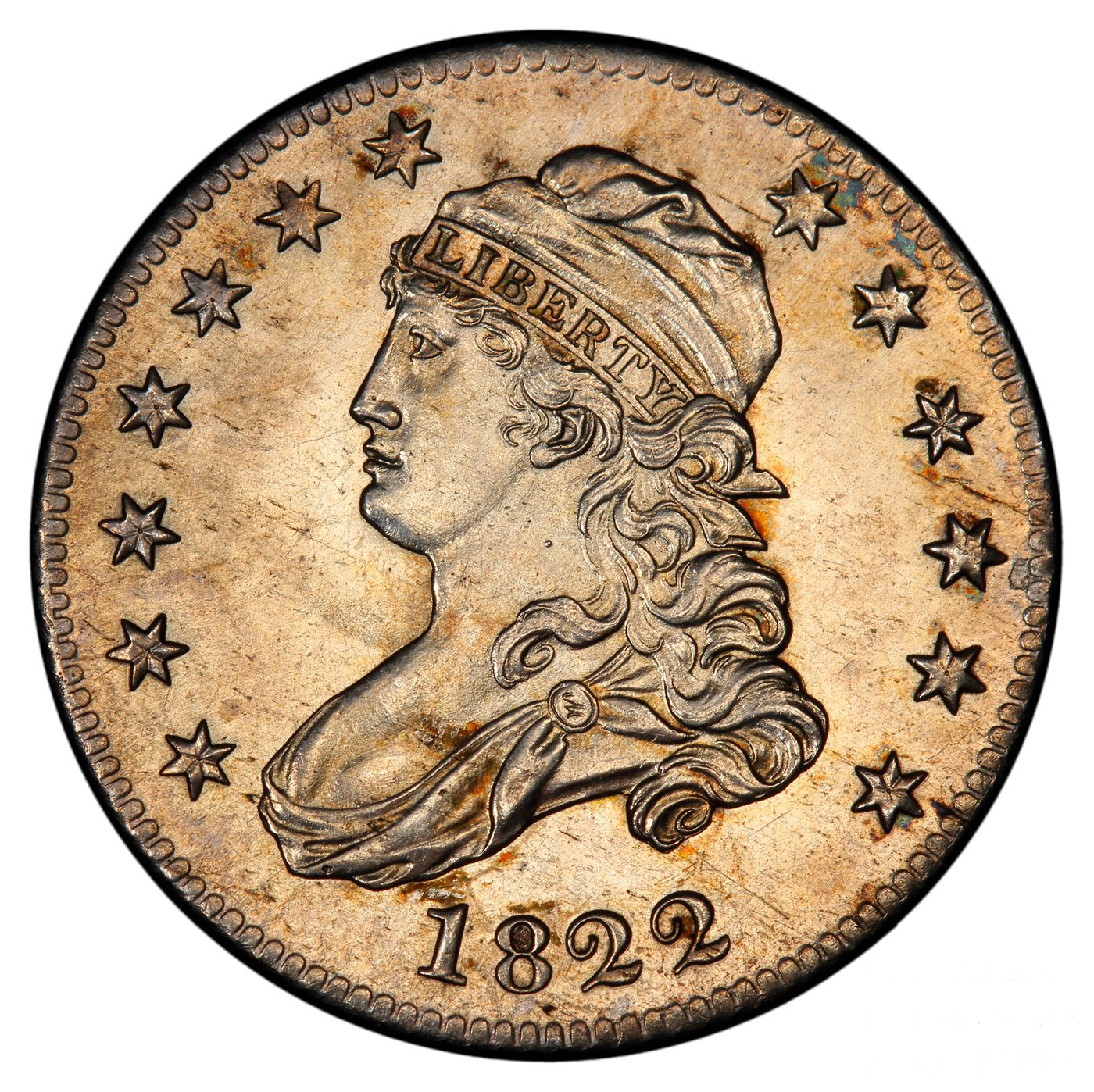
The story behind the coin
For seven years, America made no quarters at all. Between 1808 and 1814 the Philadelphia Mint poured its small silver supply into half dollars — the workhorse coin of the early republic — and the quarter simply waited its turn. When it returned in 1815, the new coin wore John Reich's "Capped Bust" design, already familiar from the dime and half dollar.
Then disaster. In January 1816 a fire tore through the Mint's machinery building and destroyed the rolling equipment that flattened silver into coinage strip. Quarter production stopped cold. None were struck in 1816 or 1817, and the press did not turn again for quarters until 1818.
That stop-and-start rhythm runs through the whole series. No quarters were struck in 1826, 1829, or 1830 either. The result is a coin that was never made in great numbers and was spent hard when it was — which is exactly why, two centuries later, the Capped Bust quarter is the rarest U.S. quarter series ever made for everyday circulation.