The story behind the coin
In 1807 the Mint did something unusual. It handed the look of every silver and gold coin in the country to a man who had come to America as an indentured servant.
His name was John Reich — born Johann Matthias Reich in Fürth, Bavaria, in 1768, the son of an engraver. He fled the Napoleonic wars and arrived in Philadelphia around 1800, bound to work off a debt of about twenty guineas. His skill got noticed fast. As early as 1801, Mint Director Elias Boudinot wrote to President Jefferson that he "was much pleased with his work." In April 1807 the Mint hired Reich as assistant engraver to the aging Chief Engraver, Robert Scot, at $600 a year — a sum Jefferson himself thought high.
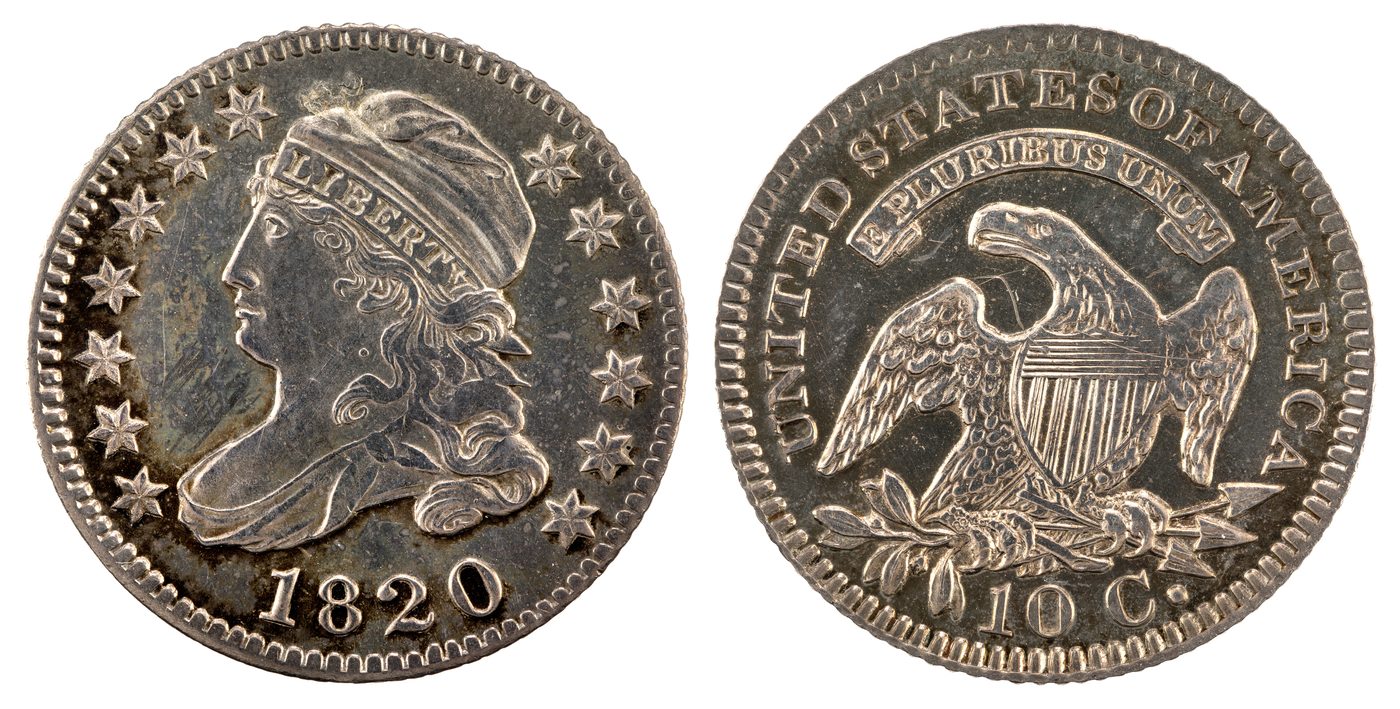
Reich's job was nothing less than to redraw American money. His new Liberty — wearing a soft cloth cap, the kind freed Roman slaves once wore — debuted on the half dollar in 1807. The dime was next. In 1809 the first Capped Bust dimes left the press, replacing the older Draped Bust design. The same Liberty would eventually appear on the half dollar, quarter, dime, and half dime — one designer's face on a whole drawer of American silver.
The early dimes show their age in the best way: struck by hand-set presses, on planchets (blank coin discs) that often came out a touch off-center or weak. A 1809 dime that is sharp and well centered is a small miracle of early industrial America.