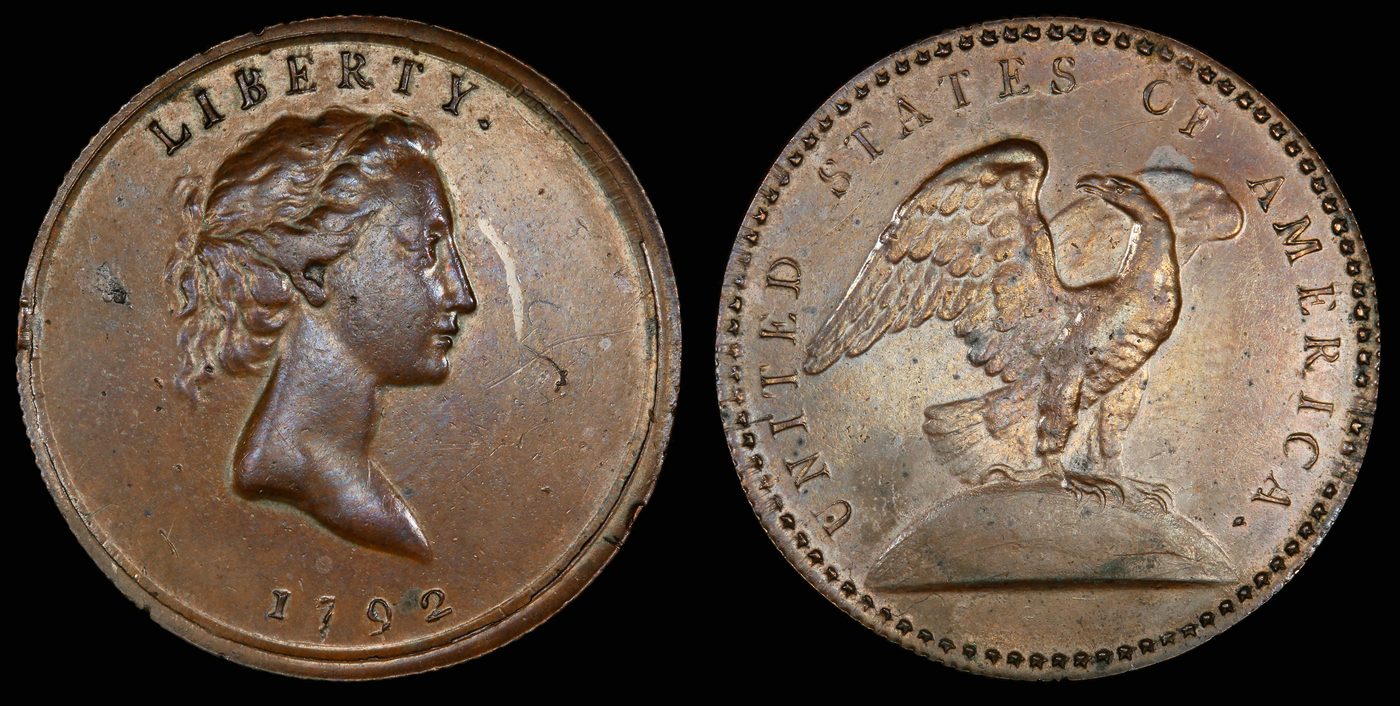
The story behind the coin
On April 2, 1792, George Washington signed the Coinage Act and the United States got the legal right to make its own money. The Act spelled out the denominations — dollar, half dollar, quarter dollar, disme, half disme, and the rest — and ordered a mint built in Philadelphia, the first federal building raised under the new Constitution.
Then came the hard part: actually making coins. Through 1792, the brand-new Mint was less a factory than a workshop full of experiments. Workers tried different metals, different planchet thicknesses, different edges and collars, just to learn how to strike a coin that looked official and held up in a pocket. These trial pieces are called patterns — test coins, never meant for circulation, made to settle a question before the real production begins.
The eagle-on-globe quarter belongs to that first batch of experiments. And it carries a haunting backstory. The design is traditionally tied to Joseph Wright, the talented artist Washington's circle had earmarked as the Mint's first draughtsman and die-sinker. Wright never got to finish the work. He died in 1793 — most accounts say in the yellow-fever epidemic that tore through Philadelphia that summer, which also took his wife, Sarah. He was about 37.