Designer
Joseph Wright: the painter who became the Mint's first engraver
He cast Washington's face in plaster and shaped America's first portrait of Liberty in copper — then yellow fever took him at 37.
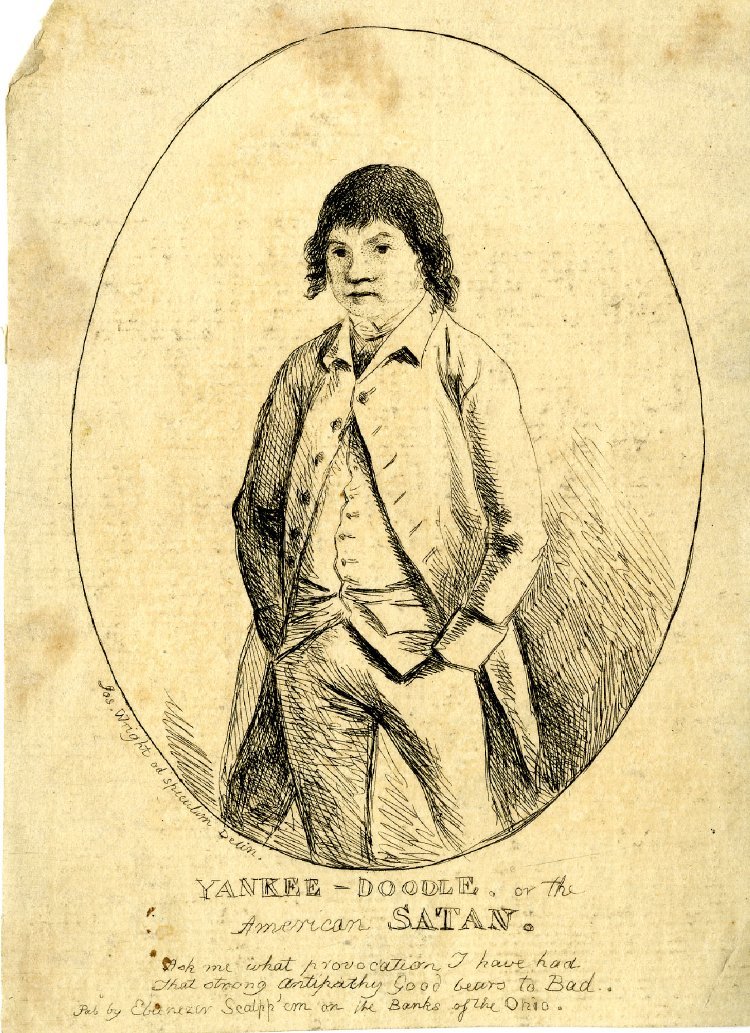
In the fall of 1793, the brand-new United States Mint delivered its first batch of a new copper cent. The man who designed it never saw one. Joseph Wright — portrait painter, Washington's friend, the Mint's first draughtsman and die-sinker — had died of yellow fever days earlier, at 37.
The painter who answered to Washington
Joseph Wright was born July 16, 1756, in Bordentown, New Jersey — and into the orbit of one of the strangest celebrities of the age. His mother was Patience Lovell Wright, a sculptor who modeled startlingly lifelike portraits in colored wax and, in London, ran a waxworks that drew the curious and the famous. (Legend, repeated for two centuries, holds that she also passed secrets to the American cause during the Revolution; it makes a fine story, but the evidence is thin.) His father, also Joseph, was a Quaker cooper — a barrel-maker.
Young Joseph followed his mother to London and, in 1775, entered the Royal Academy of Arts — the first American-born artist to do so. He trained in the circle of Benjamin West, the American-born painter who presided over British art, and his sister married the celebrated portraitist John Hoppner. In 1778 the Academy gave him a silver medal for the best model of an academy figure. He learned to paint in oil and to model a likeness in wax and clay — a rare double skill that would matter enormously later.
In 1782 he sailed home carrying a letter from Benjamin Franklin recommending him to George Washington. The general gave him a sitting at Rocky Hill, New Jersey, in 1783, and later let him do something almost no one was permitted to do: take a plaster cast directly from his face. Washington described Wright arriving at Mount Vernon "with the singular request that I should permit him to take a model of my face, in plaster of Paris" — a small, vivid window onto the man who would soon be asked to put a nation's image on its money.
From a brush to a graver
A coin die is the negative — the hardened steel stamp that punches an image into a soft metal blank. Cutting one is brutal, exacting work: everything is carved in reverse, sunk into steel, in a relief so low it survives being hammered thousands of times. It is about as far from a painter's canvas as a craft can get. Wright's gift was that he understood both worlds — the painter's sense of a face and the modeler's feel for shaping form you can hold in your hand.
That training shows in his coin work. The brand-new Mint had already tried two cents in 1793 — the Chain cent and the Wreath cent — and the public disliked the look of both. Liberty's hair, in particular, was mocked as wild and frightened. Wright reached for a better source: the Libertas Americana medal, a small masterpiece engraved in Paris by Augustin Dupré at Benjamin Franklin's urging to celebrate the American victories at Saratoga and Yorktown. It showed a youthful Liberty with flowing hair and a liberty pole topped by a cap.
Wright reworked the idea rather than copying it. He turned Liberty's head to face right, calmed her windblown hair into something dignified, and set a pole over her shoulder crowned with a soft Phrygian cap — the floppy felt cap worn by freed slaves in the ancient world and adopted by both America and France as the badge of liberty. The result, the Liberty Cap cent of 1793, was the first United States coin to carry a Liberty most people actually admired. He worked under the Mint's first director, the astronomer and instrument-maker David Rittenhouse.
Key facts
- Born
- July 16, 1756 — Bordentown, New Jersey
- Died
- September 13, 1793 — Philadelphia (yellow fever)
- Nationality
- American
- Training
- Royal Academy of Arts, London — first American-born student to matriculate
- Mint role
- First Draughtsman & Die-Sinker, US Mint (designated 1793)
- Signature coin
- Liberty Cap cent, 1793
- Also painted
- George Washington (life sitting + plaster life mask) and Benjamin Franklin
A career, in order
- 1756Born in Bordentown, New Jersey, son of wax sculptor Patience Lovell Wright.
- 1775Enters the Royal Academy of Arts in London — the first American-born student admitted.
- 1778Awarded a Royal Academy silver medal for figure modeling.
- 1782Returns to America with a letter of introduction from Benjamin Franklin to George Washington.
- 1783Paints Washington from a single life sitting at Rocky Hill, New Jersey.
- 1792Works as the new Philadelphia Mint's unofficial engraver; the 1792 pattern quarter dollar is attributed to him.
- 1793Designated the Mint's First Draughtsman & Die-Sinker; designs the Liberty Cap cent.
- Sept 1793Dies of yellow fever, days before the first Liberty Cap cents are delivered. His wife Sarah dies soon after.
The coin he never held
Here is the fact that makes Wright unforgettable to collectors. In the summer of 1793, yellow fever swept Philadelphia — then the nation's capital — and emptied the city. Thousands died; those who could, fled. Wright stayed, and the fever took him on September 13, 1793. His wife, Sarah, died within days, leaving three orphaned children who survived. Just five days after his death, on September 18, Mint coiner Henry Voigt delivered 11,056 Liberty Cap cents — the entire 1793 mintage of the type. Wright designed America's first beloved coin and never saw a finished one.
His death also reshaped the coin. With no engraver, the Mint turned to Robert Scot, who became the first official Chief Engraver and simplified Wright's design — softening the relief and the modeling over 1794. From late 1794, a technician named John Smith Gardner cut dies under Scot's direction to keep up with demand. So the 1793 Liberty Cap cent — Wright's own, before other hands reworked it — stands apart. With a mintage of about 11,056 and many die varieties catalogued (the numbers collectors call "Sheldon" varieties), it is one of the great prizes of early American copper. The 1792 pattern quarter dollar attributed to Wright is rarer still — a handful survive.
His name also brushes the very first federal coin of all. The 1792 half disme — a tiny silver five-cent piece struck before the Mint building even existed — is sometimes credited to Wright as a designer alongside Robert Birch, though early Mint records are murky and other craftsmen (Adam Eckfeldt among them) are named for the actual dies. Treat that one as an attribution, not a settled fact; the paperwork simply didn't survive.
Questions collectors ask
Who was Joseph Wright?
An American portrait painter and modeler (1756–1793) who became the United States Mint's first draughtsman and die-sinker. He painted George Washington from life and designed the 1793 Liberty Cap cent before dying of yellow fever.
What coin is Joseph Wright most famous for?
The Liberty Cap cent of 1793. He based its Liberty on the French Libertas Americana medal, turning her to face right and crowning a liberty pole with a soft Phrygian cap — the first US coin design the public widely admired.
Did Joseph Wright design the 1792 half disme?
Possibly. Some sources credit him as a designer of the 1792 half disme alongside Robert Birch, but early Mint records are incomplete and the dies are variously attributed to other craftsmen. It's best understood as a likely attribution rather than a confirmed fact.
Why did Joseph Wright never see his own coins?
He died of yellow fever on September 13, 1793, in the Philadelphia epidemic. The first 11,056 Liberty Cap cents were delivered five days later, on September 18 — so the designer never held a finished example.
Who took over after Joseph Wright died?
Robert Scot became the Mint's first official Chief Engraver and simplified Wright's design. From late 1794, John Smith Gardner cut dies under Scot's direction.
Sources
- Joseph Wright (American painter) — Wikipedia
- Liberty Cap large cent — Wikipedia
- 1793 Liberty Cap Cent: A Collector's Guide — CoinWeek
- Liberty Cap Cent, 1793–1796 — CoinWeek
- Joseph Wright — Coinappraiser.com Knowledge Center
- 1792 half disme — Wikipedia
- A More Accurate History of the 1792 Half Disme — American Numismatic Association