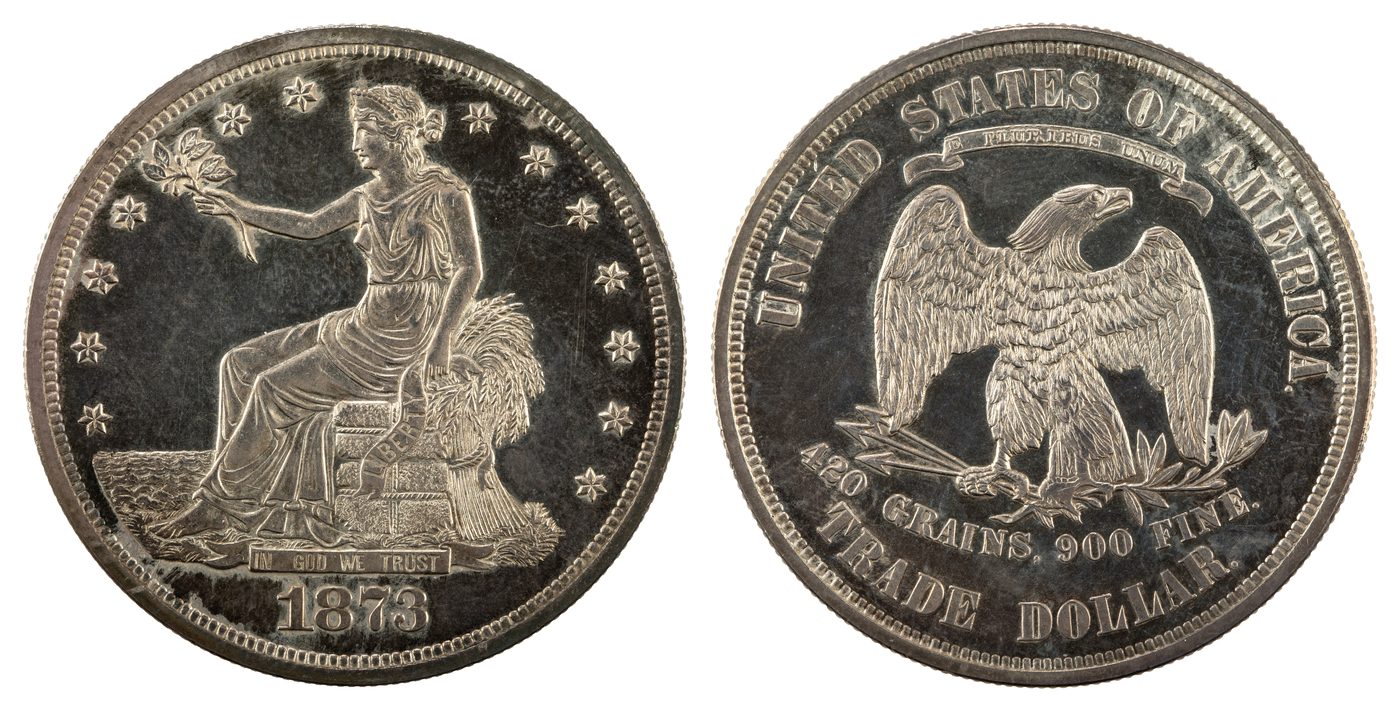
The story behind the coin
By the early 1870s the United States had a glut of silver and a problem with where to spend it. New strikes in the American West — the Comstock Lode above all — were pulling silver out of the ground faster than the country could use it, and the price was sliding. Meanwhile, on the other side of the Pacific, a different silver coin ruled the wharves of Canton and Shanghai: the Mexican peso, descendant of the old Spanish dollar, the coin Chinese merchants trusted by weight and habit.
The idea was simple and a little audacious. If American silver could be struck into a coin Chinese merchants would accept instead of the peso, the West's silver would have a buyer and U.S. trade in the East would have a foothold. Congress agreed, and the Coinage Act of 1873 authorized the Trade Dollar — a coin designed not to circulate in America at all, but to be exported, sold to merchants, and shipped across the ocean as bullion you could count.
To make the pitch, the Mint did something telling: it made the Trade Dollar heavier than a regular silver dollar. It carried 420 grains of standard silver against the 412.5 of the ordinary dollar — and it said so, right on the coin. The reverse is stamped 420 GRAINS, 900 FINE. This was a coin that advertised its own silver content to a buyer half a world away who cared about exactly one thing: how much metal was really there.
Then the plan went sideways. Silver kept falling. By the late 1870s the bullion in a Trade Dollar was worth less than a dollar, and the coins began drifting back from the docks into American commerce — used at face value by people who had no idea they were holding what Washington now considered a leftover. Congress's response, in an act of July 22, 1876, was to demonetize the coin: strip it of legal-tender status entirely. (It had carried a five-dollar legal-tender ceiling to begin with, the result of a drafting quirk; 1876 removed even that.) The Mint kept making them for export through 1878, then stopped striking them for circulation altogether.