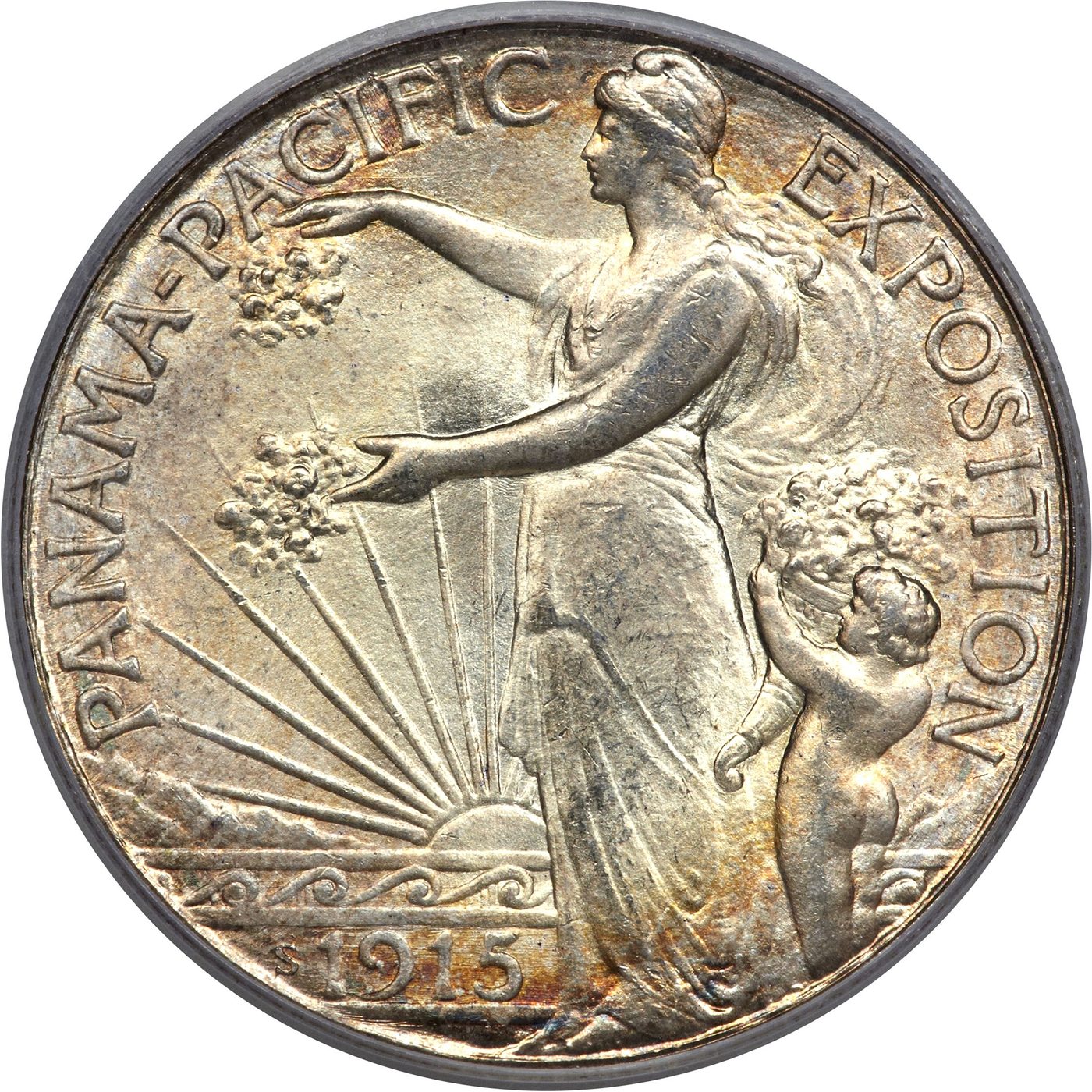
The story behind the coin
On the morning of April 18, 1906, an earthquake and the three days of fire that followed leveled much of San Francisco. Nine years later, the city answered with the most extravagant party in its history.
The occasion was the Panama-Pacific International Exposition — a world's fair held from February 20 to December 4, 1915 to celebrate the opening of the Panama Canal, which had cut the sea voyage from coast to coast nearly in half. But everyone understood the second message. By draping a glittering temporary city of domes and courtyards along the bay (on land filled in for the purpose — today's Marina District), San Francisco was telling the world it had come all the way back. Close to 19 million people came to see it.
A fair on that scale needed money. So on January 16, 1915, President Woodrow Wilson signed an act of Congress authorizing a set of commemorative coins to be sold to the public as a fundraiser — among them this half dollar. The coins were struck in San Francisco, then sold at the fair to visitors who wanted a souvenir with real silver in it.