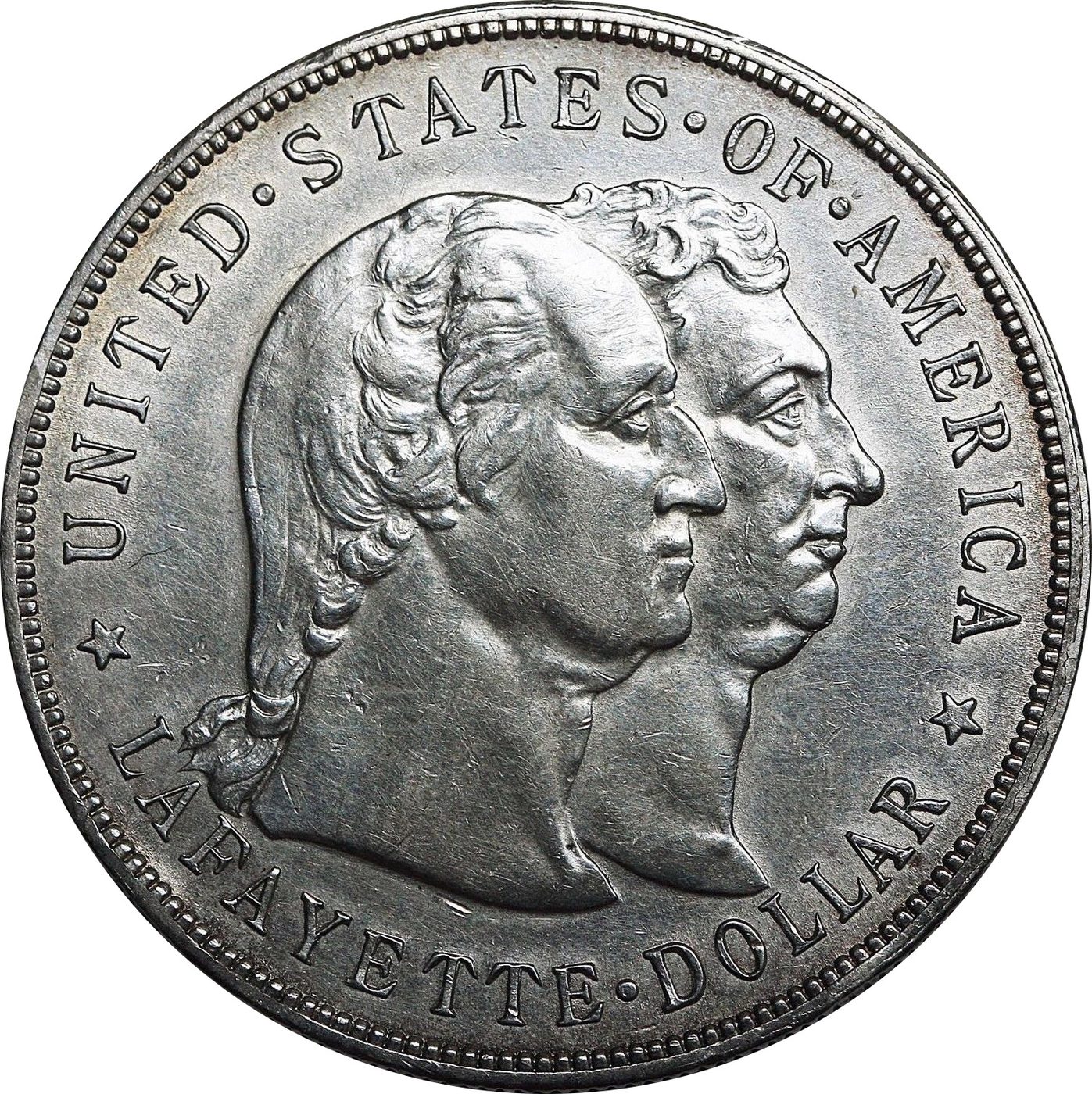
The story behind the coin
In 1899 the United States wanted to thank France — and it reached for a dead hero to do it.
The hero was the Marquis de Lafayette, the young French aristocrat who had crossed the Atlantic at nineteen to fight in the American Revolution, become a near-son to George Washington, and helped pull France into the alliance that won the war. A century later, the U.S. was invited to take part in the 1900 Paris Exposition — the great World's Fair — and decided the right gesture was a monument: a bronze statue of Lafayette on horseback, given to the city of Paris.
Statues cost money. So Congress turned the monument into a coin. On March 3, 1899 it authorized 50,000 silver dollars for the Lafayette Memorial Commission, which would sell them to the public at $2 apiece — double face value — and pour the proceeds into the statue fund. Part of the campaign ran through the nation's schoolchildren, who gave to the monument fund as a civics lesson in Revolutionary history. It was a brand-new idea in American money: a coin sold above its value to pay for something.
That made the Lafayette dollar the first U.S. commemorative silver dollar — the start of a tradition that runs to this day.