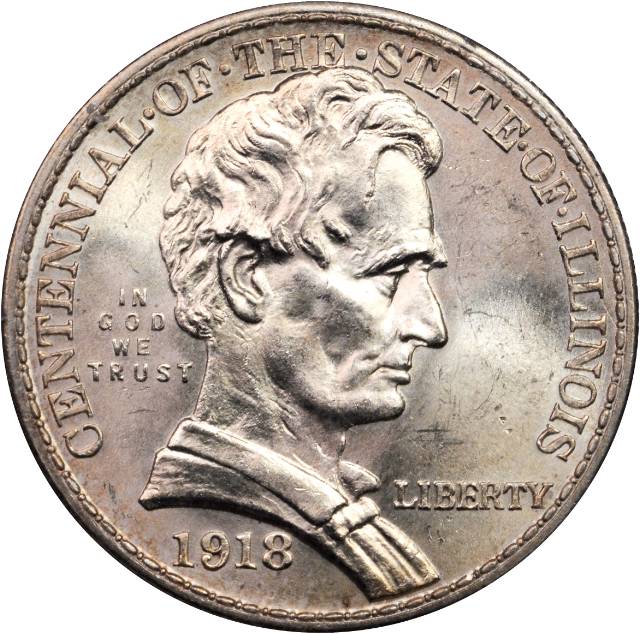
The story behind the coin
The United States had made commemorative coins before — for a world's fair, for an exposition. But it had never made one for a single state. Illinois changed that.
In 1818, Illinois became the 21st state. A century later, in the middle of the First World War, the state wanted to mark the moment. Congress agreed. The bill — H.R. 8764 — was signed into law by President Woodrow Wilson on June 1, 1918, authorizing up to 100,000 silver half dollars to commemorate Illinois's hundredth birthday.
The math was the point. A commemorative half dollar cost the sponsoring group fifty cents — its face value — to buy from the Mint. They then sold it to the public for a dollar. That fifty-cent spread funded the celebration. The Illinois Centennial Commission ran the sale, distributing coins largely through the Springfield Chamber of Commerce, and every coin went out the door at a dollar apiece. It was, contemporaries noted, the first commemorative to sell its entire authorized run.
So what made it matter? Two firsts in one small silver disc: the first U.S. coin to honor an event "confined to a single state," in the Mint's own words, and the first to sell out completely. It opened the door to the long, strange parade of classic commemoratives that followed — coins for trails, battles, and towns, each one a tiny fundraiser wearing the dignity of legal tender.