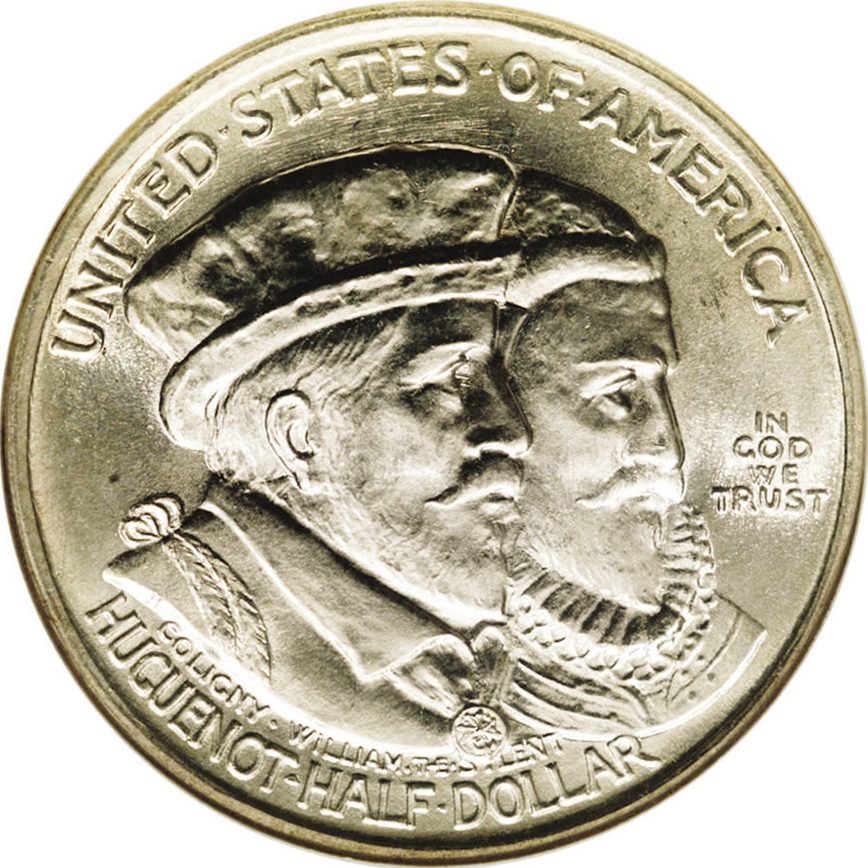
The story behind the coin
In 1624 a ship called the Nieuw Nederlandt crossed the Atlantic carrying French-speaking Walloons from what is now Belgium, along with French Huguenots — Protestants fleeing persecution in Catholic Europe. They settled the colony of New Netherland, the territory that would one day become New York. Three centuries later, their descendants wanted a coin to remember them by.
The push came from the Huguenot-Walloon New Netherland Commission, a body organized under the Federal Council of Churches of Christ in America. Congress agreed without a fight: the authorizing act passed without opposition and President Warren G. Harding signed it on February 26, 1923. It allowed for up to 300,000 silver half dollars.
That last detail — churches sponsoring and selling a federal coin — is what made the project unusual, and what eventually drew fire. A commemorative half dollar in this era worked like a fundraiser: the Mint made the coins, a sponsoring group bought them at face value, and the group resold them to the public at a markup to fund the cause. Here the cause was an explicitly religious anniversary, and that raised eyebrows about church and state long before the coins ever reached a collector's hand.