Designer
John Baer Stoudt
The Pennsylvania pastor whose sketches became a 1924 U.S. coin
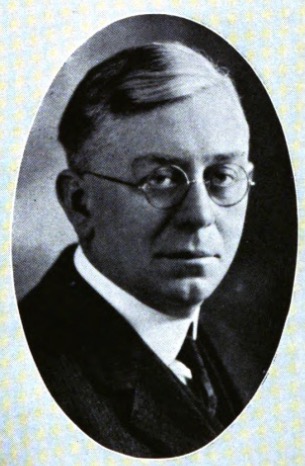
Most people on a U.S. coin's design credit went to art school. John Baer Stoudt went to seminary. A Reformed minister and folklorist, he sketched the 1924 Huguenot-Walloon half dollar himself — then handed it to the Mint to finish.
Who he was
John Baer Stoudt was not a sculptor or an engraver. He was a country preacher with a scholar's obsession — and that obsession ended up on a coin.
Born in 1878 in Maxatawny Township, Berks County, Pennsylvania, Stoudt trained for the pulpit, not the studio. He worked his way through Keystone State Normal School, Franklin and Marshall College, and the Reformed Church's seminary, and in 1908 he was ordained. For the rest of his working life he served Reformed congregations in the Lehigh Valley — first the Salisbury charge near Emaus, then Grace Reformed Church in Northampton.
But preaching was only half of him. Stoudt spent fifteen years walking the Pennsylvania-German countryside, writing down the rhymes, ballads, and old beliefs of his neighbors before they vanished. The Folklore of the Pennsylvania Germans (1916) was one of the first real collections of that vanishing oral world. He wrote constantly — church histories, a study of the inscriptions potters scratched into Pennsylvania-German earthenware, even a book on the Liberty Bell. He died in Allentown in 1944.
How a preacher designed a coin
The thread that pulled Stoudt onto a coin was his own ancestry. He was descended from Huguenots — French Protestants driven into exile — and he became a leading authority on their history. That made him the natural choice to lead the Huguenot-Walloon Tercentenary, the 1924 celebration of the 300th anniversary of the first Walloon and Huguenot settlers reaching New Netherland in 1624.
Stoudt chaired the commission. And when the commission won approval for a commemorative half dollar, he didn't just commission an artist — he supplied the concept and the sketches himself, and even went before Congress to explain the design. He put two Protestant heroes on the obverse — the heads side — as jugate busts, meaning two overlapping profiles facing the same way: Gaspard de Coligny of France and William the Silent of the Netherlands. The reverse — the tails side — shows the ship Nieuw Nederlandt that carried the settlers across.
An amateur's sketch can't be struck into metal, though. That job fell to George T. Morgan, the Mint's chief engraver — by then in his late seventies and famous as the man behind the 1878 Morgan dollar. Morgan turned Stoudt's drawings into the plaster models the dies were cut from. So the coin carries two hands: the historian who imagined it and the master engraver who made it real.
The design drew fire even at the time. Critics asked why two men who had died roughly forty years before the 1624 voyage belonged on a coin about that voyage — and whether a religious anniversary deserved federal coinage at all. The objections didn't stop it. About 142,000 were struck at Philadelphia in 1924.
Key facts
- Born
- 1878, Maxatawny Township, Berks County, Pennsylvania
- Died
- 1944, Allentown, Pennsylvania
- Nationality
- American
- Profession
- Reformed minister, historian, and folklorist
- Coin design
- Huguenot-Walloon Tercentenary half dollar (1924) — concept and sketches
- Coin engraver
- George T. Morgan modeled Stoudt's sketches
- Notable book
- The Folklore of the Pennsylvania Germans (1916)
- Honors
- French Legion of Honor; Belgian Order of the Crown; honorary D.D., University of Montpellier
Questions collectors ask
Did John Baer Stoudt actually design the Huguenot-Walloon half dollar?
He supplied the concept and the original sketches, and presented the design to Congress as chairman of the tercentenary commission. He was not a trained artist, so the Mint's chief engraver, George T. Morgan, turned those sketches into the plaster models the coin was struck from. The standard credit reads 'George T. Morgan, based on sketches by John Baer Stoudt.'
Was Stoudt a professional artist or engraver?
No. He was a Reformed Church minister in Pennsylvania's Lehigh Valley and a respected historian and folklorist of the Pennsylvania Germans. The coin came out of his work leading the Huguenot-Walloon Tercentenary, not from an art career.
Why are Coligny and William the Silent on the coin if they died before 1624?
That was the main criticism at the time. The two were honored as leaders of the Protestant cause that the Huguenot and Walloon settlers belonged to, even though both had died roughly four decades before the 1624 voyage the coin commemorates. Stoudt, as a Huguenot descendant and historian, chose them as symbolic figureheads rather than as people who made the trip.
What else is John Baer Stoudt known for besides the coin?
He is best remembered as an early collector of Pennsylvania-German folklore. His 1916 book The Folklore of the Pennsylvania Germans was one of the first serious gatherings of that community's stories, rhymes, and beliefs, and he wrote widely on local church history and Huguenot heritage.
Sources
- Wikipedia — Huguenot-Walloon half dollar
- Biography of Rev. John Baer Stoudt (Berks County PAGenWeb)
- History Highlights — John Baer Stoudt (Jerusalem Western Salisbury Union Church)
- John Baer Stoudt, 1878–1944 (The Online Books Page, Univ. of Pennsylvania)
- The Folklore of the Pennsylvania Germans (Penn State University Press)
- U.S. Mint — Huguenot-Walloon Tercentenary Half