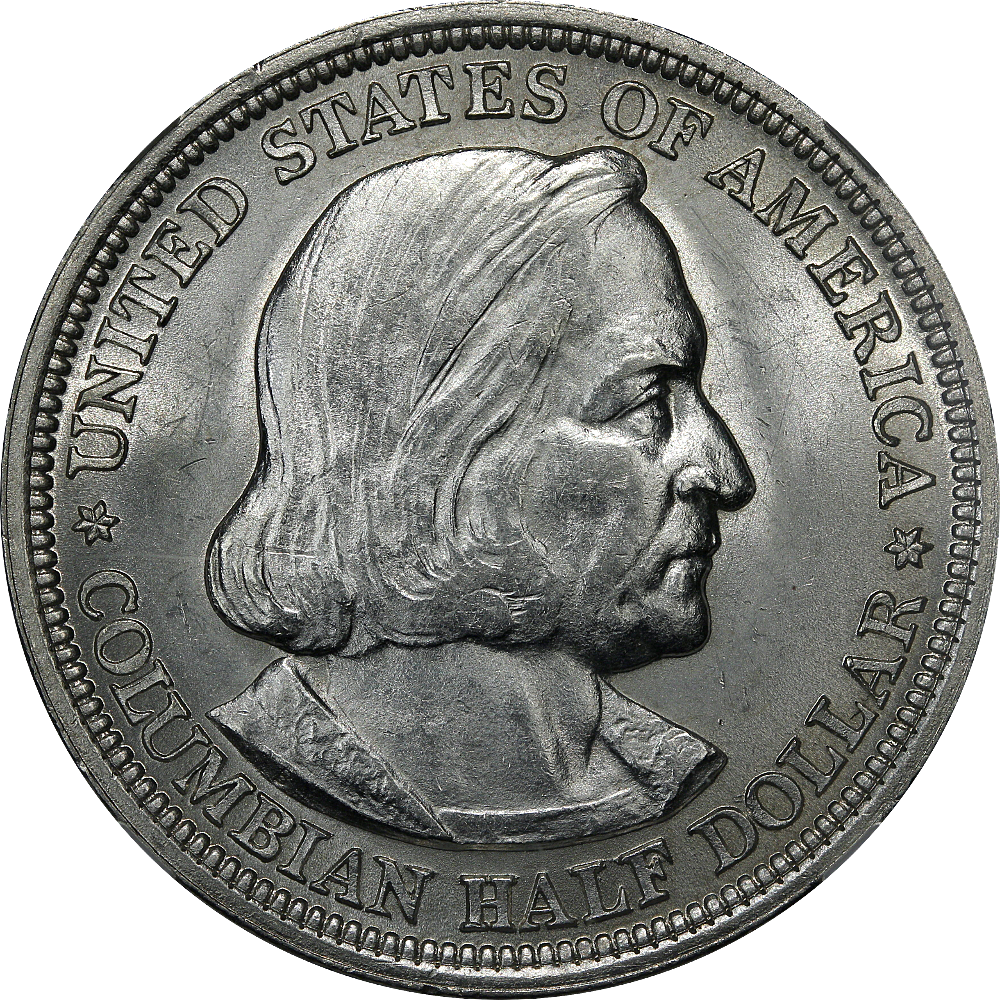
The story behind the coin
For a hundred years, the United States had made coins for one reason: to spend them. Then came Chicago.
The city had won the right to host the World's Columbian Exposition — a vast world's fair marking 400 years since Columbus reached the Americas. It was meant to open in 1892, the anniversary year, but the scale of it pushed the opening to May 1893. To help pay for the fair, Congress did something genuinely new. On August 5, 1892, it authorized up to five million special fifty-cent pieces — and the fair would sell them to the public for a dollar each, double face value, pocketing the difference.
That made the Columbian half dollar the first commemorative coin in U.S. history — the first American coin struck to honor an event rather than to circulate. Every commemorative that followed, from the Oregon Trail to the modern Mint's annual programs, traces back to this one.
The launch was pure showmanship. The first coin off the press was sold as a publicity stunt to Wyckoff, Seamans & Benedict, the firm behind the Remington typewriter, for $10,000 — by far the most ever paid for a single U.S. coin at the time. The company donated it to Chicago's new Columbian Museum, which became the Field Museum of Natural History. A fifty-cent coin had just become a national headline.