Designer

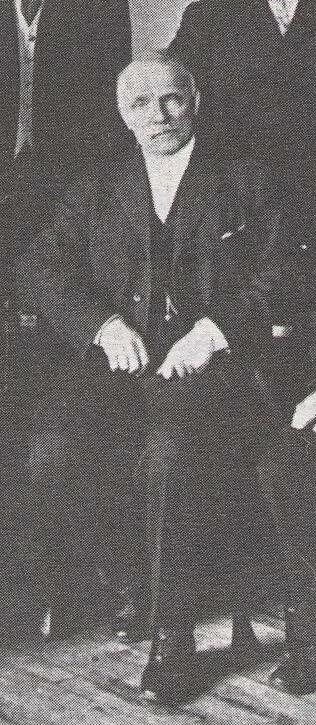
George T. Morgan: the Englishman who drew America's Liberty

Recruited from London over the Mint's own engravers — and made to wait four decades for the top job.

George T. Morgan: the Englishman who drew America's Liberty
U.S. Mint (Philadelphia Mint) · public domain · source

In 1876 the U.S. Mint went shopping abroad for a die-sinker, and the man London sent back gave America the most collected silver dollar it would ever strike. Then he waited forty-one years for the Mint to make him its chief.

The man the Mint imported

In 1876 the U.S. Mint did something it rarely did: it went shopping for talent overseas. The Director of the Mint, Henry Linderman, wanted fresh blood for the engraving department — and he didn't trust his own men to provide it. So he wrote to C.W. Fremantle, the deputy master of London's Royal Mint, asking for "a first-class die-sinker." Fremantle's recommendation was a thirty-year-old engraver who had, in his words, "made himself a considerable name" in England but had few chances to use it. His name was George Thomas Morgan.

Morgan was a Midlands craftsman, born in Bilston, England, on November 24, 1845. He trained at art school in Birmingham, won a scholarship to the National Art Training School in South Kensington — the institution that would become the Royal College of Art — and learned his trade cutting dies for the London medal house of John Pinches. A die is the hardened steel stamp that strikes a coin's image into blank metal; cutting one by hand, in mirror-image and sunk below the surface, is the whole art of the engraver. Morgan was good at it.

He sailed into Philadelphia on October 9, 1876, on a six-month trial. He arrived into an awkward situation. The Mint already had a Chief Engraver, William Barber, and Barber had a son, Charles, working alongside him — a family that expected to inherit the department. Linderman had effectively brought in an outsider to compete with them on their own ground. The tension that defined Morgan's American career was baked in from his first day.

The dollar, the model, and the perfect profile

The coin that made Morgan's name was forced into being by politics. The Bland-Allison Act of 1878 ordered the Treasury to buy millions of dollars of silver every month and turn it into coins — a sop to silver-mining states and farmers who wanted more money in circulation. The country suddenly needed a new silver dollar, and fast. Morgan's design won.

For the obverse — the heads side — Morgan refused the usual route of inventing an idealized goddess. He wanted a real American face. After rejecting several candidates, his friend the painter Thomas Eakins pointed him to a young Philadelphia schoolteacher, Anna Willess Williams. She sat for five sessions in November 1876, reluctantly, and only on the condition that her name stay secret. Morgan declared her profile the most perfect he had seen in England or America. He crowned her with a Phrygian cap — the ancient symbol of a freed slave, and so of liberty itself — and tucked wheat and cotton into her hair for the farms of North and South. The reverse carries an eagle Morgan drew from studying live bald eagles.

Williams's secret didn't last. Her identity leaked soon after the dollar was struck on March 11, 1878, and the press dubbed her "the silver dollar girl." The fame, by all accounts, troubled her; she went on teaching for decades. The coin, struck from 1878 to 1904 and revived for one year in 1921, became the bedrock of American coin collecting — the single most chased U.S. silver dollar there is.

The craft, and the long rivalry

Morgan's signature was the human face. Where many nineteenth-century engravers gave Liberty a stiff, classical mask, Morgan modeled from life and gave her warmth — a real profile, softly lit, with detail in the hair and a calm, modern expression. You can see the same hand in his finest pattern coins, the trial pieces a mint strikes to test a design before it ever reaches your pocket. The 1879 Schoolgirl dollar — Liberty in a beaded hairband, hair flowing loose — is widely held to be one of the most beautiful designs the U.S. Mint never adopted.

His career was shadowed by the Barbers. The two camps worked in parallel for years, and sometimes head to head. The clearest example is the experimental $4 gold "Stella" of 1879: Charles Barber drew the Flowing Hair version of Liberty, Morgan drew the rival Coiled Hair version — two engravers, two heads, one coin. Yet when William Barber died in 1879, it was Charles Barber, not Morgan, who was appointed Chief Engraver in 1880. Morgan, the more celebrated designer, stayed an assistant.

He waited. It was only when Charles Barber died in February 1917 that Morgan — by then 71 — finally became the seventh Chief Engraver of the United States Mint. He held the post for the last eight years of his life, designed the reverses of the Columbian half dollar and the McKinley Birthplace Memorial gold dollar, and died in Germantown, Philadelphia, on January 4, 1925, still in office.

Career timeline

  1. 1845Born November 24 in Bilston, England.
  2. 1870sTrains in Birmingham and at the National Art Training School, South Kensington; cuts dies for John Pinches in London.
  3. 1876Recruited by the U.S. Mint via London's Royal Mint; arrives in Philadelphia on October 9 as a special/assistant engraver.
  4. 1878The Morgan dollar is first struck on March 11, modeled on schoolteacher Anna Willess Williams.
  5. 1879Designs the Coiled Hair $4 Stella pattern (opposite Charles Barber's Flowing Hair), the Schoolgirl dollar, and goloid metric dollar patterns.
  6. 1880Passed over: Charles E. Barber, not Morgan, becomes Chief Engraver after William Barber's death.
  7. 1893Sketches the reverse of the Isabella quarter and designs the reverse of the Columbian half dollar for the World's Columbian Exposition.
  8. 1917At age 71, finally appointed the seventh Chief Engraver of the United States Mint.
  9. 1921The Morgan dollar is revived for a single year under the Pittman Act.
  10. 1925Dies January 4 in Germantown, Philadelphia, still serving as Chief Engraver.

Key facts

Full name
George Thomas Morgan
Born
November 24, 1845 — Bilston, England
Died
January 4, 1925 — Germantown, Philadelphia
Nationality
British-born; worked in the United States from 1876
Mint role
Assistant/special engraver 1876; 7th Chief Engraver 1917–1925
Trained
Birmingham School of Art; National Art Training School, South Kensington
Signature work
Morgan dollar (1878–1904, 1921)
Liberty model
Anna Willess Williams, a Philadelphia schoolteacher
Other designs
$4 Stella (Coiled Hair), Schoolgirl dollar, goloid metric dollar, Isabella quarter reverse, Columbian half dollar reverse

Questions collectors ask

Who designed the Morgan dollar?

George T. Morgan, a British-born engraver recruited to the U.S. Mint in 1876. The coin is named after him — an unusual honor, since most coins are named for what they depict. His monogram 'M' appears on both sides, on Liberty's neck and on the eagle's left wing.

Who was the model for Liberty on the Morgan dollar?

Anna Willess Williams, a young Philadelphia schoolteacher. The painter Thomas Eakins recommended her; she sat for five sessions in November 1876 on condition that her name stay secret. Morgan called her profile the most perfect he had seen in England or America. Her identity leaked soon after the coin appeared.

Was George Morgan ever the Chief Engraver of the Mint?

Yes, but only at the very end. Despite designing the nation's signature silver dollar, Morgan was passed over in 1880 in favor of Charles Barber. He didn't become Chief Engraver until 1917, at age 71, after Barber died — and he held the post until his own death in 1925.

Why is a $4 coin associated with Morgan?

The $4 'Stella' of 1879–1880 was an experimental pattern meant to explore whether the U.S. might join an international coinage union. Two versions exist: Charles Barber's Flowing Hair Liberty and George Morgan's rival Coiled Hair Liberty. Both are among the most famous and valuable U.S. pattern coins.

What was the goloid metric dollar?

A pattern dollar Morgan designed in 1879 using 'goloid,' an experimental alloy of gold, silver, and copper. The idea collapsed for a practical reason: goloid looked identical to ordinary 90% silver, so it could not be told apart without a chemistry lab — an open invitation to counterfeiters.

Sources