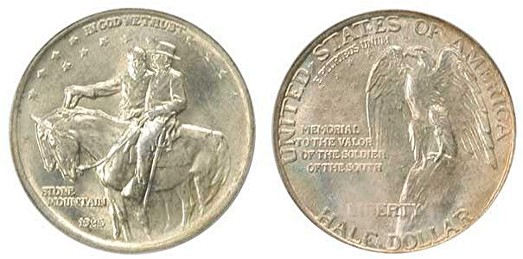
The story behind the coin
In 1923, a sculptor named Gutzon Borglum climbed the face of Stone Mountain, a vast dome of granite outside Atlanta, and began carving the head of Robert E. Lee into the rock. The plan was enormous: a Confederate memorial cut directly into the mountainside. The plan was also broke.
Carving a mountain is expensive, and the Stone Mountain Confederate Monumental Association — the private group behind the project — ran short of money fast. Their solution was unusual and clever. They asked Congress to authorize a commemorative coin they could sell to the public at a markup, with the proceeds funding the carving. On March 17, 1924, President Coolidge signed the bill. It authorized up to 5,000,000 half dollars.
The coin was meant to do two jobs at once: honor "the soldier of the South," and quietly funnel the difference between its 50-cent face value and its $1.00 sale price into the carving fund. This was the standard machinery of early U.S. commemoratives — Congress let a private group buy the coins at face value, and the group sold them at a premium to anyone who'd pay. The Mint produced the coins; the cause kept the spread.
It was also, by 1925, a deeply political object. The bill's original language tied the coin partly to the memory of the recently deceased President Warren Harding, but Coolidge had that reference struck. And the subject itself — a monument to the Confederacy, carved in the decade the second Ku Klux Klan was reborn near that very mountain — meant the coin was contested from the start. The story below is the documented history of the coin and its campaign; the meaning of the monument it funded remains argued over to this day.