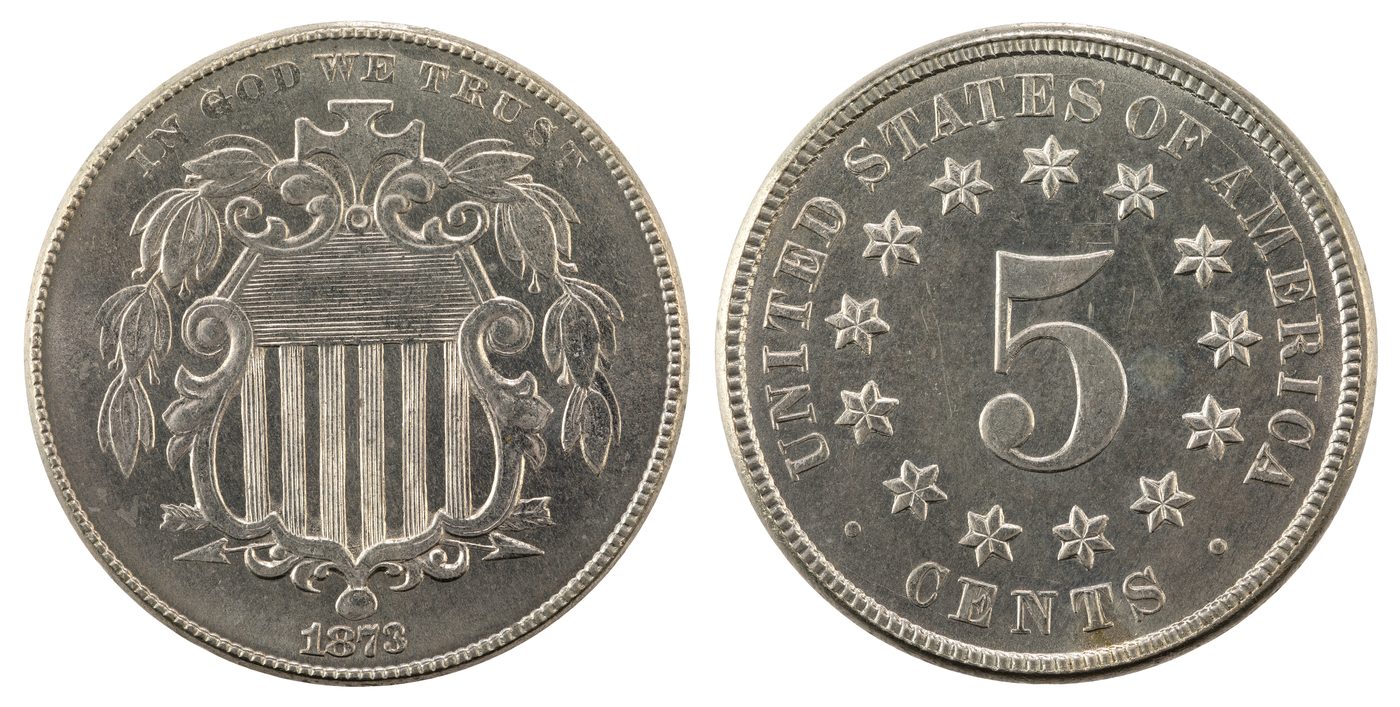
The story behind the coin
During the Civil War, Americans stopped trusting paper and started hoarding metal. Gold and silver vanished from tills almost overnight. By the time the fighting ended in 1865, everyday change had been replaced by a patchwork of merchant tokens and flimsy five-cent "fractional currency" notes — paper worth a nickel.
The country needed a real five-cent coin again, and it needed one that nobody would bother to hoard. The answer was nickel — the metal — alloyed with copper. It was cheap, hard, and useless to melt down for profit. It also had a powerful champion: industrialist Joseph Wharton, who controlled most of the nation's nickel mining and lobbied hard for coins made of the stuff. Congress obliged with the Act of May 16, 1866, authorizing a five-gram piece of 75% copper and 25% nickel.
That coin was the first five-cent piece Americans ever called a "nickel." (The old silver five-cent piece was the half dime, and the two coins jingled in pockets side by side for years.) But the very first design — with a fan of rays sprayed between the stars on the back — fought the coining press from the start. The dies cracked; the high points wouldn't fill. So in early 1867, the Mint simply removed the rays. That stripped-down version — the Shield Nickel Without Rays — is the coin on this page, and it ran from 1867 all the way to 1883.