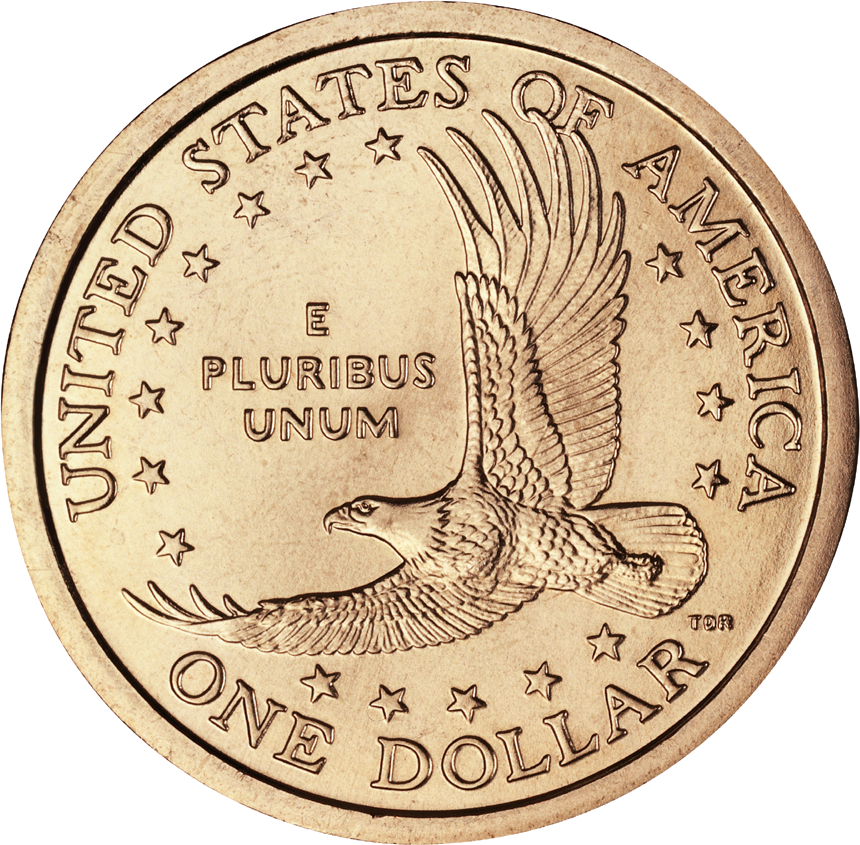
The story behind the coin
The United States had a dollar-coin problem, and it was self-inflicted.
The previous attempt — the Susan B. Anthony dollar of 1979 — was almost exactly the size and color of a quarter. Cashiers fumbled it, the public hated it, and the Mint stopped striking it for circulation after barely a year. But vending machines and transit systems had quietly come to rely on dollar coins, and by the mid-1990s the Treasury's stockpile of Anthony dollars was running low. The government needed a new dollar fast.
Congress answered with the United States $1 Coin Act of 1997. The new coin had to be the same size as the Anthony dollar — so existing vending machines would still take it — but it had to look and feel completely different. The fix was color and edge: a copper core wrapped in manganese brass to give it a warm golden tone, and a smooth, plain edge instead of the quarter-like reeding. You would know it by sight and by touch, even in a pocket.
Then came the harder question: whose face goes on it? Treasury Secretary Robert Rubin convened a nine-member design committee. A public poll run by the General Accounting Office actually favored the Statue of Liberty, 65 percent to 27. The committee chose Sacagawea anyway — the Shoshone teenager who guided Lewis and Clark across the continent, carrying her infant son the whole way. It was a deliberate, modern choice: the first circulating U.S. coin to honor a Native American woman, depicted not as a symbol but as a real person.