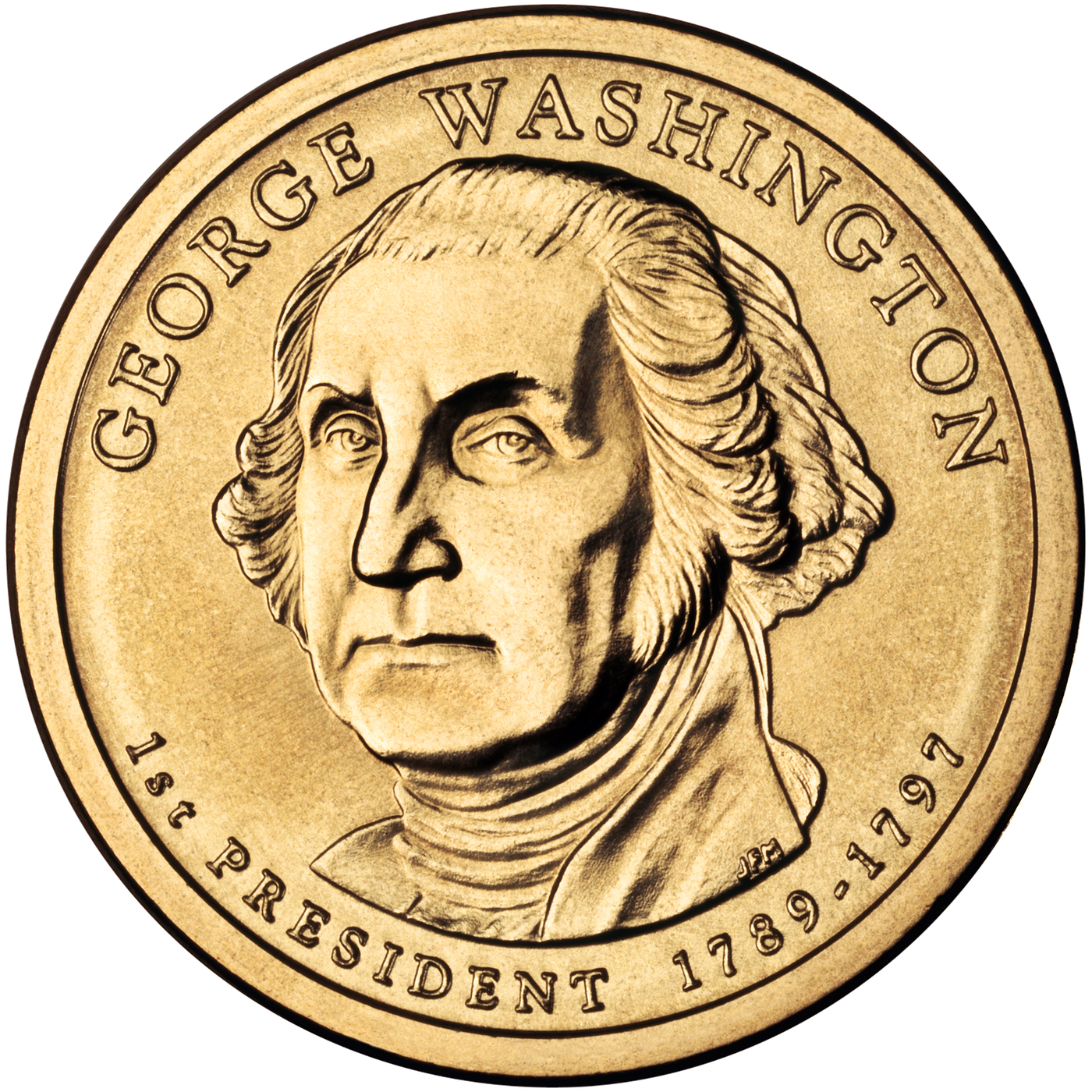
The story behind the coin
In 2005, Congress looked at a hit and tried to bottle it twice.
The hit was the 50 State Quarters program. A new design every few weeks had turned spare change into something people checked, sorted, and collected — and it minted real demand for an ordinary coin. Lawmakers wanted that magic again, but with a harder problem to solve: the dollar coin. America had tried to replace the paper dollar twice — first with the 1979 Susan B. Anthony dollar, then the 2000 Sacagawea "golden dollar" — and both times the public shrugged. The coins piled up; the bill stayed in wallets.
So the Presidential $1 Coin Act, signed by President George W. Bush on December 22, 2005, bet that changing portraits would pull the dollar coin into daily use. The plan: honor every deceased president, four per year, in the order they served — the same rolling-design trick that worked for the quarters. The first coin, George Washington, was released on February 15, 2007, near his birthday.
It did not work. People still didn't want a dollar coin, no matter whose face was on it. But the Mint kept striking them by the hundreds of millions because the law required four new presidents every year. By mid-2011, more than 1.25 billion unspent dollars had accumulated in Federal Reserve vaults — an NPR Planet Money investigation put the waste in the hundreds of millions of dollars, since each coin cost roughly 30 cents to make. On December 13, 2011, the Treasury pulled the plug: it stopped making Presidential dollars for circulation and finished the series — through Ronald Reagan in 2016 — for collectors only.
That is the strange charm of this coin. It is one of the most-produced and least-used coins in U.S. history at the same time. You can find a 2007 Washington in pocket-change quality for a dollar — yet it is also a genuine artifact of a government program that failed in public and kept running by law.