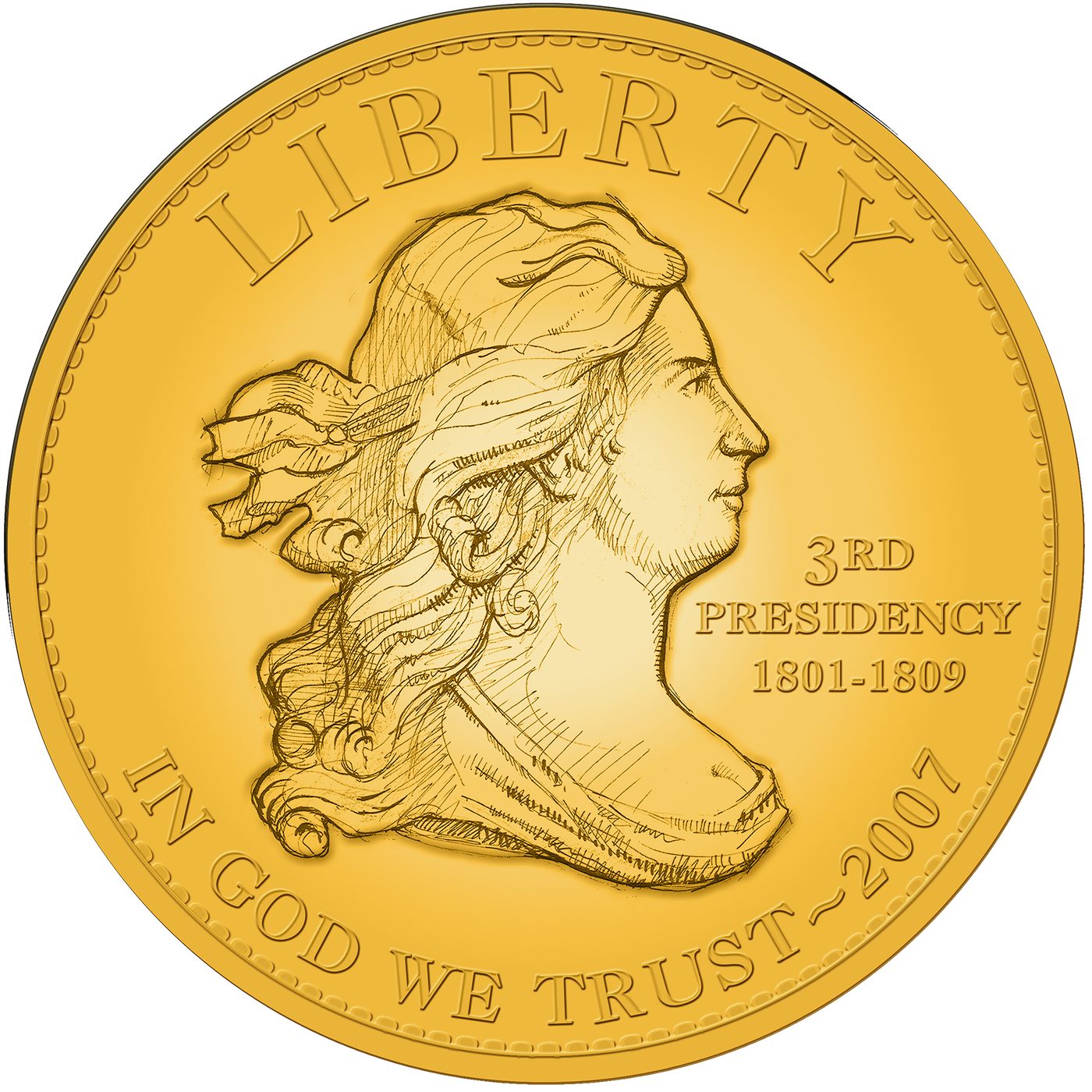
The story behind the coin
For most of American history, the women who shaped the White House left almost no mark on its money. Presidents got the coins. Their wives got footnotes.
That changed with a single law. The Presidential $1 Coin Act of 2005, signed by President George W. Bush on December 22, 2005, launched the well-known Presidential dollar program — a new circulating dollar for each deceased president, four a year, in office order. But the same act did something quieter and far more unusual. For every president honored on a dollar, the Mint would also strike a half-ounce gold coin honoring his spouse.
It was the first time the U.S. Mint ran a consecutive series of coins featuring real women — First Lady after First Lady, in the order their husbands served. Martha Washington and Abigail Adams led the way; the first two coins went on sale together on June 19, 2007.
Then the program hit a problem the law had to plan for: not every president brought a wife to the White House. Jefferson was a widower for nineteen years before he took office. Jackson's wife Rachel died weeks after his election. Van Buren had been a widower since 1819. Buchanan never married at all. Chester Arthur lost his wife before he became president. The statute had an answer ready — when a president served without a First Lady, his gold coin would show an emblematic Liberty taken from a circulating coin of that president's era, with a reverse drawn from his own life.
That fix produced the series' biggest surprise, which we'll get to.