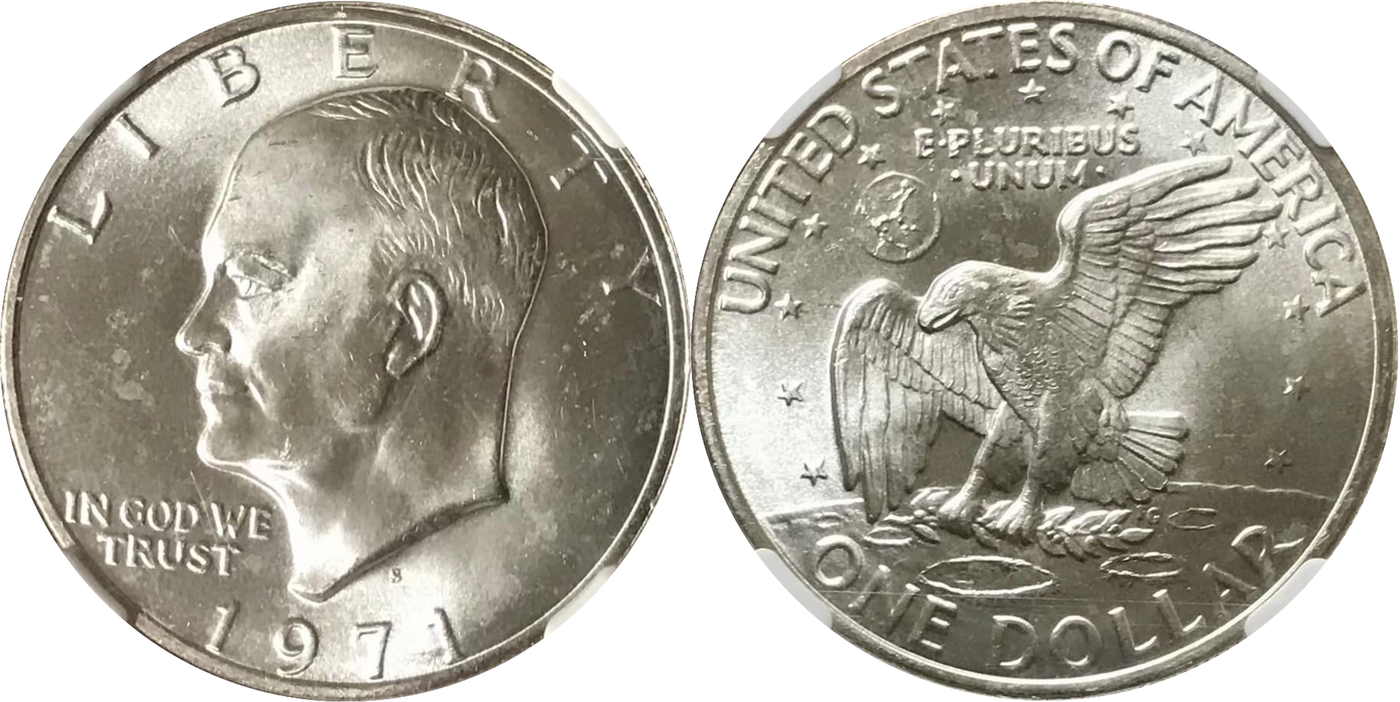
The coin the Mint promised to destroy
In late 1970, the United States went looking for a new dollar. It had not struck a circulating one since the Peace dollar ended in 1935. When Dwight D. Eisenhower — wartime supreme commander, two-term president — died in March 1969, Congress had its subject. President Richard Nixon signed the coin into law on December 31, 1970, tucked into a bank-holding bill, and the Mint had to move fast.
Before a new coin runs by the millions, the Mint makes trial strikes — test pieces that prove a given pairing of dies (the hardened steel stamps that carry the design), collars (the ring that shapes the rim), and blanks will actually produce a clean coin on a high-speed press. On Monday, January 25, 1971, at 11:00 a.m. in Philadelphia, those first Eisenhower trial strikes were made. Mint Director Mary T. Brooks invited the press to watch. A standing Trial Strike Committee oversaw the work, and the Mint's position was plain: the trial pieces would be destroyed.
Here is the twist. Collectors have since found coins — struck in San Francisco with an "S" mint mark — that match the original, taller version of the design Eisenhower's coin was supposed to wear. Three are known. They are the prototypes the Mint never meant to leave the building. One surfaced in 2008, a second in 2010, a third in 2013.