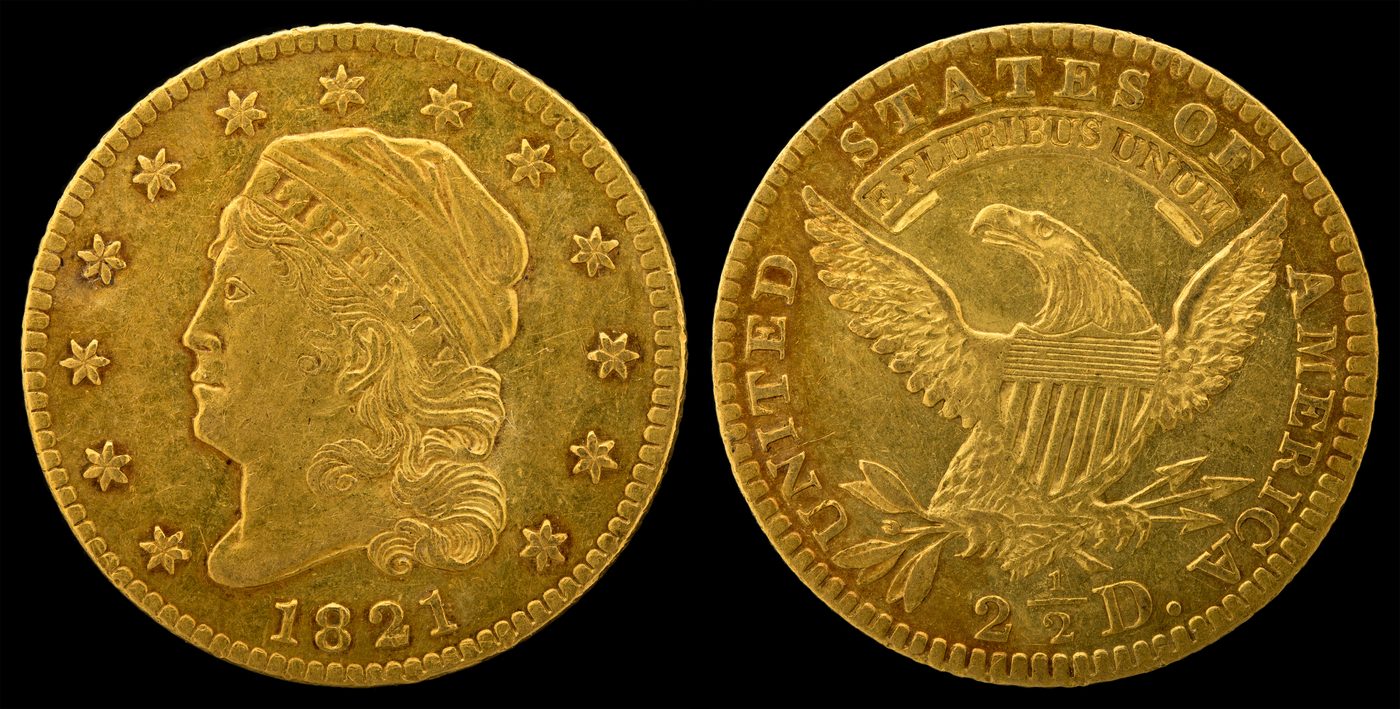
The coin that disappeared
Picture a gold coin the size of a modern dime, worth two and a half dollars in a year when that bought a week's groceries. The U.S. Mint struck a run of them across a quarter-century — and then the world quietly destroyed almost all of them.
The Capped Head quarter eagle ($2.50 in gold) was doomed by arithmetic. The Coinage Act of 1792 fixed the official value of gold to silver at 15 to 1. But by the 1820s, gold was worth closer to 15.5 or 15.6 to 1 in Europe. That gap sounds tiny. It wasn't. It meant the gold inside an American quarter eagle was worth more than its face value — so anyone holding one could melt it, sell the metal abroad, and pocket the difference.
That is exactly what happened, at industrial scale. A bullion broker in 1831 reportedly melted some 40,000 U.S. half eagles in Paris in a single transaction. American gold coins, never common to begin with, all but vanished from the country's pockets. The quarter eagle was the smallest, scarcest victim of that flow.
So the Mint made these coins, and the market unmade them. That is the whole story of why a coin struck by the thousands is now counted in the dozens — and why collectors a century and a half later treat finding one as a genuine event.