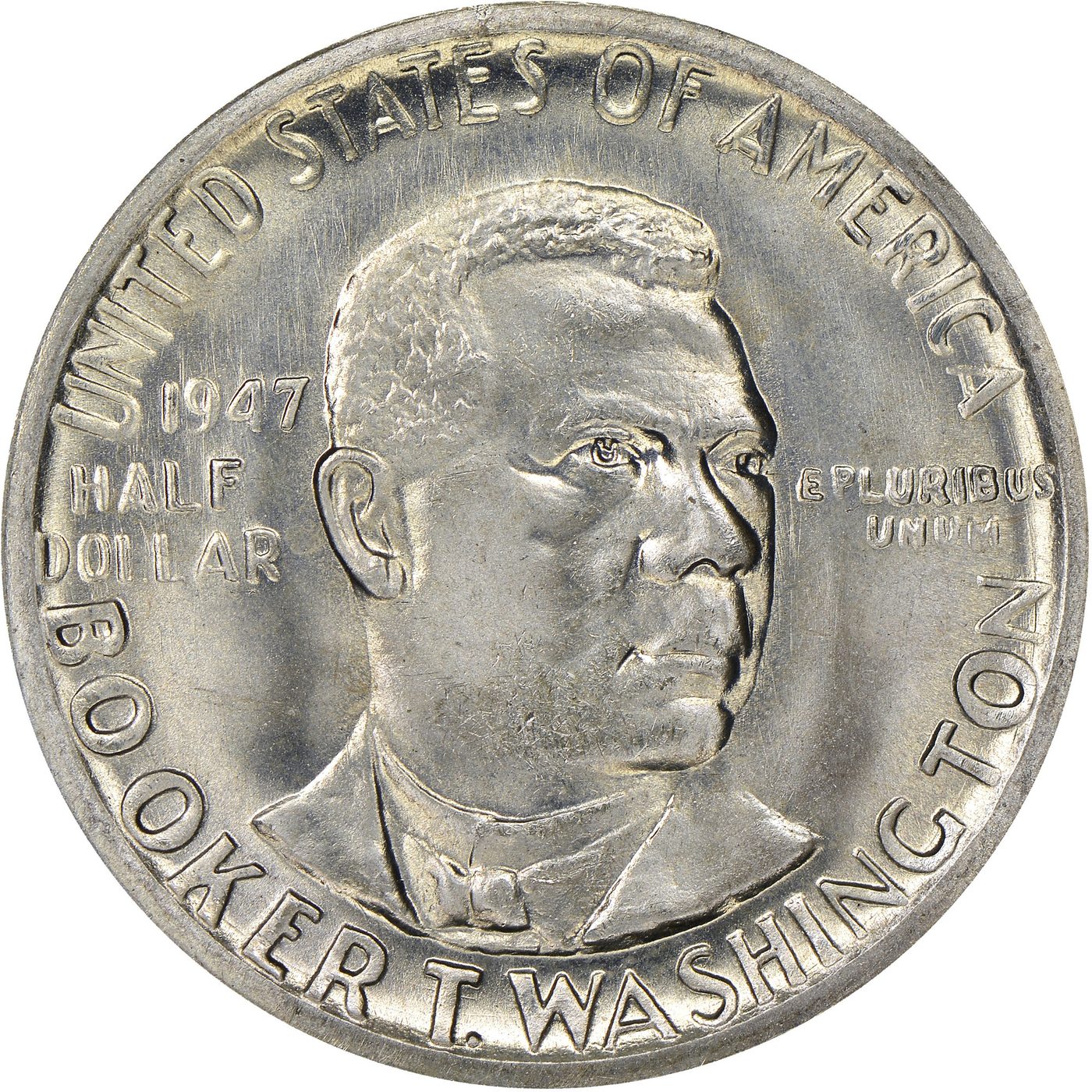
The story behind the coin
Booker T. Washington was born enslaved in a Virginia cabin in 1856. He died in 1915 the most famous Black educator in America — founder of the Tuskegee Institute, adviser to presidents, author of Up From Slavery. Three decades after his death, Congress put his face on a coin. He became the first Black American ever honored on United States money.
The push came from S.J. Phillips, a former Tuskegee student. Phillips wanted to buy and preserve Washington's birthplace in Franklin County, Virginia, as a memorial and school. To raise the money, he turned to a uniquely American instrument: the commemorative half dollar. These were special-issue coins Congress authorized for an anniversary or a cause, sold to the public above face value, with the markup — the surcharge — going to the sponsor. On August 7, 1946, Congress authorized up to five million Booker T. Washington half dollars to fund the birthplace memorial.
The symbolism was real and the cause was worthy. What followed was a cautionary tale. The coin would limp along for six years, sell a fraction of what was authorized, and help convince Congress to shut the entire commemorative program down.