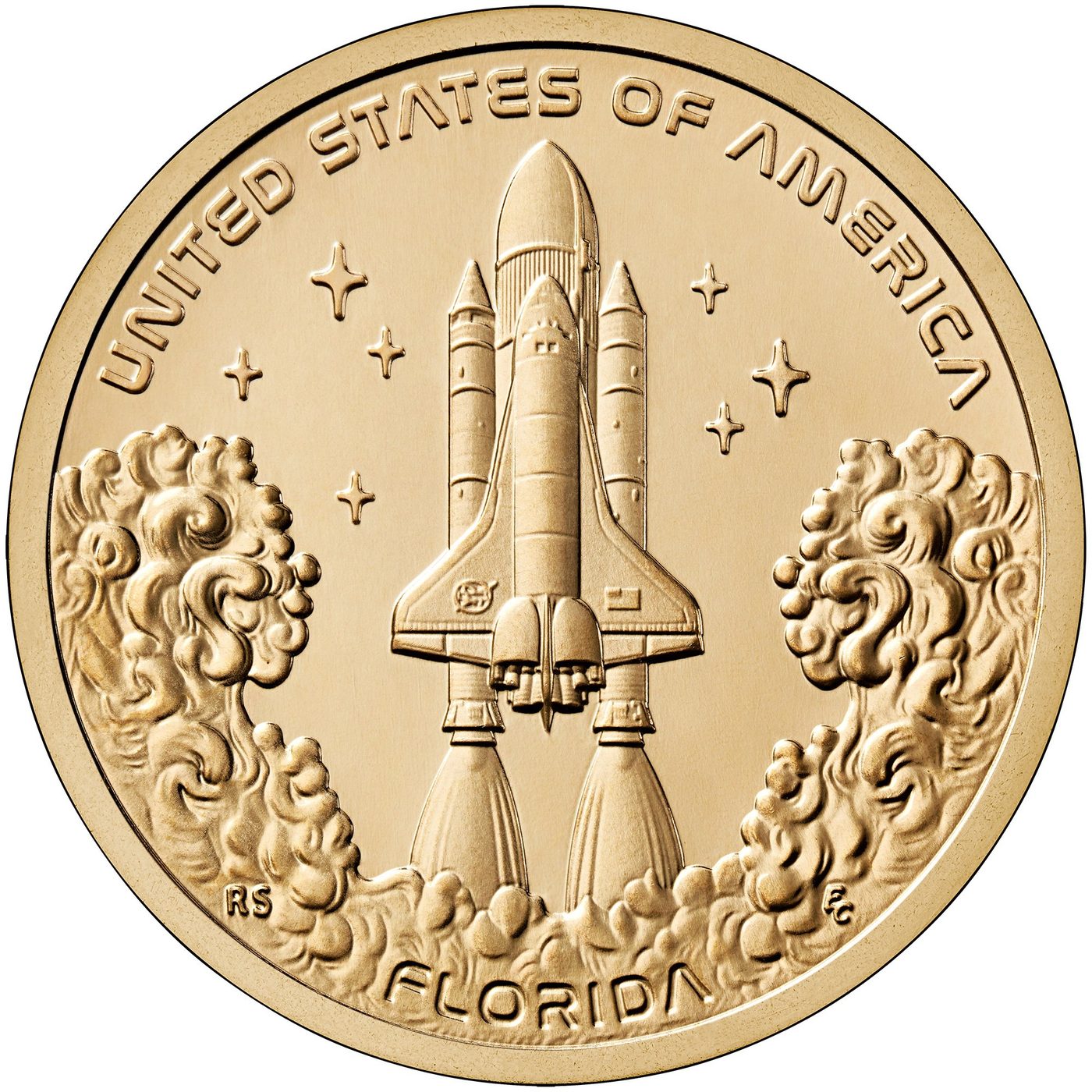
The story behind the coin
Picture a dollar coin you will never find in your change, never get back from a vending machine, never fish out of a tip jar. It exists — by the millions — but the U.S. Mint sells it only to people who ask for it. That is the American Innovation dollar, and the strangeness is the point.
The program began as an act of Congress. The American Innovation $1 Coin Act passed both chambers in June 2018 and was signed into law on July 18, 2018. It told the Treasury to spend the next fourteen years striking dollar coins — four a year — each one honoring an invention, an innovator, or a group of innovators from a different state, territory, or the District of Columbia. The coins are released in the order the states ratified the Constitution or joined the Union, so the series reads like a slow march through American history: Delaware first, then Pennsylvania, New Jersey, Georgia, and onward.
By design the run is finite and complete: one coin for each of the 50 states, plus Washington, D.C., and the five U.S. territories — 56 designs in all, rolling out from 2019 through 2032, on top of a single introductory coin struck in 2018.
So why make a dollar nobody spends? Because the dollar coin had already lost that fight. America has tried for decades to get people to carry dollar coins — the Susan B. Anthony, the Sacagawea, the Presidential dollars — and Americans keep reaching for the paper note instead. Rather than mint hundreds of millions of coins to sit unwanted in Federal Reserve vaults, the Treasury made the Innovation dollar a collector coin from day one. It is struck on the same golden planchet as those earlier dollars, but it is sold only at a premium, in rolls, bags, and sets, straight from the Mint. The story it tells — American ingenuity, state by state — is the product.