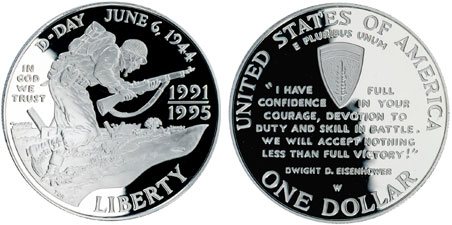
The story behind the coin
By the early 1990s, the men who had stormed the beaches of Normandy were turning seventy. The country wanted to thank them while they were still here to be thanked. So Congress did something coins do well: it turned an anniversary into a small object of metal that ordinary people could hold.
The result was the World War II 50th Anniversary Commemorative Coins Act — Public Law 102-414 — which President George H. W. Bush signed on October 14, 1992. It authorized three coins: a clad half dollar, this 90% silver dollar, and a gold five-dollar piece. All three carry the same unusual dual date, 1991–1995, instead of a single year. That span marks the fifty years from America's entry into the war in 1941 to the surrender of Japan in 1945, counted forward half a century.
Here's the quiet trick the date plays. The coins were actually struck and sold in 1993 — but you will never find "1993" on one. The Mint stamped them with the four-year commemorative window instead. To a newcomer it reads like a mistake. To the people who wrote the law, it was the whole point: this wasn't a coin for one moment, but for an era the country was determined not to forget.
Sales opened on May 28, 1993. The timing was deliberate — close enough to the run-up to the 50th anniversary of D-Day the following June that buying one felt like joining a national act of remembrance.