The story behind the coin
After the Civil War, American silver had vanished from circulation. To pay for the war the government had printed paper money — "greenbacks," backed by promise rather than metal — and suspended specie payment, meaning you could no longer walk into a bank and trade a paper note for gold or silver coin. When that happens, people hoard the real metal. By the late 1860s the small change of daily life wasn't coins at all but fractional currency — flimsy paper notes worth a few cents each, easy to lose and easy to fake.
The Mint wanted those coins back. But there was a trap: if a silver coin held more silver than its face value during a money panic, people would just melt it. So engineers and officials floated a fix. Make new silver coins that were deliberately lighter — worth a bit less than their stamped value — so no one would ever profit by melting them. Coins like that could safely circulate and quietly redeem the hated paper. The Mint stamped these trial pieces with a single word so no one would mistake the idea: STANDARD.
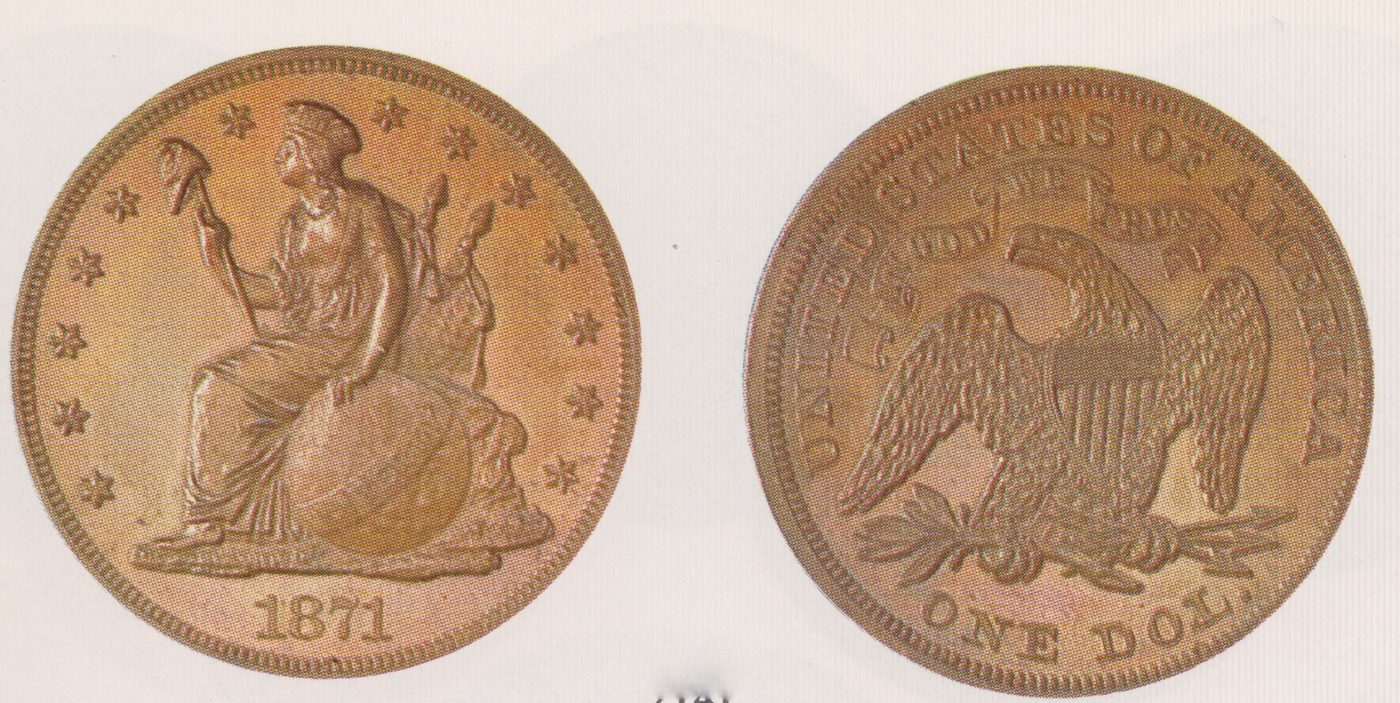
This is the Standard Silver pattern series — a sprawling run of experimental dimes, quarters, half dollars, and dollars struck from 1869 onward. A pattern is a trial coin: struck to test a design or a recipe before any mass production begins, never meant to be spent. More than 280 Standard Silver patterns were made across the series, and the Mint sold many of them straight to collectors. The 1871 dollar you see here is the crown of that experiment — the largest denomination, carrying the most ambitious face. Congress never adopted the plan. The lighter subsidiary silver that finally redeemed the fractional notes didn't arrive until the 1870s under different laws. The Standard Silver dollar was a road the country chose not to take.