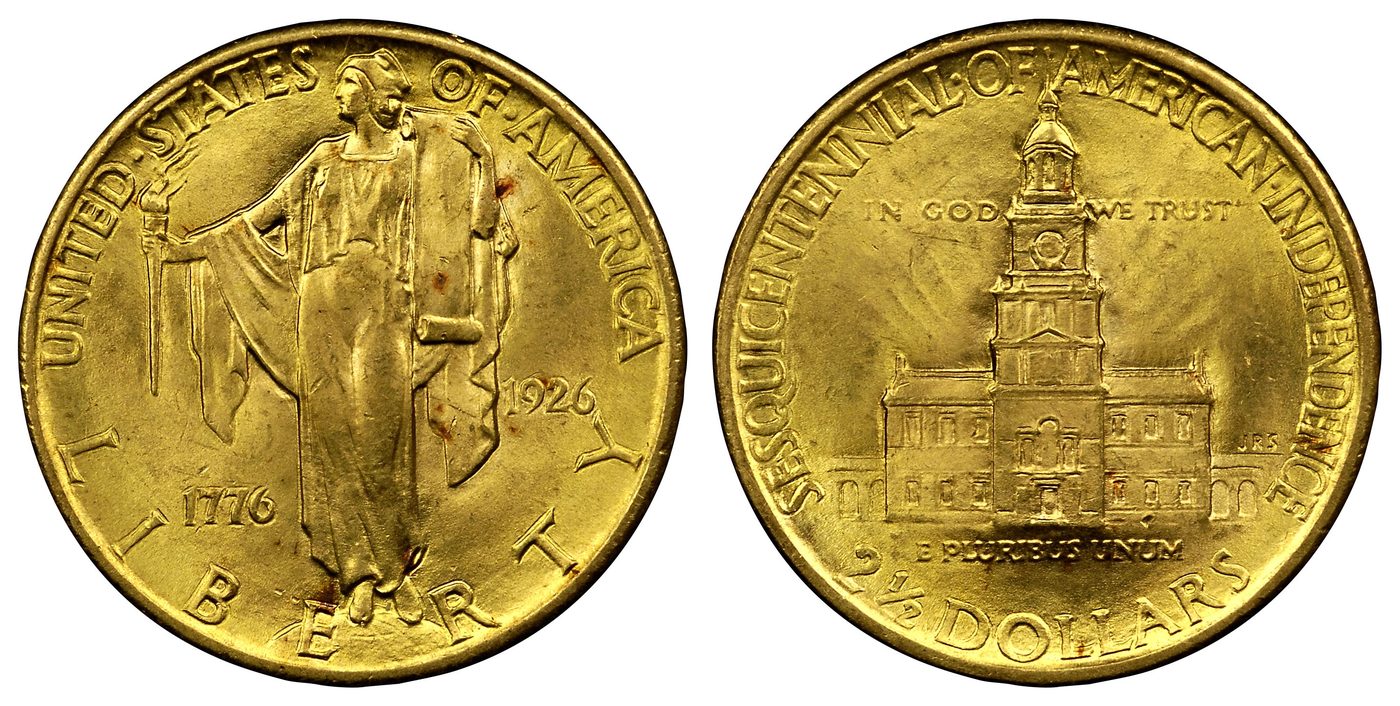
The story behind the coin
In the summer of 1926, Philadelphia threw itself a party for the ages. The Sesquicentennial International Exposition marked 150 years since the Declaration of Independence was signed a few blocks away. There were fairgrounds, a towering replica Liberty Bell strung with lights, and a souvenir nobody quite expected: a tiny gold coin.
Congress had authorized it the year before, in the Act of March 3, 1925, alongside a companion silver half dollar. The gold piece was a quarter eagle — the old name for a $2.50 gold coin, a denomination the Mint had retired from regular production in 1915. Bringing it back, in gold, for a birthday, was a statement: this anniversary deserved the good metal.
The problem was the price. At $4 apiece — well above the $2.50 of gold each coin contained — the Sesquicentennial quarter eagle asked buyers to pay a steep premium for a keepsake during a year when the novelty of commemoratives was already wearing thin. They didn't sell.
The Philadelphia Mint struck 200,226 of them. When the Exposition closed and the unsold coins came back, the count was brutal: 154,207 returned to the furnace and melted. Only about 46,019 survived in collectors' hands. It was the last gold commemorative the United States would issue until 1984 — a gap of nearly six decades.