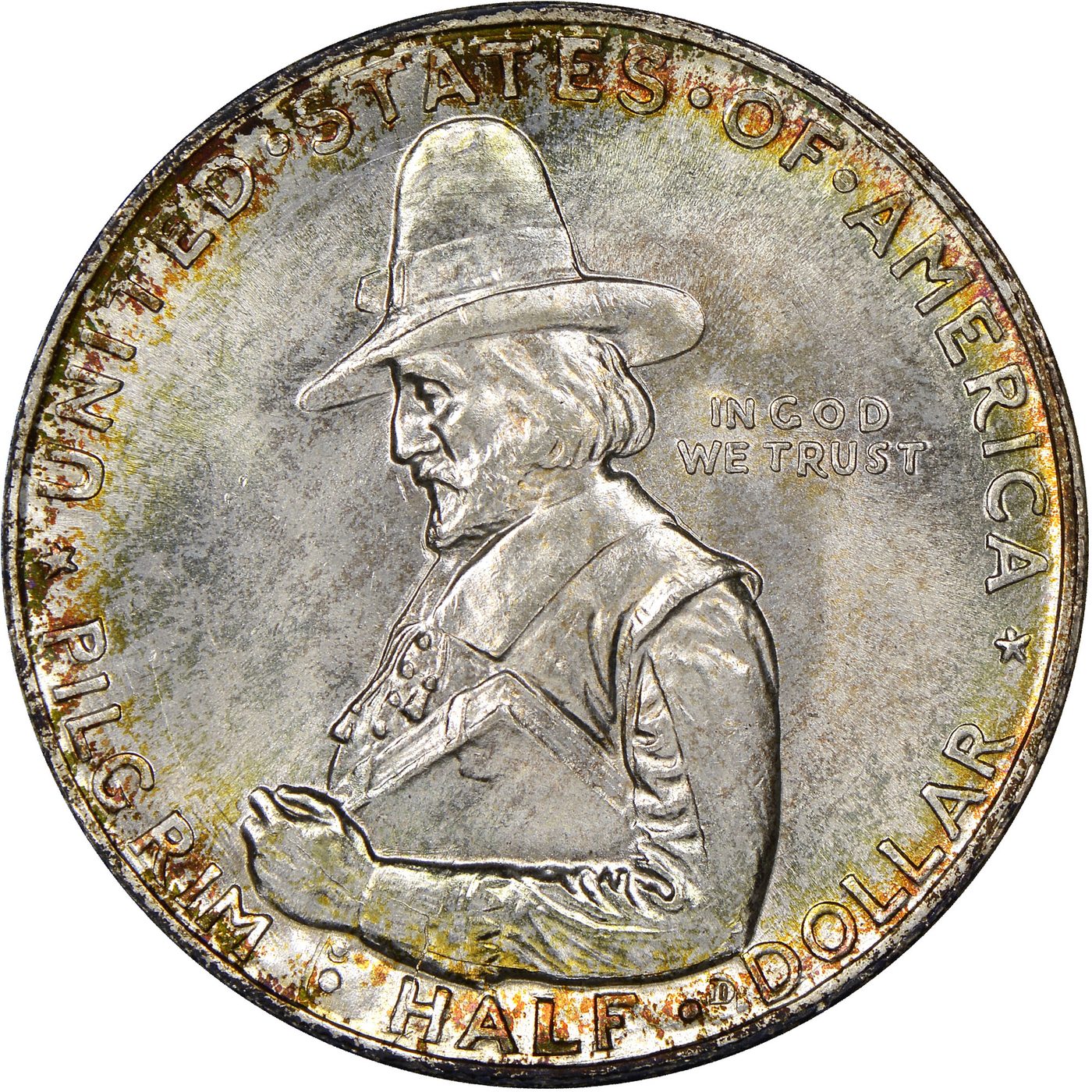
The story behind the coin
In 1620, a leaky merchant ship called the Mayflower dropped about a hundred English settlers on the coast of what is now Massachusetts. Three centuries later, Plymouth wanted to throw a party — and pay for it.
So Massachusetts congressman Joseph Walsh introduced a bill, and on May 12, 1920, President Woodrow Wilson signed it into law. It authorized up to 300,000 silver half dollars to mark the Pilgrim Tercentenary — tercentenary simply meaning the 300th anniversary. The coins weren't a gift from the government. The Mint struck them at face value, handed them to the organizers, and the organizers sold them to the public for a dollar apiece. The profit funded the celebration. This was the standard playbook for early U.S. commemoratives: a coin doubling as a fundraiser.
The first year went well. Then came the second year — and the second year is where this coin earns its reputation.