Designer
Cyrus E. Dallin
The Utah-born sculptor who spent a career carving Native America — and once put a Pilgrim on a silver coin.
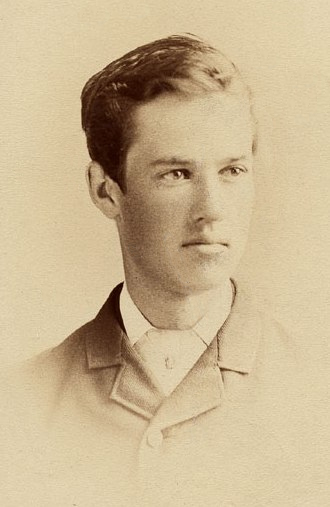
He grew up in a Utah mining town, played with Ute and Paiute children, and went on to become one of America's great sculptors of Native subjects. Then, in 1920, the man famous for warriors on horseback was asked to design a coin honoring the Pilgrims.
Who he was
Cyrus Edwin Dallin was born in 1861 in Springville, in what was then Utah Territory — a frontier mining town a long way from any art school. As a boy he played alongside Ute and Paiute children, and that early closeness to Native life shaped almost everything he made later. He would become one of America's most respected sculptors of Native American subjects, and he never stopped insisting their dignity be taken seriously.
The path out of Utah ran through clay. Local mining investors saw promise in the young man's modeling and paid for him to go east. At nineteen he arrived in Boston to train with the sculptor Truman Howe Bartlett, then crossed the Atlantic to study in Paris — at the Académie Julian and under established French sculptors. Paris was where ambitious American artists went to be taken seriously, and Dallin came home with the technical command to match his subjects.
He settled in Arlington, Massachusetts, taught for decades at what is now the Massachusetts College of Art and Design, and worked until late in life. By his death in 1944 he had produced hundreds of works — and, in a detail that says something about the man, he had also competed as an archer at the 1904 Olympic Games, taking a bronze medal in the team event.
The craft
Dallin's reputation rests on bronze, not coins. His signature achievement is a series of four large equestrian sculptures — a mounted Native American figure, returned to across two decades — that traced a single, deepening idea: A Signal of Peace, The Medicine Man, Protest of the Sioux, and finally Appeal to the Great Spirit. The series read, in order, as a people moving from welcome to defiance to a last reaching toward the heavens. It was a quiet argument in bronze about how the country had treated the people who were already here.
Appeal to the Great Spirit (1909) is the one most people have seen, even if they don't know the name. A rider tilts his head back and opens his arms to the sky, reins slack. It has stood in front of Boston's Museum of Fine Arts for more than a century and remains one of the most reproduced works in the museum. Earlier pieces in the series had already won him gold medals in Paris and at the 1904 world's fair in St. Louis — recognition that placed him among the front rank of American sculptors.
So when the Pilgrim Tercentenary Commission needed an artist for its 1620 anniversary coin in 1920, it hired a Boston sculptor at the height of his fame. Coin work was unusual for Dallin — a small, hard-edged medium for a man used to monuments. The difference shows in the story of how the coin came together, and in the marks it carries.
The Pilgrim half dollar
The commission handed Dallin sketches; his job was to turn them into the plaster models a coin is struck from. The result honors the 300th anniversary of the Pilgrims' 1620 landing. The obverse — the heads side — shows Plymouth Colony's Governor William Bradford in his tall hat, a Bible under his arm, head bowed. The reverse — the tails side — carries the Mayflower under full sail.
The coin did not sail through smoothly. James Earle Fraser — himself a great coin designer, the man behind the Buffalo nickel — sat on the federal Commission of Fine Arts and thought the lettering was crude, but by then there was no time to change it. In the back-and-forth, the words "HOLY BIBLE" and Dallin's own initials were dropped from the design. A small "D" for Dallin was added to the obverse, tucked near Bradford's elbow — apparently as an afterthought, and easily mistaken by collectors for a mint mark even though every one of these coins was struck in Philadelphia, which uses no mark at all.
Numismatists have had two centuries of fun at the ship's expense, too: the Mayflower on the coin flies a triangular "flying jib" sail — rigging that hadn't come into use in 1620. A small anachronism on a coin meant to capture a precise historical moment. None of it stopped the coin from becoming a collector favorite and, for many, the unofficial "Thanksgiving coin" of the U.S. commemorative series.
Key facts
- Born
- November 22, 1861 — Springville, Utah Territory
- Died
- November 14, 1944 — Arlington, Massachusetts
- Nationality
- American
- Training
- Boston (Truman H. Bartlett); Paris (Académie Julian)
- Best-known sculpture
- Appeal to the Great Spirit (1909), Museum of Fine Arts, Boston
- US coin
- Pilgrim Tercentenary half dollar (1920–1921)
- Other distinction
- Olympic archery bronze medal, 1904 Summer Olympics
Career milestones
- 1861Born in Springville, Utah Territory
- 1880Moves to Boston to study sculpture with Truman H. Bartlett
- 1890A Signal of Peace — first of his four equestrian works
- 1900Begins decades of teaching at the Massachusetts Normal Art School
- 1904Wins a bronze medal in archery at the St. Louis Olympics
- 1909Appeal to the Great Spirit; gold medal at the Paris Salon
- 1920Designs the Pilgrim Tercentenary half dollar
- 1944Dies in Arlington, Massachusetts, aged 82
Questions about Cyrus E. Dallin
What US coin did Cyrus Dallin design?
Dallin designed the Pilgrim Tercentenary half dollar, struck in 1920 and 1921 to mark the 300th anniversary of the Pilgrims' 1620 landing. It shows Governor William Bradford on the obverse and the Mayflower on the reverse. It is his only widely circulated US coin.
Why is there a 'D' on the Pilgrim half dollar if it wasn't minted in Denver?
The small 'D' is Dallin's initial, not a mint mark — it was added near Bradford's elbow late in the design process. Every Pilgrim half dollar was struck at the Philadelphia Mint, which used no mint mark, so a true Denver coin in this series does not exist.
What is Cyrus Dallin most famous for?
His sculpture, above all 'Appeal to the Great Spirit' (1909), a mounted Native American figure with arms raised to the sky that has stood in front of Boston's Museum of Fine Arts for over a century. It was the last of a four-part series of equestrian works on Native American subjects.
Was Dallin really an Olympic athlete?
Yes. Alongside his sculpting career he competed in archery at the 1904 Summer Olympics in St. Louis and won a bronze medal in the team round.