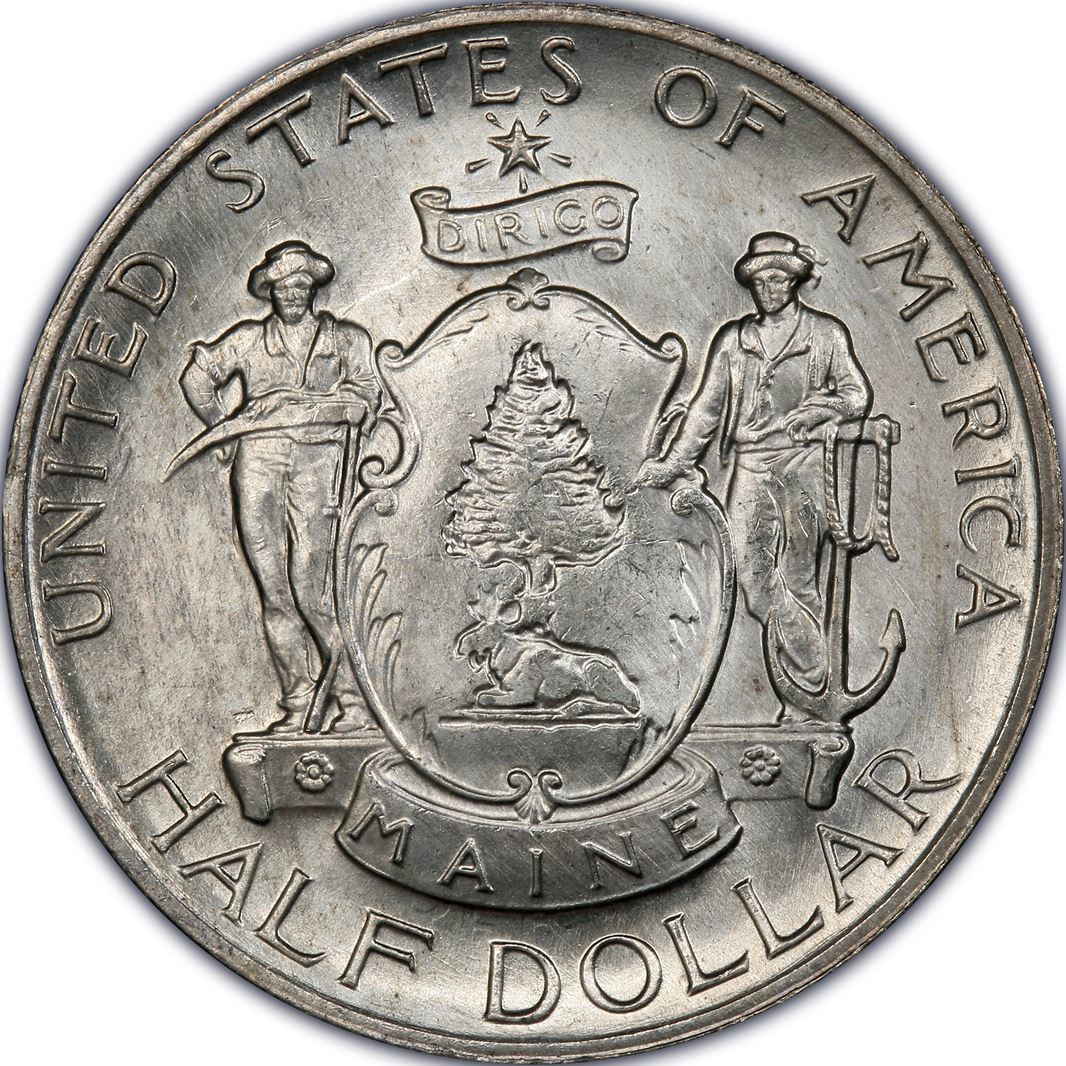
The coin that missed its own party
On March 15, 1820, Maine broke away from Massachusetts and joined the Union as the 23rd state. A century later, Portland threw a centennial celebration to mark the moment — and the state wanted a souvenir worthy of it.
So Maine's congressman, John A. Peters, introduced a bill for a commemorative half dollar. A commemorative is a coin Congress authorizes for a single occasion — not for spending, but for selling to the public to raise money or simply to honor an event. The bill passed both houses without recorded opposition, and President Woodrow Wilson signed it into law on May 10, 1920.
Then came the problem that haunts so many of these stories: time. The designs still had to be drawn, sculpted, approved, and struck. The plaster models weren't approved until July 9 — five days after the celebration the coin was meant to crown. By the time the finished half dollars reached Maine, the party in Portland was already over.