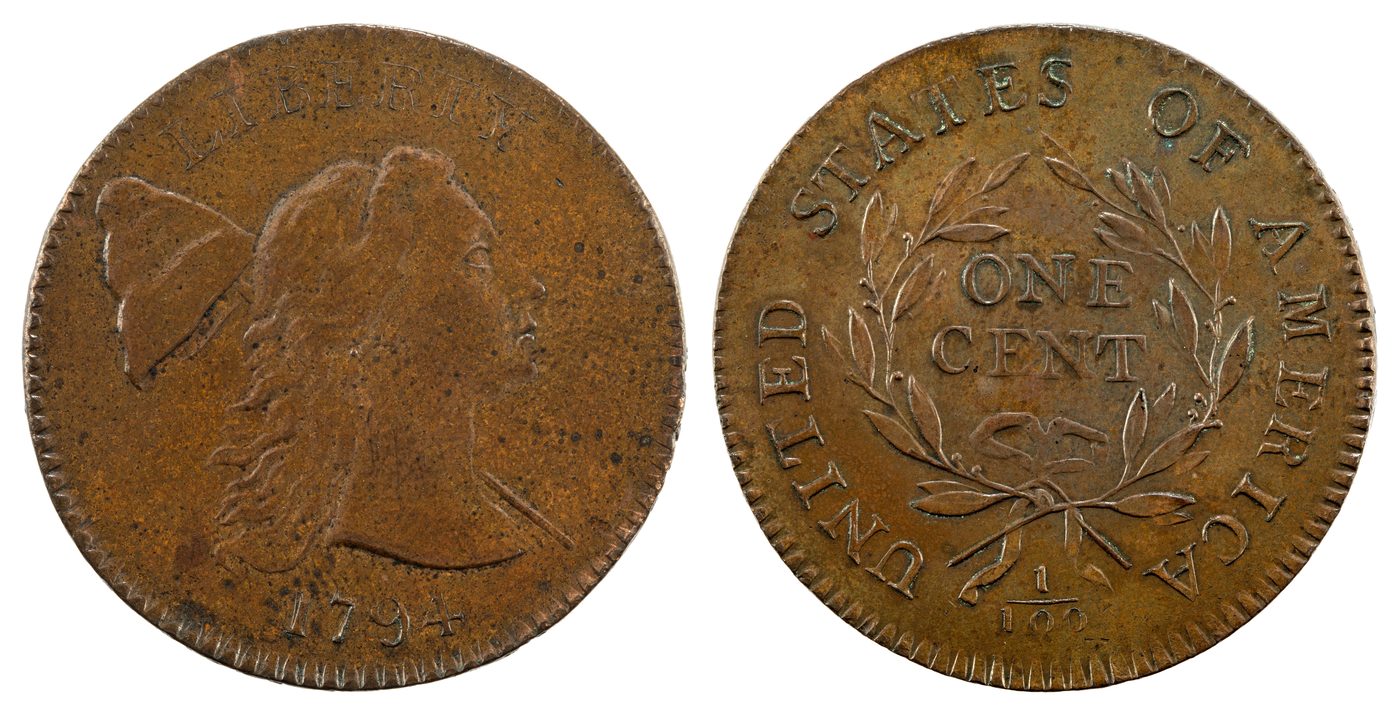
The story behind the coin
The brand-new United States Mint had a problem: nobody liked the pennies.
The young country had a Constitution, a Congress, and almost no coins of its own — people made change with a jumble of Spanish, British, and French money. The Coinage Act of April 2, 1792 was meant to fix that: a national mint in Philadelphia, a decimal dollar, and a humble copper cent at the bottom of it all. But the Mint's first two tries in 1793 both flopped. The Chain cent showed a ring of fifteen links meant to honor the union of the states — to many eyes it looked like a chain of bondage instead. A hasty replacement, the Wreath cent, fared little better.
So in the same year the Mint reached for a third design. The answer came from a young portrait painter named Joseph Wright, and it stuck. He reached for one of the most powerful images in the Western world: the Phrygian cap — a soft, peaked felt cap that ancient Rome placed on the heads of freed slaves to mark them as free. Mounted on a pole behind a profile of Liberty, the cap said, plainly, this is a country of free people. The motif drew on the Libertas Americana medal, engraved in Paris in 1782 by Augustin Dupré from ideas supplied by Benjamin Franklin.
These were big coins — pure copper, about 29 millimeters across, heavier than a modern quarter. A hundred of them, by law, made a dollar, and the Mint stamped that promise onto the edge of the early ones: ONE HUNDRED FOR A DOLLAR. The design ran from 1793 through 1796 — longer than both failed predecessors combined — and set the look of American copper for years to come.
Then tragedy struck. The yellow fever epidemic that emptied Philadelphia in 1793 killed Wright and his wife that autumn. He died most likely before any real number of his cents had circulated — never getting to spend the coin he created. The job of Chief Engraver passed to Robert Scot, who carried the design forward and quietly simplified it for the realities of mass production.