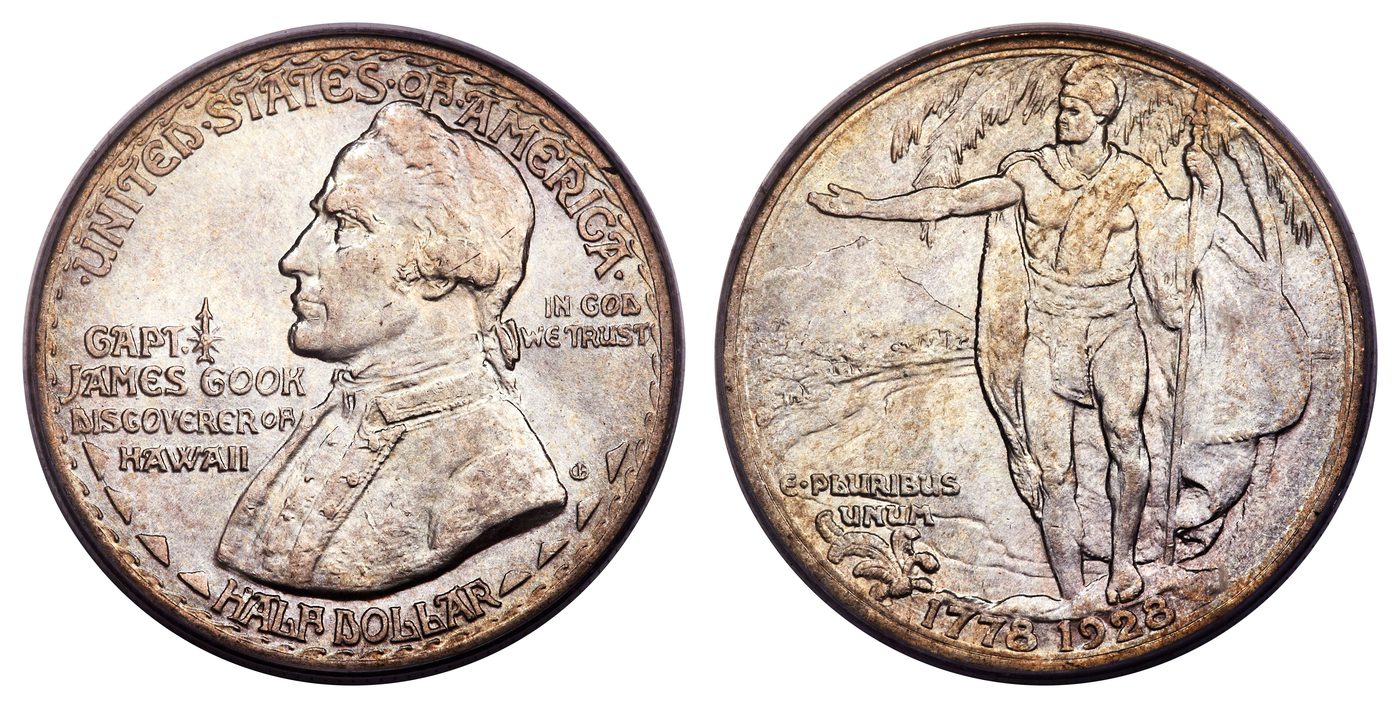
The coin nobody could get
Picture a coin so scarce that the people most eager to own it could not buy one. In the fall of 1928, the Bank of Hawaii put a new silver half dollar on sale at $2 each — twice the asking price of any commemorative half dollar that had come before. Collectors grumbled. Hawaii bought them anyway. Within weeks the supply was gone.
The reason was simple arithmetic. The Mint struck only 10,008 of these coins, the smallest production run of any classic U.S. commemorative design. (A commemorative is a coin made to honor an event rather than to circulate as money — sold at a premium, with the markup going to a cause.) Subtract the eight coins held back for the 1929 Assay Commission — the annual federal panel that tested the year's coinage for correct weight and fineness — and just 10,000 were ever offered to the public.
The occasion was the 150th anniversary — the sesquicentennial — of Captain James Cook reaching the Hawaiian Islands in January 1778. Cook was the first European to make landfall there, and his arrival opened the islands to the outside world. By 1928 Hawaii was a U.S. territory looking to mark the moment with something lasting.
The bill sailed through Congress without a fight. Territorial delegate Victor S. K. Houston introduced it in December 1927, and President Calvin Coolidge signed it into law on March 7, 1928. The Cook Sesquicentennial Commission of Hawaii would buy the coins from the Mint at face value and resell them, with the profit funding the celebration — the standard bargain behind every commemorative of the era.