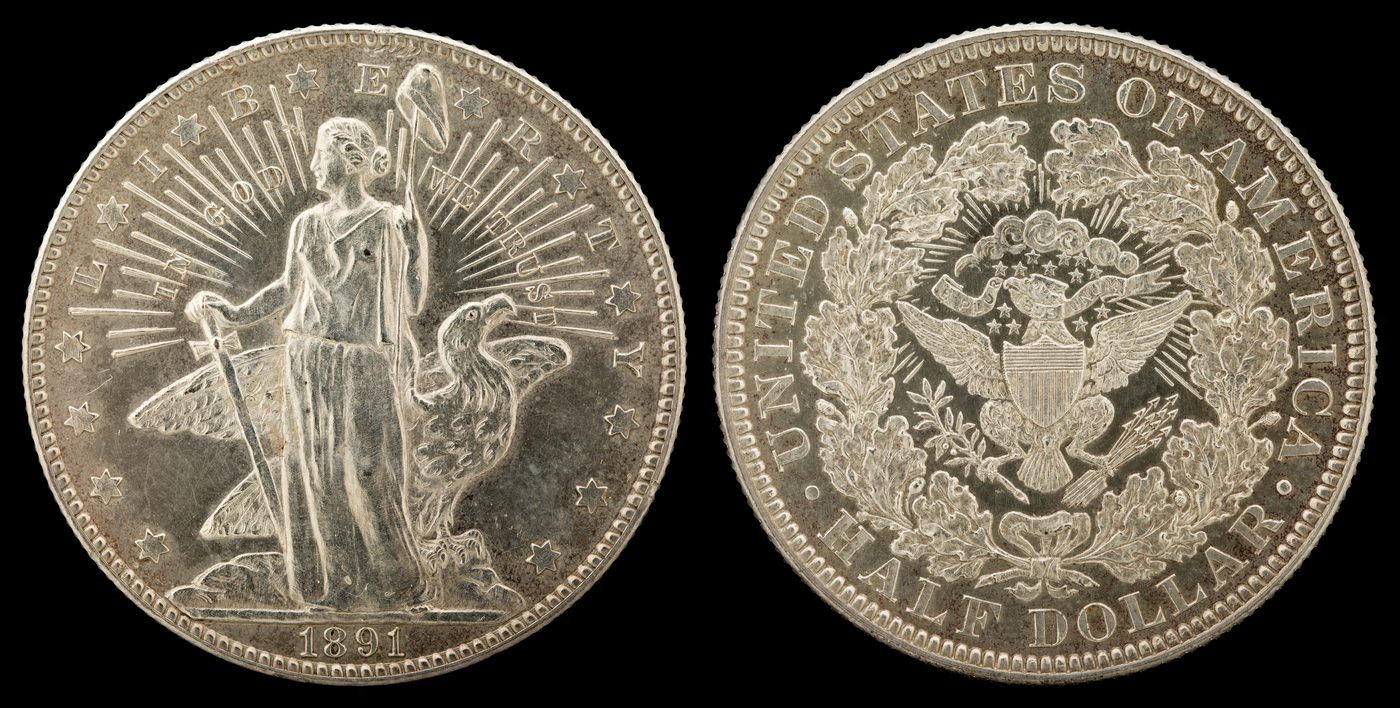
The coins that lost
Before a coin reaches your hand, it survives a quiet competition. For most of the 19th century the U.S. Mint in Philadelphia ran that competition with hammer and die — striking trial fifty-cent pieces to see how a new portrait, a new motto, or a new metal would actually look and feel. Most never made it. They were rejected, set aside, and almost never spent.
Collectors call them patterns. A pattern is a proposed coin, struck in tiny numbers to test a design, a denomination, or an alloy before the Mint commits to making millions. The half dollar — fifty cents, a serious sum when a day's wage might be a dollar — drew an enormous share of that experimenting. Decade after decade, the Mint kept asking the same question: what should America's fifty-cent piece look like? The answers it threw away fill catalogues.
Here's the part that makes collectors lean in. These weren't all honest experiments. Some were struck on the quiet, for the private benefit of the very Mint officials who ran the place — and decades later the government tried to declare the whole class of them illegal to own.