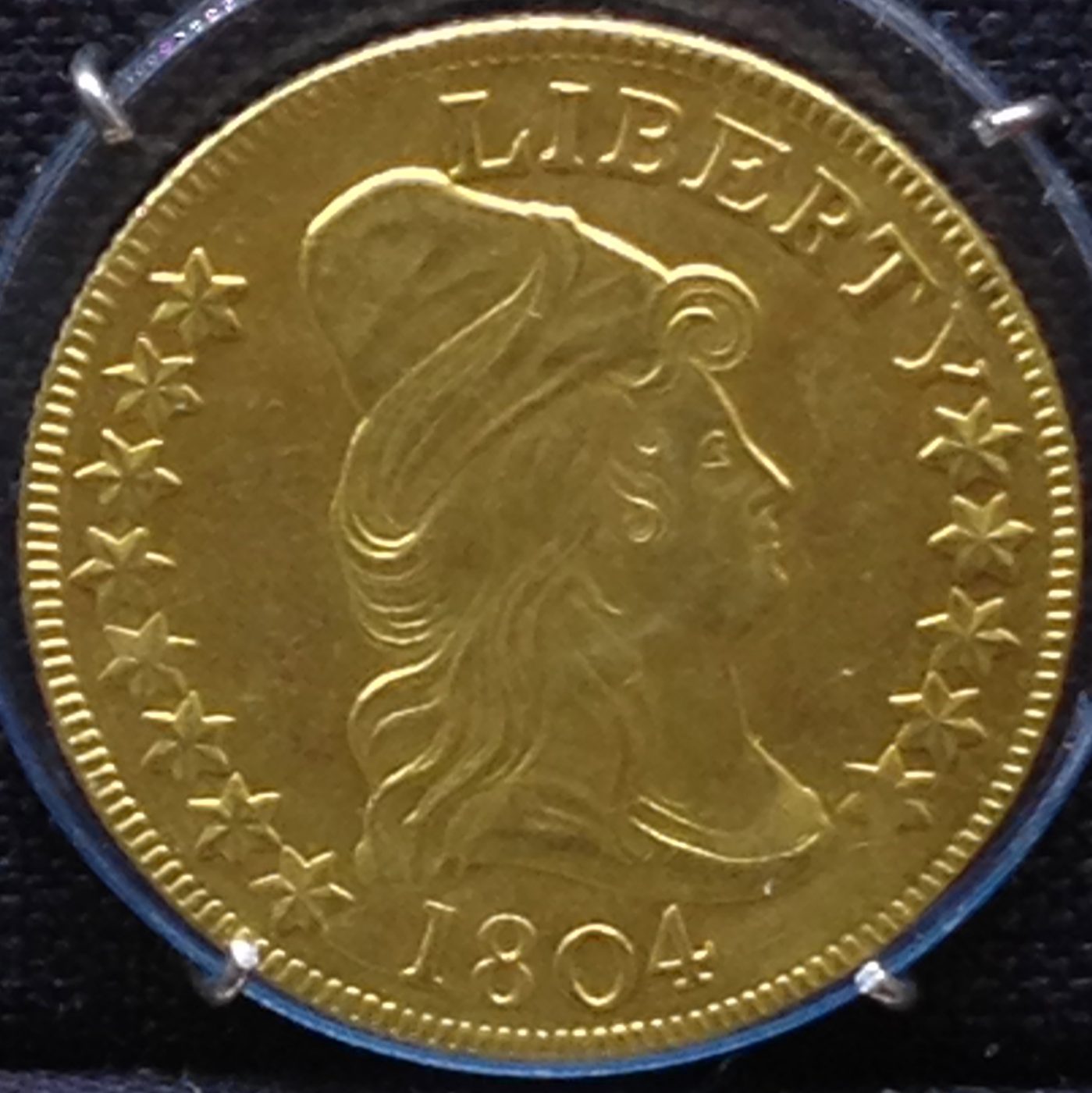
The story behind the coin
In the mid-1830s, the U.S. government needed gifts fit for kings — literally. President Andrew Jackson's administration was chasing trade treaties across Asia, and the chosen envoy, a New Hampshire merchant named Edmund Roberts, was sailing to the courts of Siam, Muscat, Japan, and Cochin-China. The plan was to dazzle each ruler with a boxed set of brilliant United States coins, one of every kind then in use.
There was a problem. The set was meant to show "specimens of each kind now in use" — and the Mint's own records said the silver dollar and the $10 gold eagle hadn't been coined since 1804. So in 1834 and 1835, Mint workers quietly made some, and dated them 1804 to match the record. This is the same backdated project that produced the legendary 1804 silver dollar. The $10 version is its gold twin: the 1804 Plain 4 Eagle.
It is one of the strangest objects in American money — a coin made to look like a relic of a year it was never struck in, created not to spend but to impress a foreign court. Only four were ever made. Three survive. One of those three sat in a box in Bangkok for over a century.