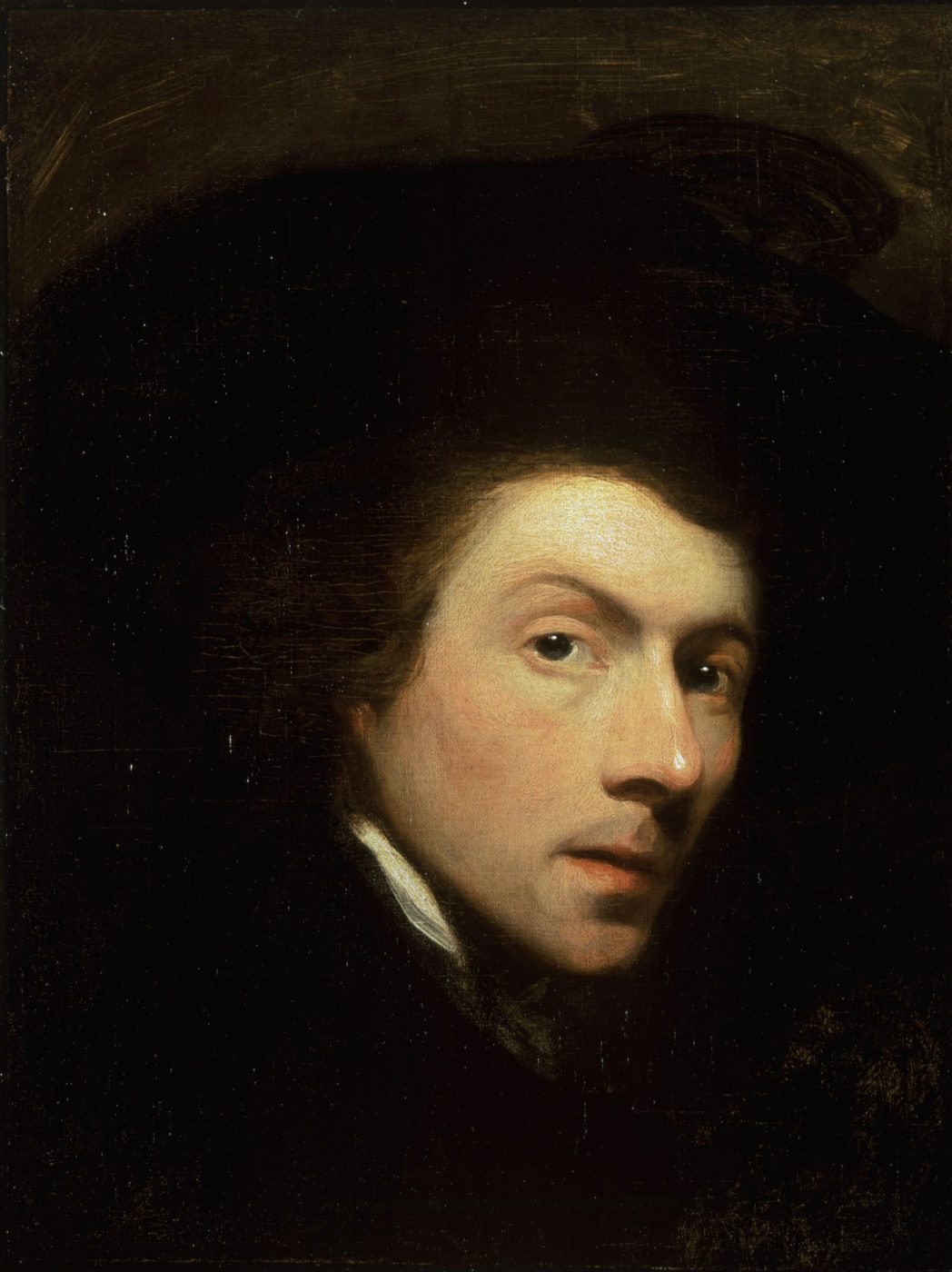
The man who painted everyone
In 1796, the most famous painter in America deliberately left a portrait unfinished — and then made a fortune off it.
The sitter was George Washington. Martha Washington had talked her husband into one more sitting, hoping for a matched pair of portraits to hang at home. Gilbert Stuart painted the President's head and shoulders, brilliant and alive, against a blank brown background. Then he stopped. He never finished it, and he never handed it over. He had realized something: as long as the original stayed in his studio, he could copy it again and again and sell each copy. He is said to have called those copies his "hundred-dollar bills," after his price. By the time he died, he had reportedly made well over a hundred of them.
That is the kind of man Stuart was — gifted, charming, and chronically, almost cheerfully broke.
He was born in Rhode Island in 1755, the son of a Scottish snuff-maker. He sailed to London as a young man and talked his way into the studio of Benjamin West, the expatriate American painter who trained a whole generation. Stuart learned fast. In 1782 a single picture — The Skater, a gentleman gliding across a frozen pond — made him the talk of London almost overnight. Commissions poured in. So did debts. By 1787 he had fled to Dublin to escape his English creditors, where he promptly ran up Irish ones too.
In 1793 he came home to America with a plan as simple as it was audacious: paint George Washington, and let every other commission in the country follow. It worked. He settled into Philadelphia, then the seat of government, and the founders lined up. Stuart painted the first six Presidents. He painted more than a thousand people in all. He set the standard for what an American portrait looked like — and he did it while leaving his family so deep in debt that he was buried in an unmarked grave.