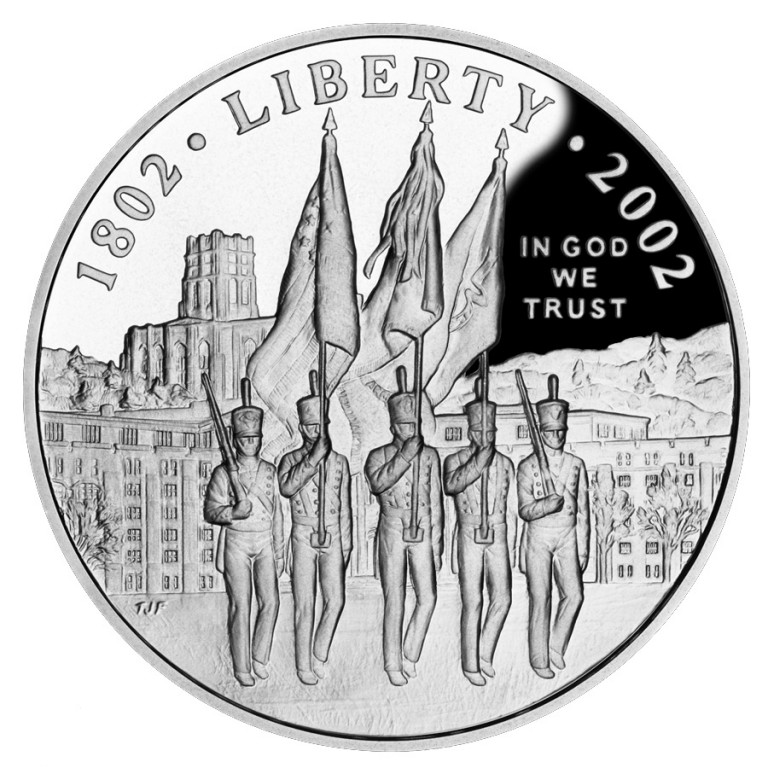
The story behind the coin
On March 16, 1802, President Thomas Jefferson signed the act that created a military academy on a bend of the Hudson River. The spot was already famous: during the Revolution, a great iron chain had been stretched across the river there to stop British ships. West Point was a fortress before it was a school.
Two hundred years later, Congress wanted to mark the anniversary the way the country often does — with a coin. The United States Military Academy Bicentennial Commemorative Coin Act authorized a single silver dollar, capped at 500,000 pieces, to be sold to the public for one year.
Here is the quiet detail that makes this coin different. It was struck at the U.S. Mint at West Point — the same West Point. The Mint runs a working facility there, and it carries the "W" mint mark (a mint mark is the small letter that tells you which Mint struck the coin). So this is a coin made at West Point, to celebrate West Point. The subject and the birthplace are the same place.
And it was never just about the silver. By law, a $10 surcharge rode on top of every coin sold, with the money going to the West Point Association of Graduates — the alumni body that funds programs for the Corps of Cadets. Buy the dollar, and you weren't only buying silver. You were paying a small tuition into the academy's bicentennial fund.