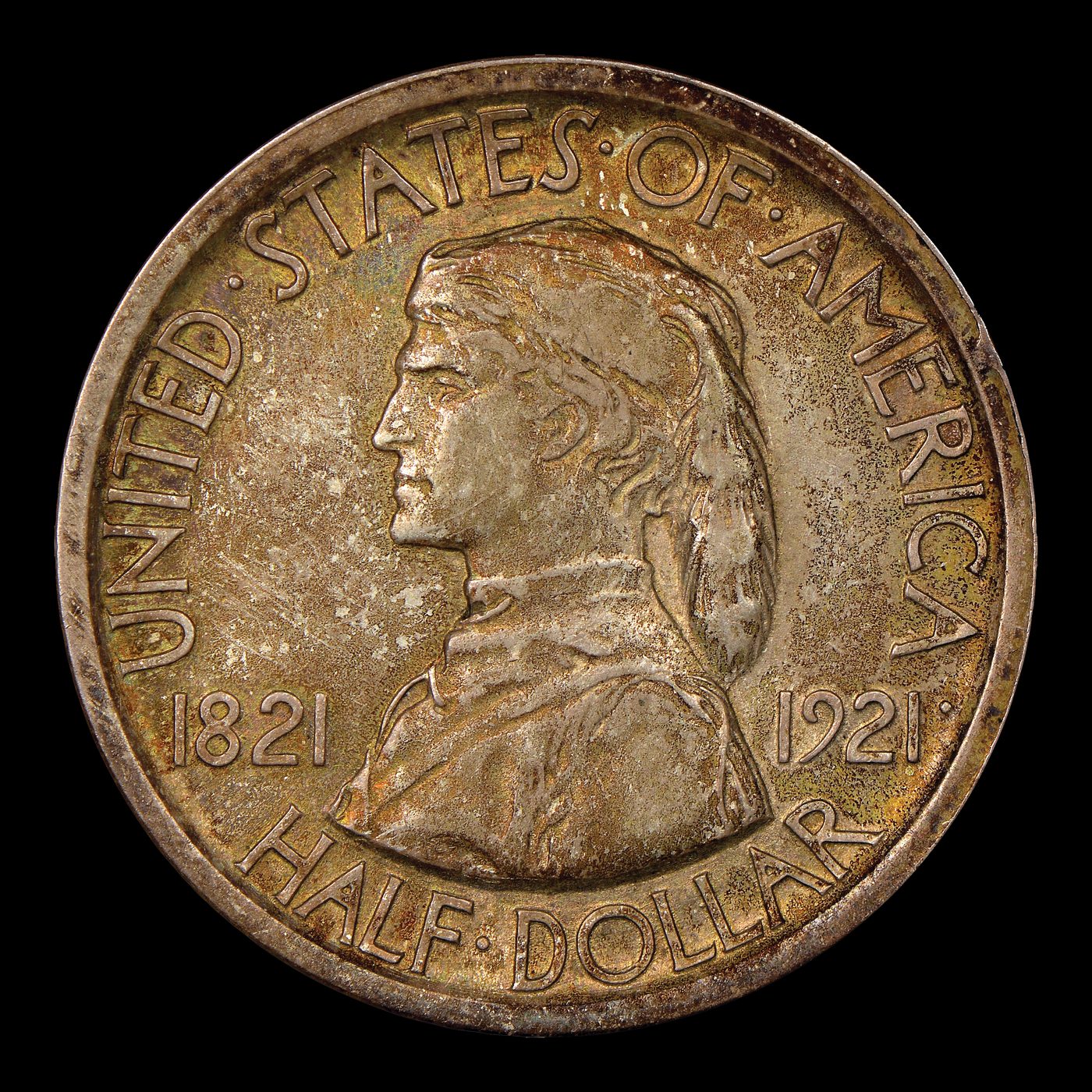
The story behind the coin
Missouri entered the Union on August 10, 1821 — the deal at the heart of the Missouri Compromise, the bargain that let one slave state and one free state in together and held a fracturing country together a little longer. A hundred years later, the state wanted a party.
The plan was a grand exposition in Sedalia, and a souvenir to sell at it: a commemorative half dollar. Congress agreed. The authorizing bill passed without recorded opposition, and President Warren G. Harding signed it into law on March 4, 1921 — his inauguration day.
Here is the part that still stings collectors a century on. The coins were struck. The exposition came and went in August 1921. And the country was in the grip of the sharp postwar Recession of 1921, with little advance publicity for the sale. Souvenir half dollars at a dollar apiece — twice face value — were a hard sell to a half-empty fairground. The unsold coins went back to the Philadelphia Mint and into the furnace. By the end, almost 60% of the plain coins had been returned and melted. The survivors are the coin we chase today.