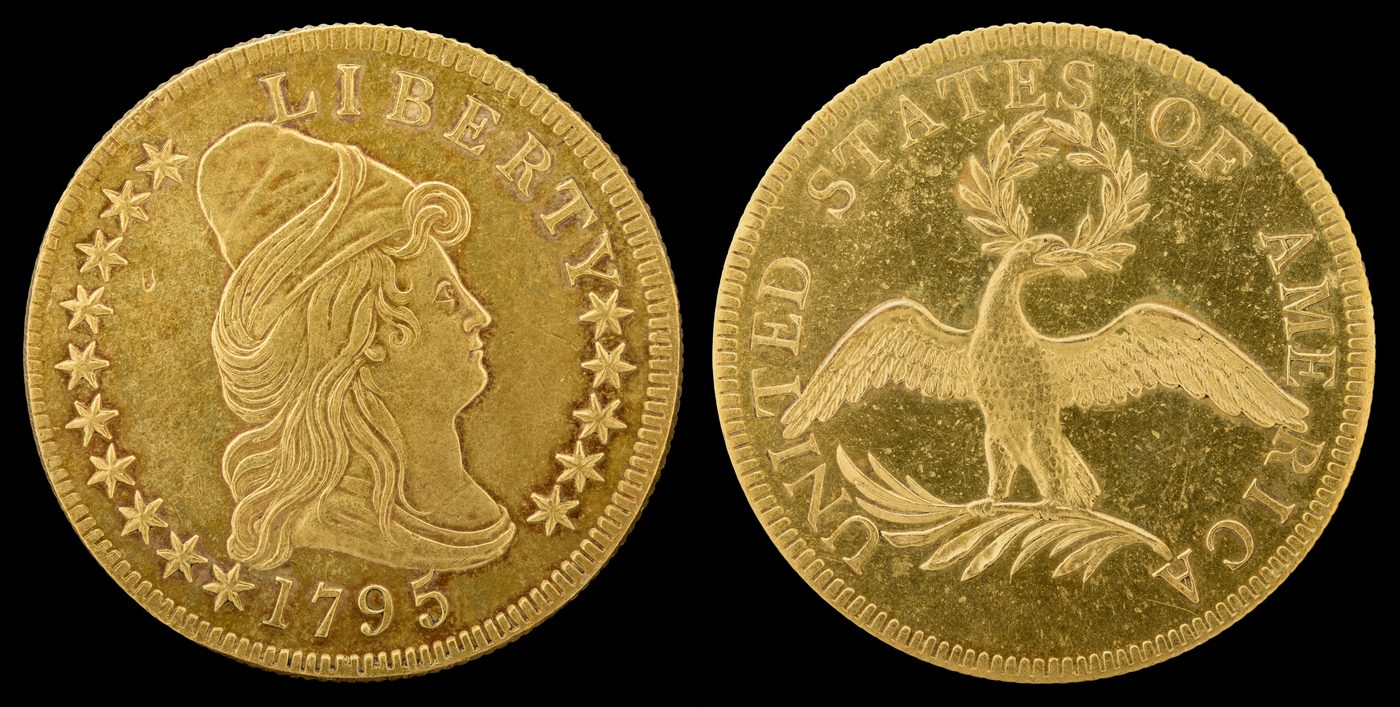
The story behind the coin
In September 1795, the Philadelphia Mint delivered the first gold coins ever struck by the United States. They were ten-dollar pieces — eagles — and ten dollars in 1795 was a serious sum, more than a skilled tradesman might earn in a week. This was the new nation announcing it could mint gold to rival Europe's.
The trouble started almost immediately, and it was baked into the law. The Coinage Act of 1792 — the act that created the Mint and authorized the eagle as the country's highest denomination — fixed the value of gold at fifteen times silver, ounce for ounce. But the world market drifted toward roughly 15.75 to 1. That gap was small on paper and enormous in practice.
Here's what it meant: a $10 gold eagle held a bit more gold than $10 was worth in silver. So bullion dealers and merchants did the obvious thing. They bought eagles, shipped them abroad, and melted them for the metal — pocketing the difference. As one history of the period puts it bluntly, gold had all but vanished from American circulation by 1800. The Mint was, in effect, manufacturing export bars stamped with an eagle.
On December 31, 1804, President Thomas Jefferson ordered the Mint to stop striking eagles altogether (and silver dollars with them). There was no point making coins that fled the country the moment they left the press. America's first gold coin had lasted barely nine years. No eagle was struck again until 1838 — and only after Congress finally cut the gold weight so the coins were worth keeping at home.