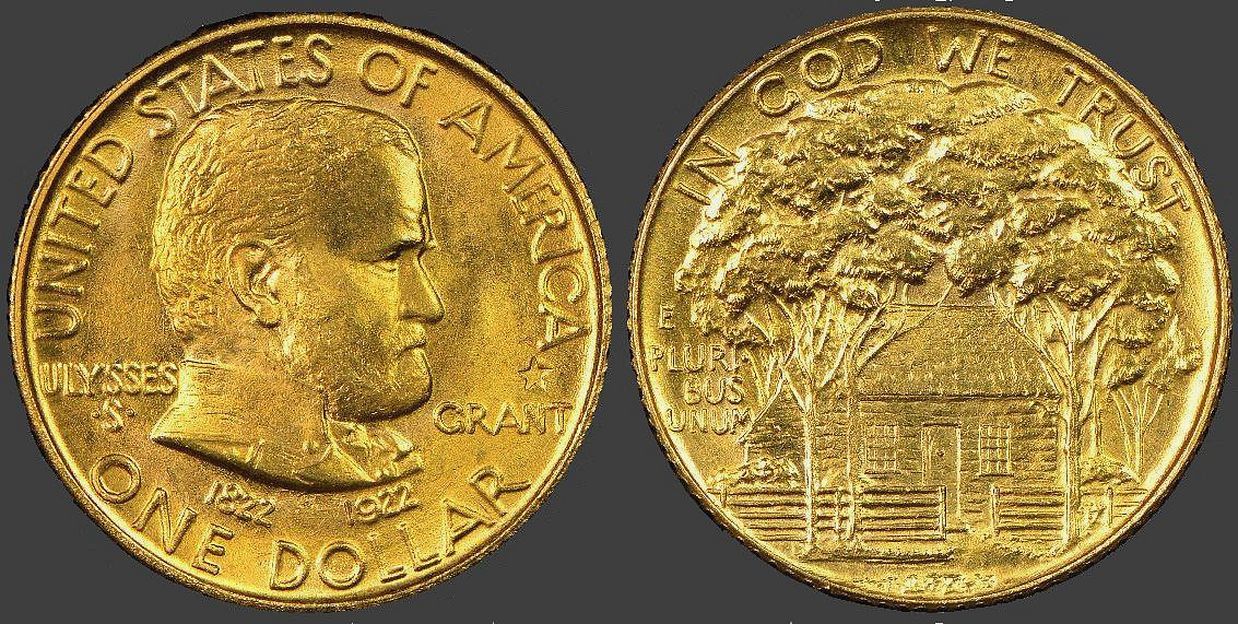
The story behind the coin
Ulysses S. Grant was born on April 27, 1822, in a small frame house in Point Pleasant, Ohio. A hundred years later, Ohio wanted to throw him a birthday party in gold.
The man had earned the tribute. Grant was the general who won the Civil War for the Union, then served two terms as president during the hard, tangled years of Reconstruction. By 1922 he was firmly an American icon — and a centennial was a chance to honor him and raise money for memorials in his home state.
So Ohio congressman Charles C. Kearns introduced a bill for a commemorative gold dollar. It became law on February 2, 1922, signed by President Warren G. Harding. The act authorized two centennial coins: a silver half dollar and this gold dollar. The catch — and the reason this little coin has a story at all — is that the gold dollar was never meant to spend. It was a souvenir, sold above face value to fund the memorials.
Here is where it gets murky. The proceeds were supposed to build community memorial buildings in Georgetown and Bethel, Ohio, and a highway linking Grant's birthplace to nearby New Richmond. As numismatic historians have noted, those monuments were never built — and where the money went is not clearly recorded. The birthday gift, it seems, got lost on the way to the party.