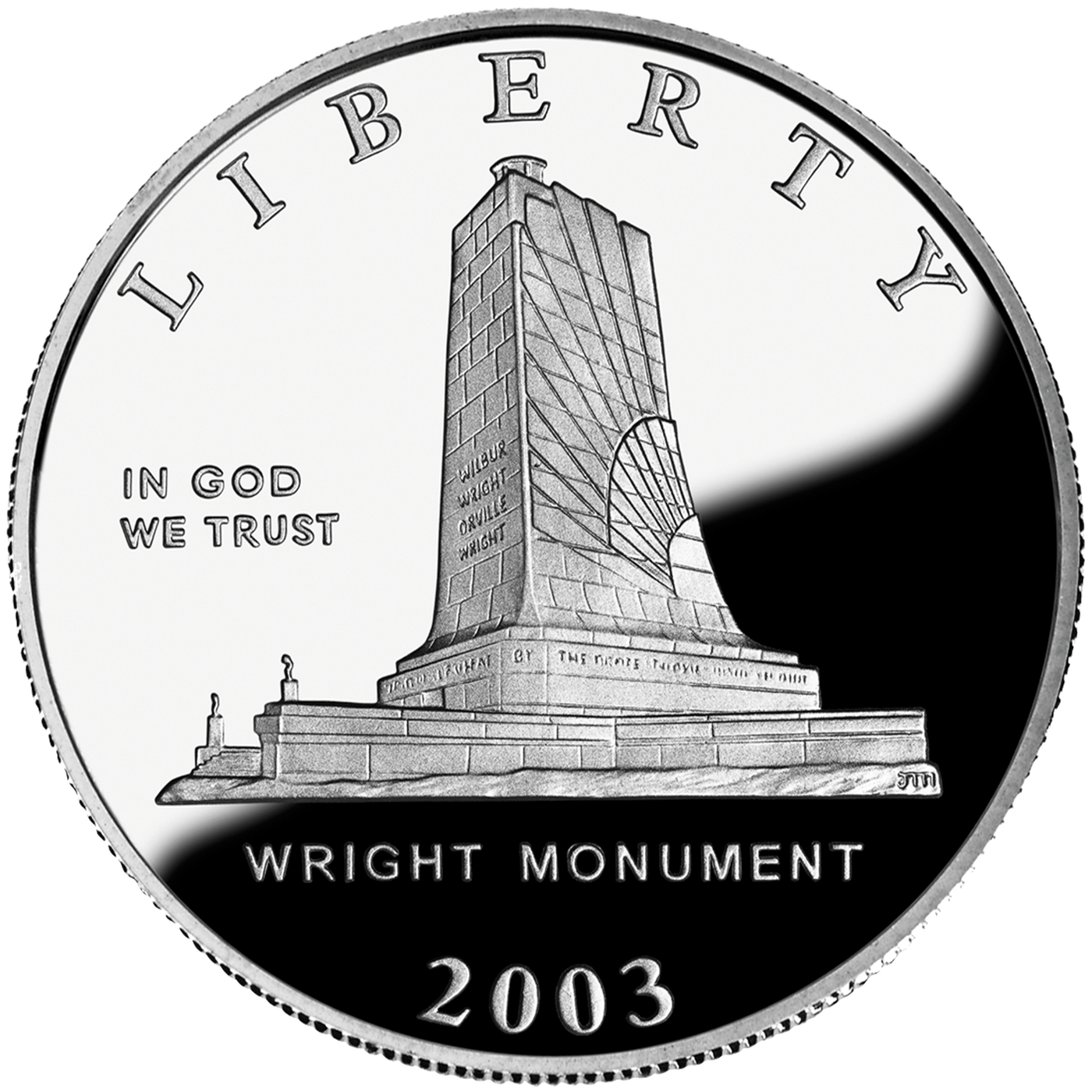
The story behind the coin
On December 17, 1903, on a windswept stretch of dune near Kitty Hawk, North Carolina, Orville Wright lay flat on the lower wing of a fragile machine of spruce and muslin and held on. The flight lasted twelve seconds and covered 120 feet — shorter than the wingspan of a modern airliner. It was the first time a powered, heavier-than-air craft had carried a person off the ground and back under control. The bicycle shop in Dayton had won the sky.
A century is a natural moment for a country to look back, and Congress did. The First Flight Centennial Commemorative Coin Act — Public Law 105-124, signed in late 1997 — ordered the U.S. Mint to strike a three-coin set for the 2003 anniversary: a $10 gold piece, a silver dollar, and this clad half dollar. They were the only U.S. commemoratives dated 2003.
The reason for the coins was as practical as it was patriotic. The Act tied a surcharge to every sale, and the money was earmarked for the Wright Brothers National Memorial on the Outer Banks — the granite monument and the visitor grounds that mark the spot where it all happened. Buyers weren't just getting a keepsake; they were chipping in to keep the place standing.