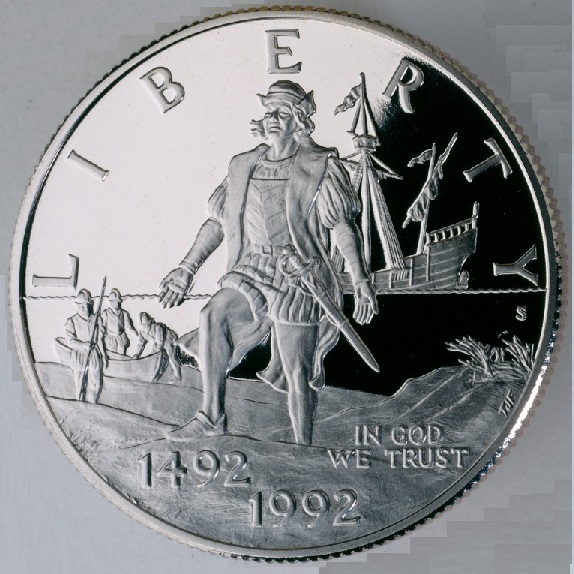
The story behind the coin
Some coins are made to be spent. This one was made to be kept.
When 1992 arrived, it carried a round number that no one in the coin world could ignore: 500 years since Columbus's 1492 voyage. Congress responded the way it usually does for a big anniversary — it ordered commemorative coins. The Christopher Columbus Quincentenary Coin Act (Public Law 102-281) authorized a three-coin set: this clad half dollar, a 90%-silver dollar, and a $5 gold half eagle.
Here's the key thing to understand about a modern U.S. commemorative. Unlike the penny in your pocket, it never enters general circulation. The Mint strikes it, sells it directly to collectors at a premium, and adds a built-in surcharge — a fixed donation baked into the price. For this half dollar, that surcharge was $1 per coin, routed to the Christopher Columbus Fellowship Foundation, a body created by the same law to fund research and discovery. Buy the coin, fund the cause. That's the whole modern commemorative model in one transaction.
The 500th anniversary was not a quiet one. Columbus had become a contested figure by 1992 — celebrated by some as the explorer who linked two worlds, criticized by others for what that linking cost the people already living here. The coin sits squarely in the older, triumphal telling: Columbus the discoverer, arms thrown wide at the shore.