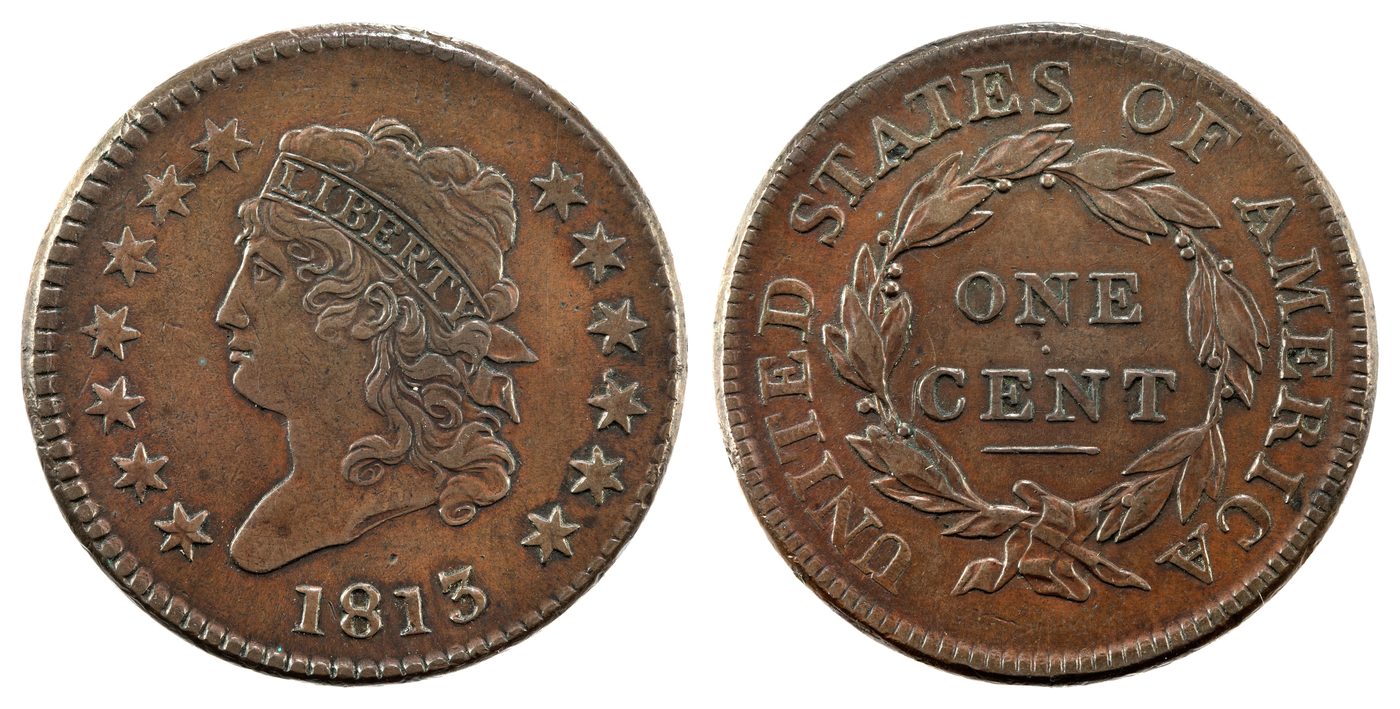
The story behind the coin
The United States Mint did not make its own copper. It bought ready-made blank discs — planchets — from one supplier across an ocean: the firm of Boulton & Watt in Birmingham, England. For years that arrangement worked. Then the two countries went to war.
The War of 1812 cut the lifeline. The last big shipment of English planchets — about 20 tons — reached the Mint in 1812. After that, nothing. The Mint coined cents in 1812 and 1813 out of the stock it already had on the shelf, watching the pile shrink.
By late 1814 the Treasury had ordered the Mint to stop striking cents, and Mint workers had gone without their wages for the better part of a year. So in December 1814, Mint Director Robert Patterson told his chief coiner, Adam Eckfeldt, to strike the last copper into cents — and hand those coins to the staff as pay. The men spent them immediately.
Then the copper was gone. No cents were struck in 1815 at all — the only year, going back to 1793, with no U.S. cent. Private merchants and foreign coppers filled the gap in people's pockets until fresh planchets arrived from England in 1816. The Classic Head cent is the coin caught on the wrong side of that famine: a design that lasted just seven years and went out not because anyone disliked it, but because the raw material stopped coming.