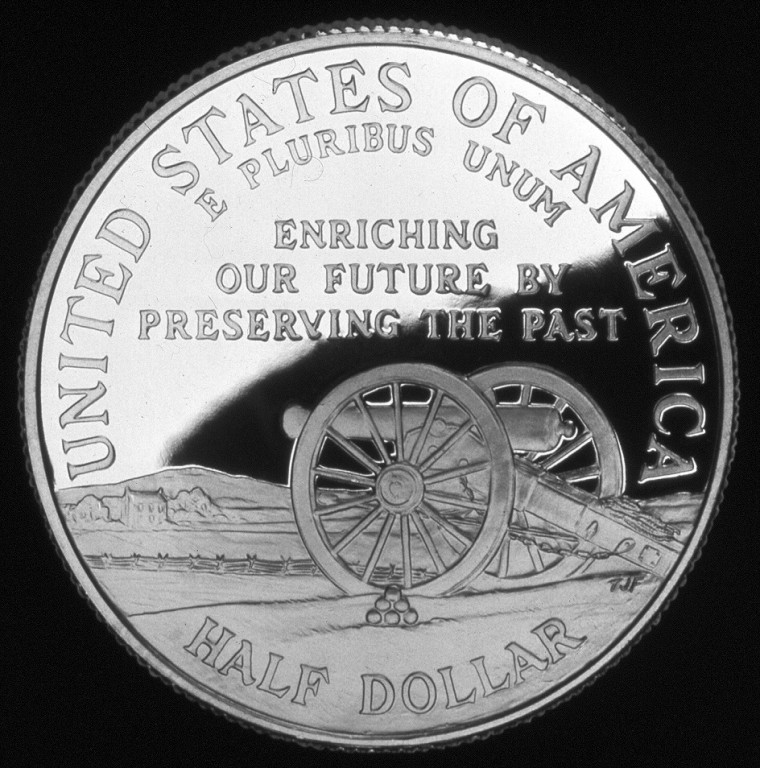
The story behind the coin
Most Civil War monuments mark a battle. This coin marks the rescue.
By the 1890s the great battlefields — Gettysburg, Antietam, Shiloh, Chickamauga — were thirty years past the fighting and quietly vanishing under farms and roads. So Congress began setting aside the ground itself, creating the first national military parks in 1890. A century later, that preservation effort was the thing worth a coin.
The Civil War Battlefields Commemorative Coin Act of 1992 (Public Law 102-379) authorized three coins to honor it — a copper-nickel clad half dollar, a silver dollar, and a $5 gold piece. President George H. W. Bush signed the bill on October 5, 1992. The Mint released the finished coins on March 31, 1995.
The half dollar is the entry point to that set: the cheapest of the three, struck in ordinary copper-nickel rather than precious metal, meant for the collector who wanted the design without the bullion. (A commemorative is a coin Congress authorizes for a specific occasion — sold at a premium, not spent at a store.)