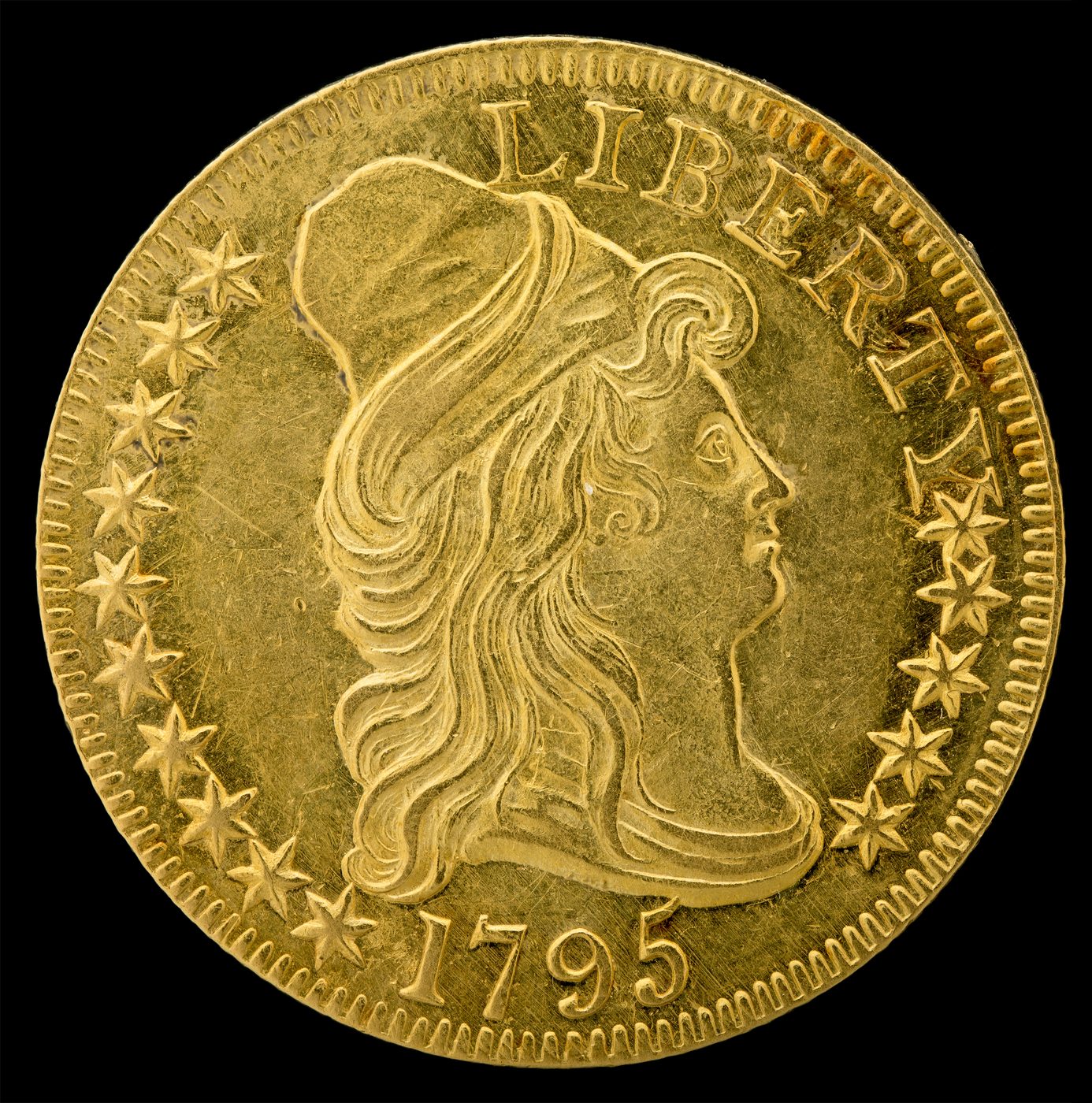
The first gold the country ever struck
The United States was three years into making its own money, and it had no gold to show for it. Silver dollars and copper cents had come first. Gold — the metal that backed serious commerce — was still waiting.
That changed in the summer of 1795. The Coinage Act of 1792 had authorized a $5 gold piece called the half eagle (the $10 piece was the "eagle," so the $5 was its half). On July 31, 1795, the Philadelphia Mint delivered its first 744 of them. By mid-September the year's total reached 8,707 coins. They were the first gold coins the young republic ever produced — proof that the United States could mint its own gold and not lean on Spanish and British coins to do its biggest business.
There was a problem built into the law from the start. The 1792 act fixed the value of silver to gold at 15 to 1. The rest of the world valued gold higher than that. So an American gold coin was worth more melted abroad than spent at home. Bullion dealers shipped half eagles overseas by the bag and ran them through the furnace. That is the quiet tragedy behind this coin: most of the gold the Mint struck in these years was destroyed almost as fast as it was made. The survivors are the lucky few that slipped the net.