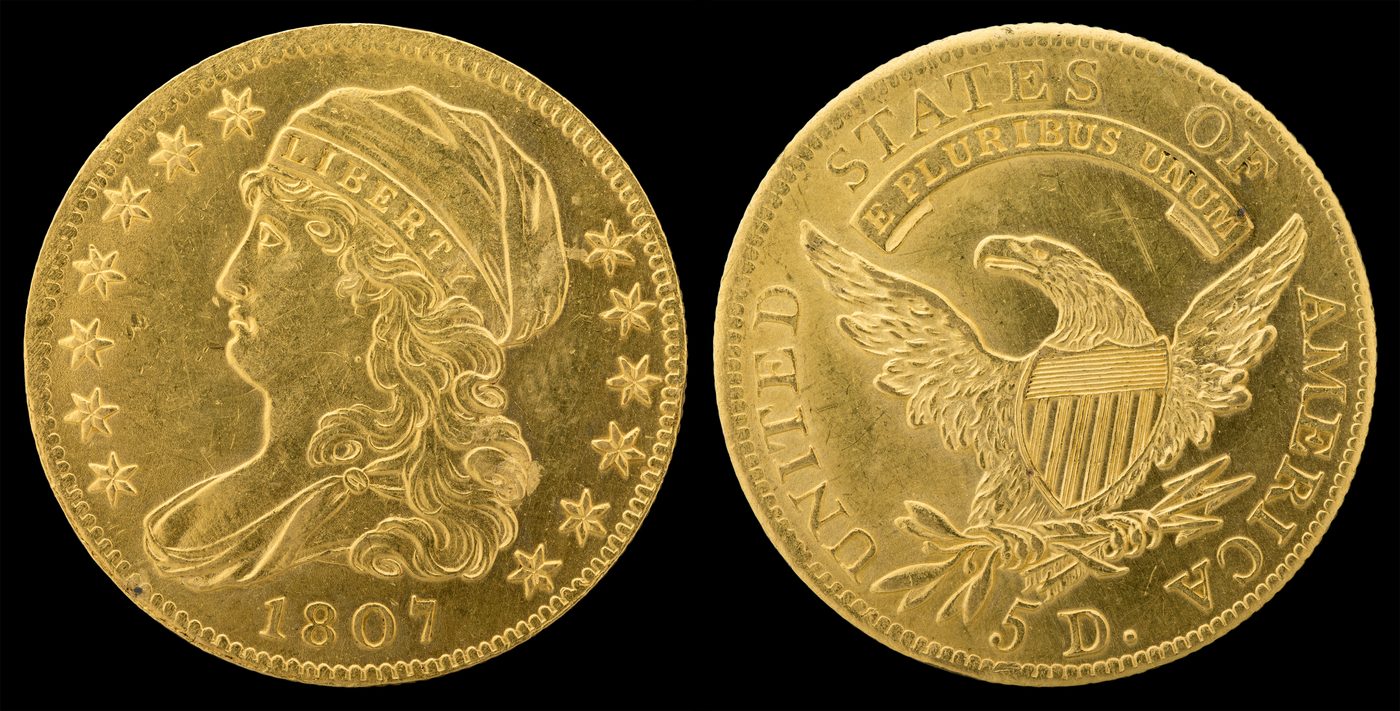
The story behind the coin
In 1807 a German immigrant who had come to America as an indentured servant put his stamp on the country's gold. His name was John Reich, and the half eagle — the $5 gold piece — was one of the first coins he redesigned.
The half eagle mattered out of all proportion to its size. The United States had no paper currency from the federal government yet, and Congress had quietly suspended the silver dollar in 1804. That left gold coins like the half eagle as the country's largest, most serious money — the coin of banks, big merchants, and international trade.
And that was the problem. Gold trades on its metal, not its stamp. Through this whole period, the bullion in a U.S. half eagle was often worth more abroad than $5 at home. So merchants and bankers took the freshly minted coins, shipped them across the Atlantic — mostly to England — and had them melted into bullion. The Mint was, in effect, running a foundry for Europe. Coins poured out the door and never came back.
That single fact shapes everything a collector needs to know. The mintages look healthy — tens of thousands a year. The survivors do not. Hold one of these and you're holding a coin that got lucky: it dodged the melting pot that swallowed most of its brothers.