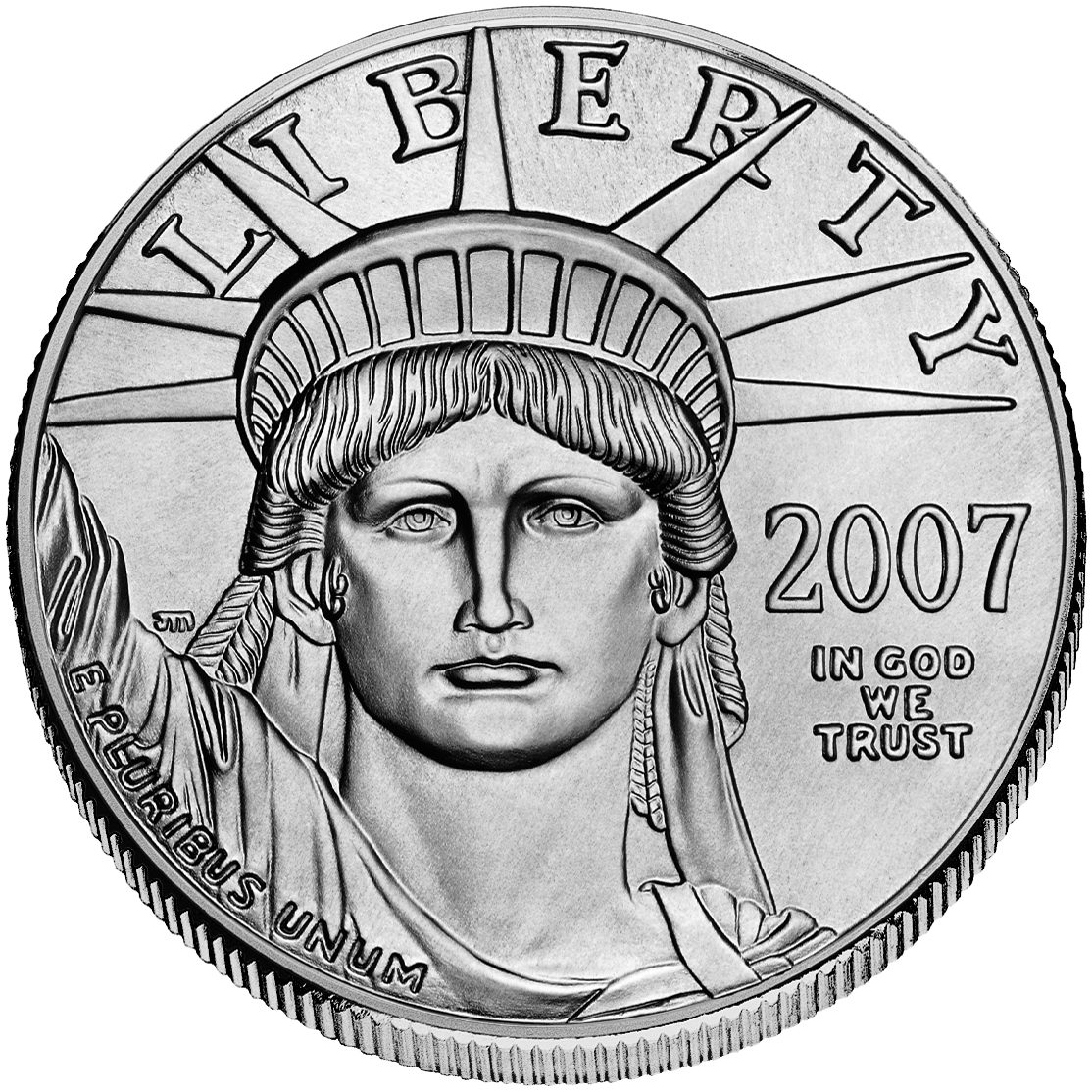
The story behind the coin
For most of its history the United States made its money out of copper, silver, and gold. Platinum — rarer than gold, denser, harder to work — was a metal for jewelers and chemists, never for coins.
That changed in the 1990s. The American Eagle program — gold and silver bullion coins backed by the U.S. government — had been a quiet success since 1986, and other countries were already selling platinum coins to investors who wanted a third precious metal in legal-tender form. So a coalition of the American Numismatic Association, the Platinum Guild International, and the U.S. Mint pitched Congress on platinum. Congress authorized it, and President Bill Clinton signed it into law on September 30, 1996.
The American Platinum Eagle followed in 1997 — the first platinum coin in U.S. history. The one-ounce version carried a face value of $100, the highest denomination ever struck on a United States coin. That number is a legal formality, not a price: the metal alone is worth many times more. But it made a statement. This was sovereign money, made of the rarest of the three classic precious metals.
The Mint sold it two ways from the start, and the split still defines the series. Bullion coins are the plain investor product, bought for the metal and sold near the platinum price. Proof coins — struck on polished dies for a mirror finish, the word proof meaning the striking method, not a grade — are made for collectors and sold at a premium. The proofs are where the real story lives, because the proofs are where the design keeps changing.