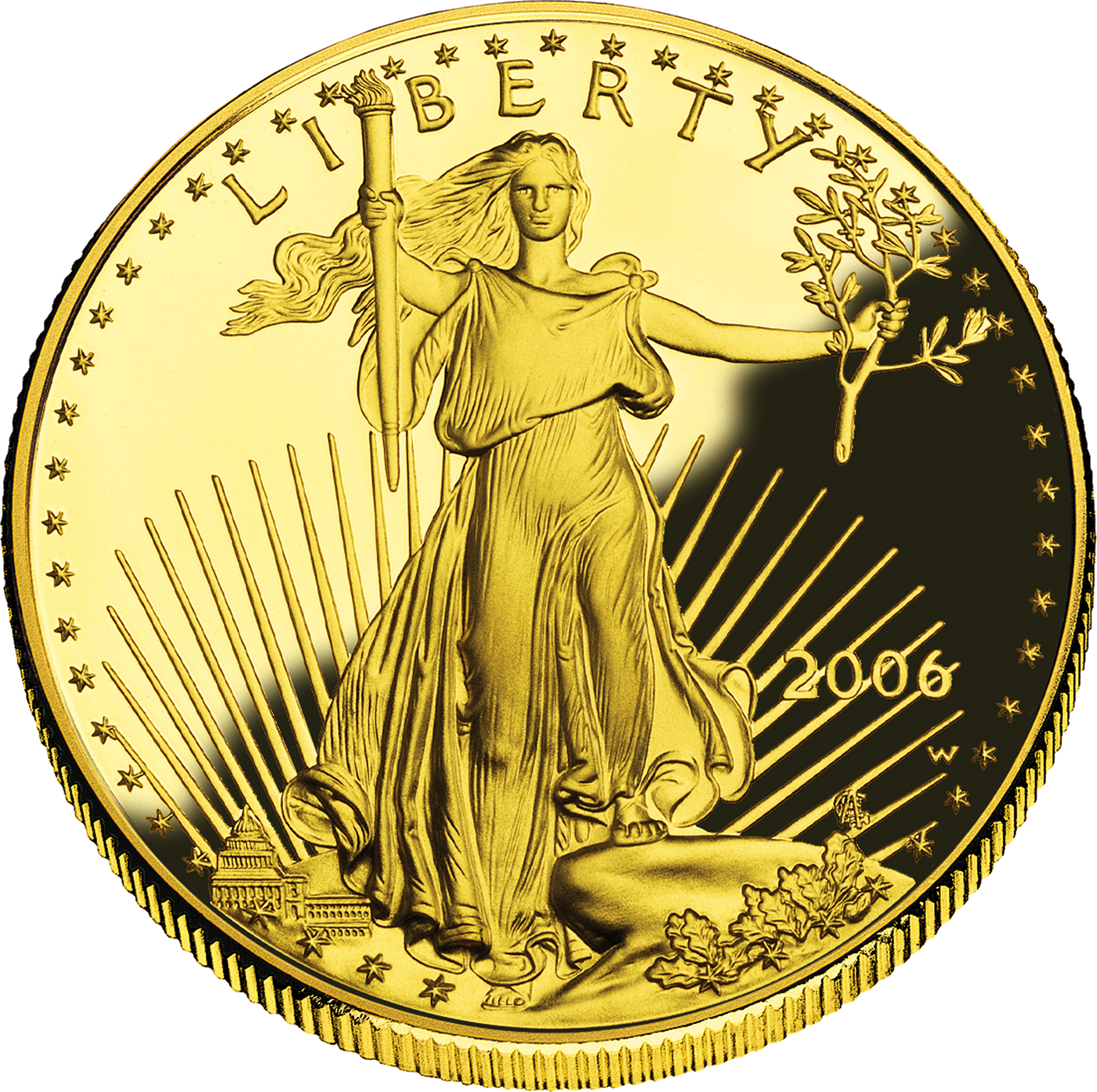
The story behind the coin
For half a century, owning gold this way was off the table. From 1933 until the mid-1970s, Americans were largely barred from holding investment gold — a Depression-era emergency that quietly outlived the crisis that caused it. By the 1980s the ban was gone, and a new problem appeared: the best-selling gold coin in the world, the South African Krugerrand, was now boycotted in the United States over apartheid. American buyers wanted gold. They had no American coin to buy it with.
Congress fixed that with the Gold Bullion Coin Act of 1985. It ordered the U.S. Mint to strike a family of official gold coins, and it added a patriotic string: the gold had to be mined from natural deposits within the United States. The first American Gold Eagles rolled out in 1986. They were never meant to jingle in a pocket — they're bullion, coins bought and sold for the metal inside them, with a face value (the dollar amount stamped on them) that's a legal formality far below what the gold is worth.
The Eagle did what it was built to do. It gave the country its own gold coin to rival the Krugerrand and the Canadian Maple Leaf, backed by the weight and purity guarantee of the U.S. government. Nearly four decades on, it is still the Mint's flagship gold piece.