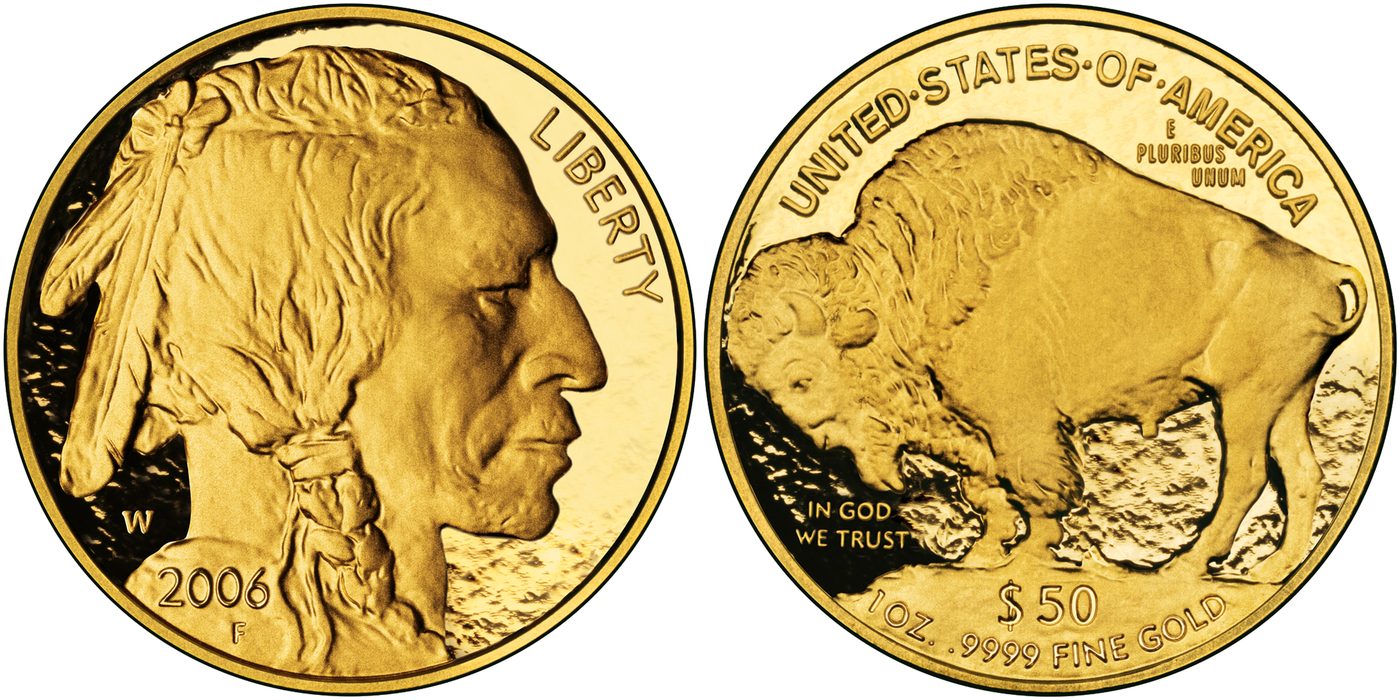
The story behind the coin
For most of its history, the United States Mint did not make pure gold coins. The classic American gold pieces — the Double Eagle, the Eagle — were 90% gold, hardened with copper so they could survive in a pocket. Even the modern American Gold Eagle bullion coin, launched in 1986, is an alloy: 22 karats. Buyers around the world, though, increasingly wanted the same thing offered by Canada's Maple Leaf and other foreign coins — gold as pure as a mint could make it. The U.S. had nothing to sell them.
Congress fixed that almost as an afterthought. Tucked into the Presidential $1 Coin Act of 2005 — a law mostly about the dollar coins honoring former presidents — was an order to strike a one-ounce, 24-karat gold bullion coin with a face value of $50. The Mint obliged, and in June 2006 the American Gold Buffalo went on sale: the first coin the United States ever issued in .9999 fine gold (99.99% pure).
The law carried one more patriotic string. By statute, the gold in these coins must come from newly mined sources within the United States — not recycled bullion. So a Gold Buffalo is American metal through and through, dug from American ground and struck into a uniquely American image.