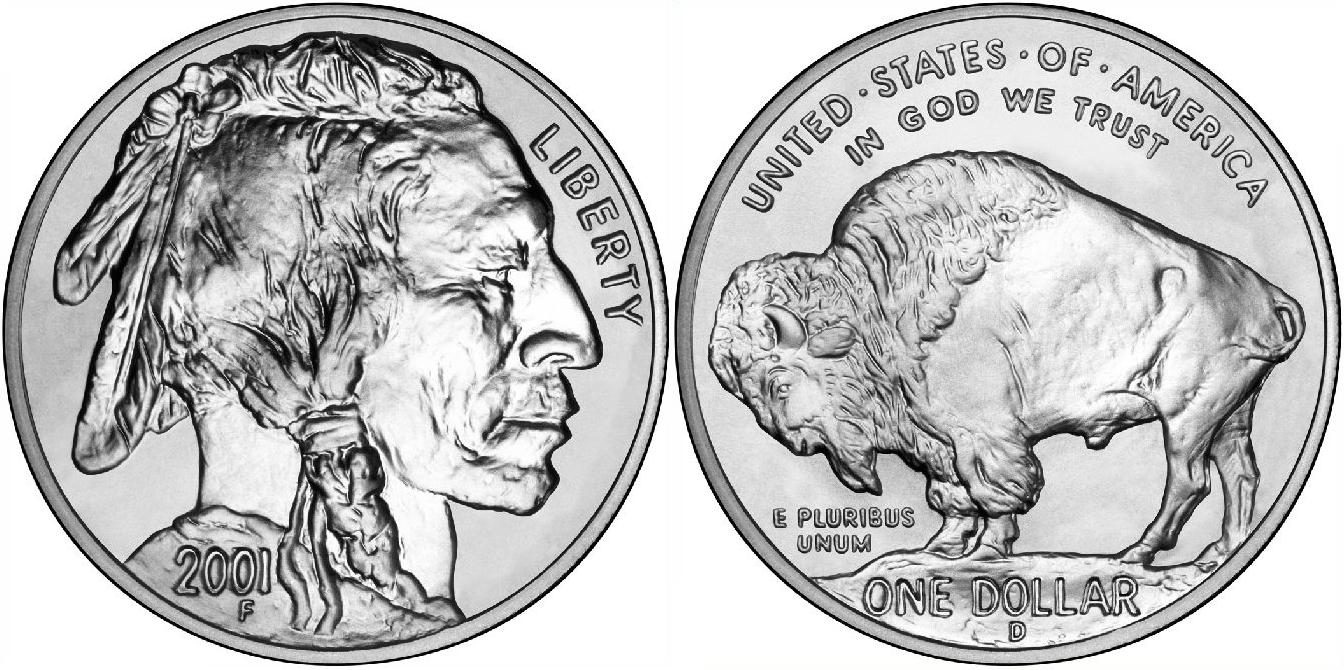
The story behind the coin
Most modern U.S. commemorative coins are quiet affairs. Congress authorizes them, the Mint strikes them, and many never come close to selling their full run. The 2001 American Buffalo silver dollar was the exception that collectors still talk about. It went on sale on June 7, 2001, and by June 21 every one of the 500,000 authorized coins was sold — a fifteen-day sellout that few modern commemoratives have matched.
The coin existed to do a serious job. It was authorized by the American Buffalo Commemorative Coin Act of 2000 (Public Law 106-375, signed October 27, 2000), and every coin carried a $10 surcharge — money raised on top of the price and handed to a cause. That cause was the National Museum of the American Indian, the Smithsonian's new museum rising on the National Mall in Washington. The surcharges helped fund its construction and its endowment for education and outreach.
There is a quiet rightness to that. The coin's portrait honors Native Americans, and the money it raised went to a museum dedicated to telling their story. The design and the purpose finally pointed in the same direction — something the original 1913 nickel, struck in an era far less generous to the people it depicted, could not claim.