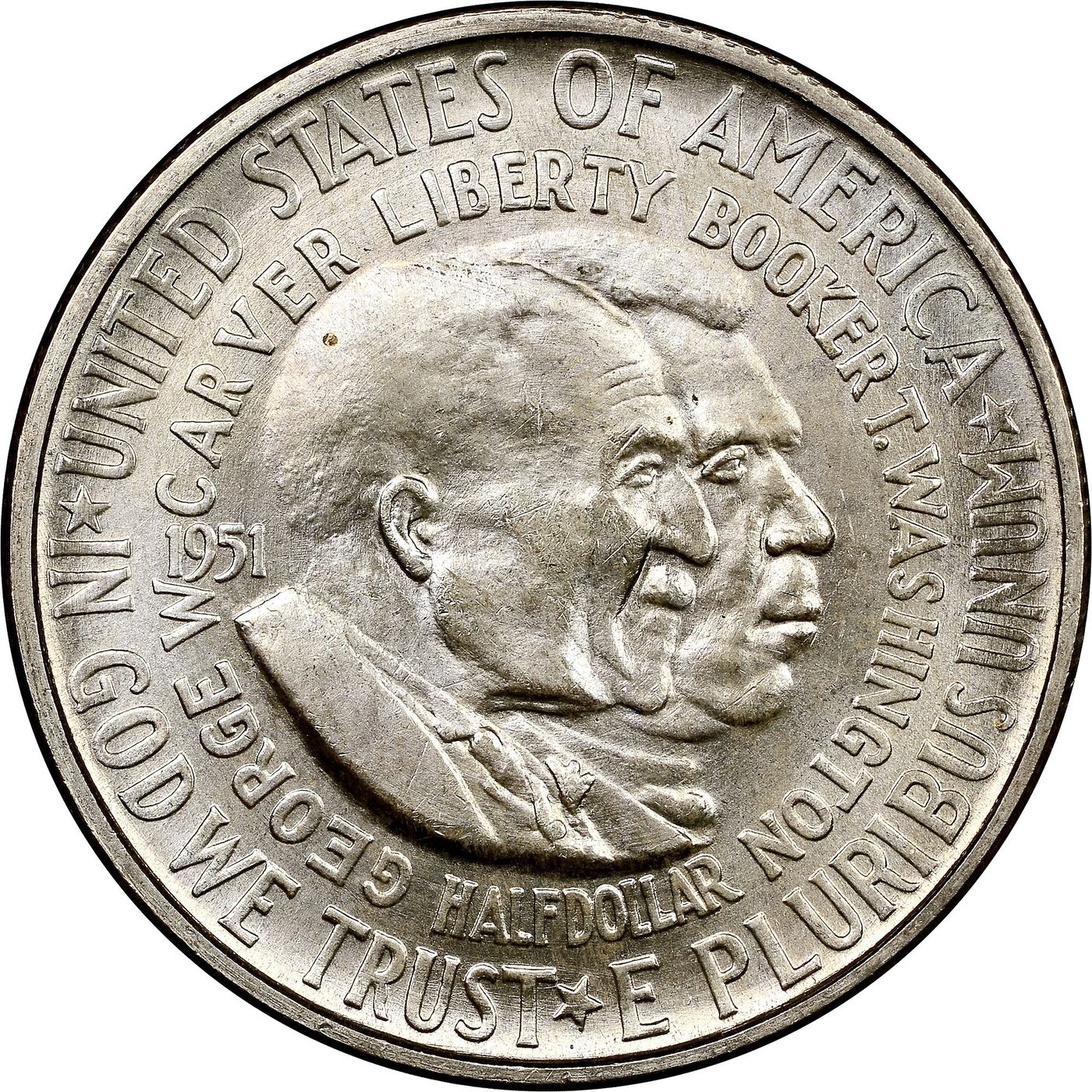
The story behind the coin
By 1951, the great American commemorative coin program was dying of its own excess. In the 1930s, promoters had flooded collectors with dozens of "commemorative" half dollars honoring everything from local centennials to a roadside fort, often just to skim a profit on the surcharge. Congress and the Treasury had soured on the whole idea. The Washington-Carver half dollar was the last gasp — and it arrived wrapped in the politics of the Cold War.
The man behind it was S.J. Phillips, a former Tuskegee student who had already shepherded the Booker T. Washington Memorial half dollar (struck 1946–1951) through Congress. That earlier coin sold badly. Millions went unsold and were returned to the Mint. So Phillips came back with a new pitch: melt the leftover Washington coins and restrike them as a joint tribute to Booker T. Washington, the famed educator, and George Washington Carver, the agricultural scientist whose work with the peanut and soil made him one of the most celebrated Americans of his day.
The sales pitch had a hard edge of its time. The authorizing law — Public Law 82-151, passed September 21, 1951 — was promoted in part as a way to "oppose the spread of Communism" among African Americans, holding up two Black men who had risen through education and self-reliance as proof of what America offered. The reverse spells it out in a single word stamped across the map of the country: AMERICANISM.