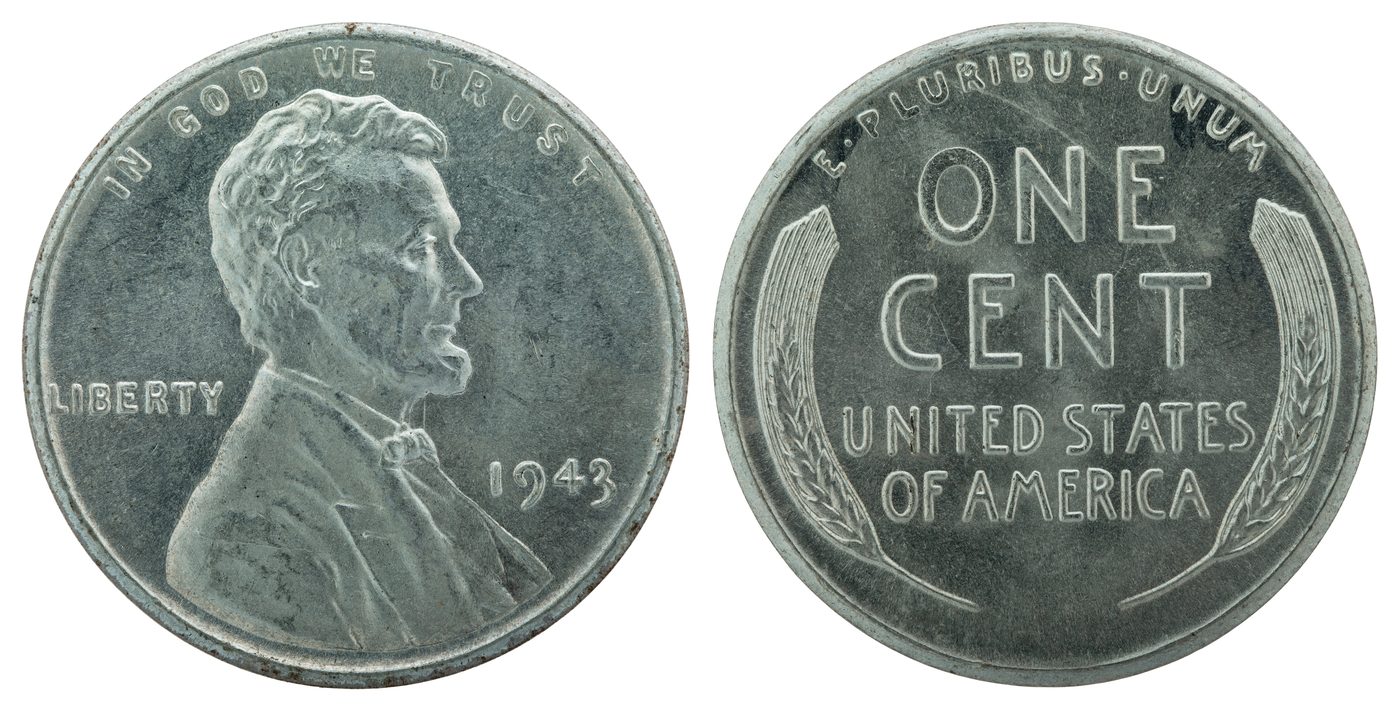
The story behind the coin
By 1943, the United States was two years into a war that ran on copper. The metal went into shell casings, telephone wire, and the electrical guts of ships and aircraft. The humble one-cent piece — 95% copper since the 1860s — suddenly looked like a small fortune in strategic material being stamped out a billion times a year and dropped into pockets.
So the Mint changed the recipe. Congress and the Treasury authorized a one-year substitute, and on February 23, 1943, the Philadelphia Mint began striking cents from low-carbon steel coated with a thin skin of zinc. The zinc was there to fight rust and give the coin a bright, silvery shine. The steel underneath made it the only regular-issue U.S. coin ever struck on a magnetic planchet — a planchet being the blank metal disc a coin is stamped from.
The public did not love it. The new cents looked like dimes at a glance, and cashiers and vending machines kept confusing the two. Worse, the zinc coating protected the faces but not the edges — when the Mint punched blanks out of coated sheet, the cut exposed bare steel. Within months, circulating steel cents began to spot, darken, and rust. The experiment lasted exactly one year. For 1944 the Mint switched to recycled copper from spent military shell casings, and the steel cent became history — and, almost immediately, a curiosity.